
Expository essays are among the most frequently assigned academic writing tasks in higher education because they test a student’s ability to explain, clarify, and organise information logically. Before writing begins, a well-constructed expository essay outline provides the structural foundation that ensures clarity, coherence, and academic precision. Without an outline, even strong ideas can become disorganised and difficult for examiners to follow.
This article explains how to design an effective expository essay outline for college-level work. It moves from the broader academic purpose of outlining to a detailed breakdown of each section, showing how students can plan essays that meet marking criteria while maintaining clarity and objectivity.
Why an Expository Essay Outline Matters in Academic Writing
An expository essay outline functions as a planning tool that organises ideas before drafting begins. In academic contexts, clarity of explanation is as important as content accuracy. Outlining helps students separate main ideas from supporting details and ensures that each paragraph contributes directly to the essay’s explanatory purpose.
University markers typically assess structure alongside content. Essays that lack a clear progression of ideas often lose marks, even when the information itself is correct. A structured outline reduces this risk by enforcing logical order and preventing repetition or digression.
Outlining also supports time management. By mapping the essay in advance, students can allocate appropriate word counts to each section and avoid spending excessive time on less significant points.
An effective expository essay outline ensures that explanation, not opinion, drives the structure of the essay.
Core Components of an Expository Essay Outline
Although expository essays can vary by discipline, their outlines generally follow a consistent academic structure. Each section has a distinct function and should be planned deliberately before writing begins.
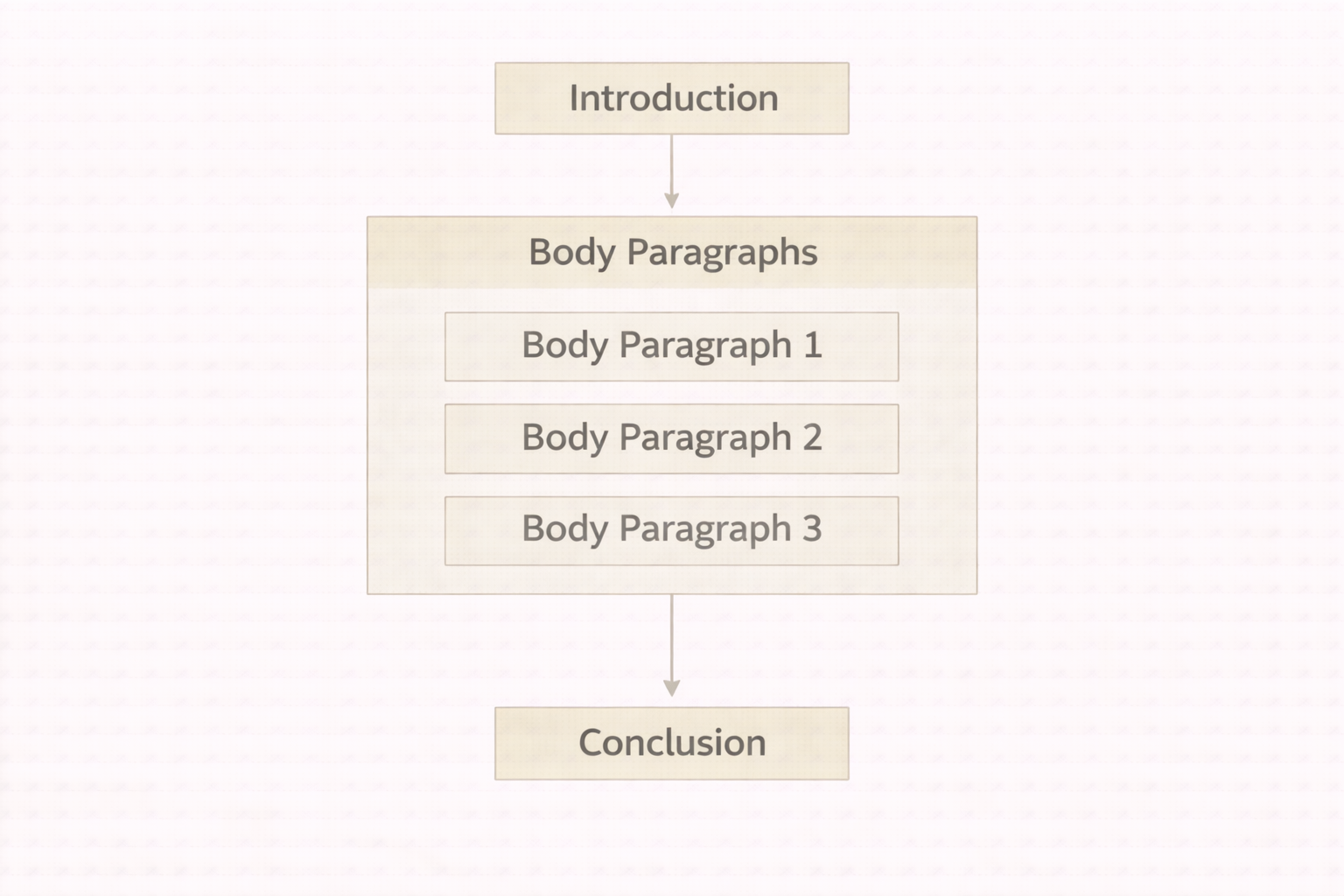
The outline typically includes an introduction, several body paragraphs organised around key ideas, and a conclusion that synthesises the explanation without introducing new arguments.
| Section | Purpose | Key Elements |
|---|---|---|
| Introduction | Introduce topic and focus | Background context, clear thesis statement |
| Body Paragraphs | Explain key ideas | Topic sentence, explanation, supporting detail |
| Conclusion | Synthesise explanation | Summary of main points, restated thesis |
Planning the Introduction Section
The introduction of an expository essay outline establishes the scope and direction of the entire assignment. It should briefly contextualise the topic and signal what the essay will explain, without attempting to persuade the reader.
An effective outline for the introduction usually includes two to three bullet points: background information, key terms or context, and a concise thesis statement. The thesis must clearly state what the essay will explain or analyse.
Because the introduction shapes the reader’s expectations, it should remain focused and proportionate. Overloading the introduction with details can weaken the explanatory flow later in the essay.
Structuring Body Paragraphs for Clarity
Body paragraphs form the core of the expository essay outline. Each paragraph should be planned around a single explanatory idea that directly supports the thesis.
Outlining body paragraphs helps ensure balance. Academic essays often require multiple body sections, each contributing equally to the overall explanation. An outline prevents one idea from dominating while others are underdeveloped.
Each body paragraph outline should include a topic sentence, the explanation or description of the concept, and examples or evidence where appropriate. This structure promotes clarity and logical progression.
Example Body Paragraph Outline
- Topic sentence introducing the concept
- Explanation of how or why the concept works
- Supporting example or clarification
- Transition to the next idea
Planning paragraphs in this way helps students maintain academic focus and avoid drifting into argument or opinion.
Organising Information Logically
Logical sequencing is a defining feature of strong expository writing. The outline should arrange body paragraphs in an order that makes sense for explanation, such as chronological, cause-and-effect, or general-to-specific progression.
For example, an essay explaining a process should outline steps in the order they occur. An essay explaining a concept may move from definition to application. Selecting the appropriate organisational logic strengthens academic coherence.
Transitions should also be planned in the outline. While transitions are written during drafting, noting logical links between sections at the outlining stage improves overall flow.
Designing an Effective Conclusion Outline
The conclusion in an expository essay outline should focus on synthesis rather than repetition. Its purpose is to bring together the main explanatory points and reinforce the thesis without adding new information.
An effective conclusion outline typically includes a restated thesis and a brief summary of the key ideas explained in the body. It may also highlight the broader significance of the topic within the academic field.
Conclusions should remain concise. Overly long conclusions often restate details unnecessarily, which can weaken the essay’s impact.
Expository conclusions synthesise explanation; they do not introduce new arguments or evidence.
Common Outline Mistakes to Avoid
Students frequently make outlining errors that affect the quality of their essays. One common mistake is outlining too vaguely, which leaves the writer without clear guidance during drafting.
Another frequent issue is including opinions or arguments in the outline. Expository essays require neutrality, and outlines should reflect explanation rather than persuasion.
Finally, some outlines lack balance, dedicating excessive space to one section while neglecting others. Careful planning helps ensure that each part of the essay receives appropriate attention.
Using an Outline to Improve Academic Performance
Developing a detailed expository essay outline improves not only writing quality but also academic confidence. Students who outline effectively tend to write more efficiently and produce clearer, more coherent assignments.
Over time, outlining becomes an internalised academic skill that supports higher-level writing tasks, including research papers and dissertations. Mastery of expository outlining therefore contributes directly to long-term academic success.
Final Academic Guidance for Students
A strong expository essay outline is the foundation of clear academic explanation. By planning structure, logic, and focus in advance, students can meet university standards with confidence and precision.
Approaching expository writing through structured outlining transforms the essay from a stressful task into a manageable, methodical process grounded in academic best practice.
Comments