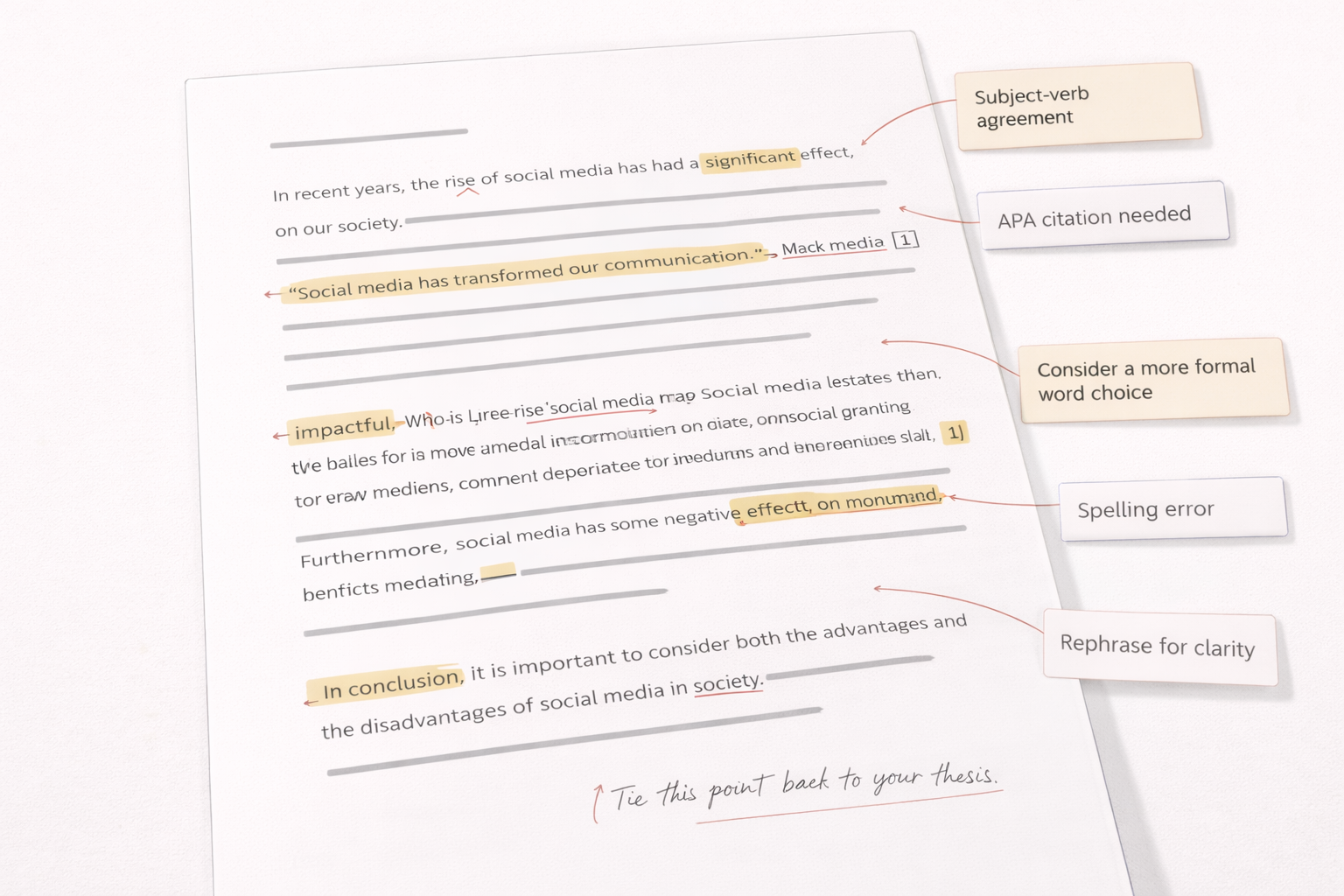
Many university students are surprised when essays they worked hard on receive disappointing marks. In most cases, the issue is not a lack of knowledge but recurring academic mistakes that weaken clarity, structure, and argumentation. These errors are so common that examiners encounter them repeatedly across disciplines.
Understanding common essay mistakes is therefore one of the most effective ways to improve academic performance. This article explains the errors that most frequently cost students marks, why they matter academically, and how they can be avoided through disciplined writing practices.
Misunderstanding the Essay Question
One of the most damaging essay mistakes occurs before writing even begins: misunderstanding the question. Academic essay questions are carefully designed to test specific skills, such as analysis, evaluation, or comparison. When students misinterpret these instructions, the entire essay may become misaligned with assessment criteria.
For example, an essay that describes theories when the question asks for evaluation will almost always score poorly, regardless of how accurate the content is. Examiners cannot reward irrelevant material, even if it demonstrates effort or subject knowledge.
This mistake often arises from rushing into writing without breaking down the question into its core components.
Examiner expectation: Essays are assessed on how accurately they respond to the task set, not on how much information they contain.
Lack of a Clear Central Argument
Another common essay mistake is failing to present a clear, defensible argument. Many students believe that presenting information alone is sufficient, but academic essays are arguments, not reports. Without a clear thesis, essays appear unfocused and descriptive.
A weak or missing thesis makes it difficult for the reader to understand the essay’s purpose. As a result, paragraphs may feel disconnected, and conclusions may appear arbitrary. Examiners often describe such essays as lacking direction or coherence.
Every strong essay must be anchored by a central claim that answers the question directly.
Poor Paragraph Structure and Development
Paragraph-level weaknesses are among the most visible essay mistakes. Paragraphs that lack a clear topic sentence, contain multiple ideas, or present evidence without explanation undermine the logical flow of the essay.
Each paragraph should function as a mini-argument that supports the overall thesis. When paragraphs drift away from the main argument or simply summarise sources, academic depth is lost.
This problem often results from insufficient planning or overreliance on quotations.
Signs of Weak Paragraph Structure
- Paragraphs that begin with vague or descriptive statements
- Evidence included without analytical commentary
- Multiple unrelated points within a single paragraph
- No clear link back to the essay question
Improving paragraph discipline significantly enhances clarity and academic credibility.
Over-Describing Instead of Analysing
Excessive description is one of the most frequent reasons essays fail to achieve higher grades. Description explains what something is, while analysis explains why it matters. Many students remain at the descriptive level, particularly when summarising theories or sources.
Academic writing requires students to interpret, evaluate, and connect ideas rather than simply report them. Essays that rely heavily on summaries signal limited critical engagement to examiners.
Shifting from description to analysis is essential for achieving upper-level marks.
Critical warning: Description demonstrates knowledge; analysis demonstrates academic skill.
Weak Integration of Evidence
Using sources incorrectly is another major essay mistake. Evidence should support the writer’s argument, not replace it. Essays that rely on long quotations or list multiple sources without explanation appear underdeveloped.
Effective evidence integration involves introducing sources, explaining their relevance, and critically interpreting their contribution to the argument. Simply inserting citations does not demonstrate understanding.
Examiners reward essays where sources are used selectively and purposefully.
Ignoring Academic Tone and Style
Academic tone is a key component of assessment that students often underestimate. Informal language, emotional phrasing, and unsupported assertions weaken academic authority. Essays written in a conversational style tend to appear less rigorous.
Maintaining an objective, formal tone allows ideas to be evaluated on their merit. This includes using cautious language, avoiding absolute claims, and maintaining consistency in terminology.
Style errors rarely fail an essay outright, but they consistently reduce marks.
Structural Imbalance Within the Essay
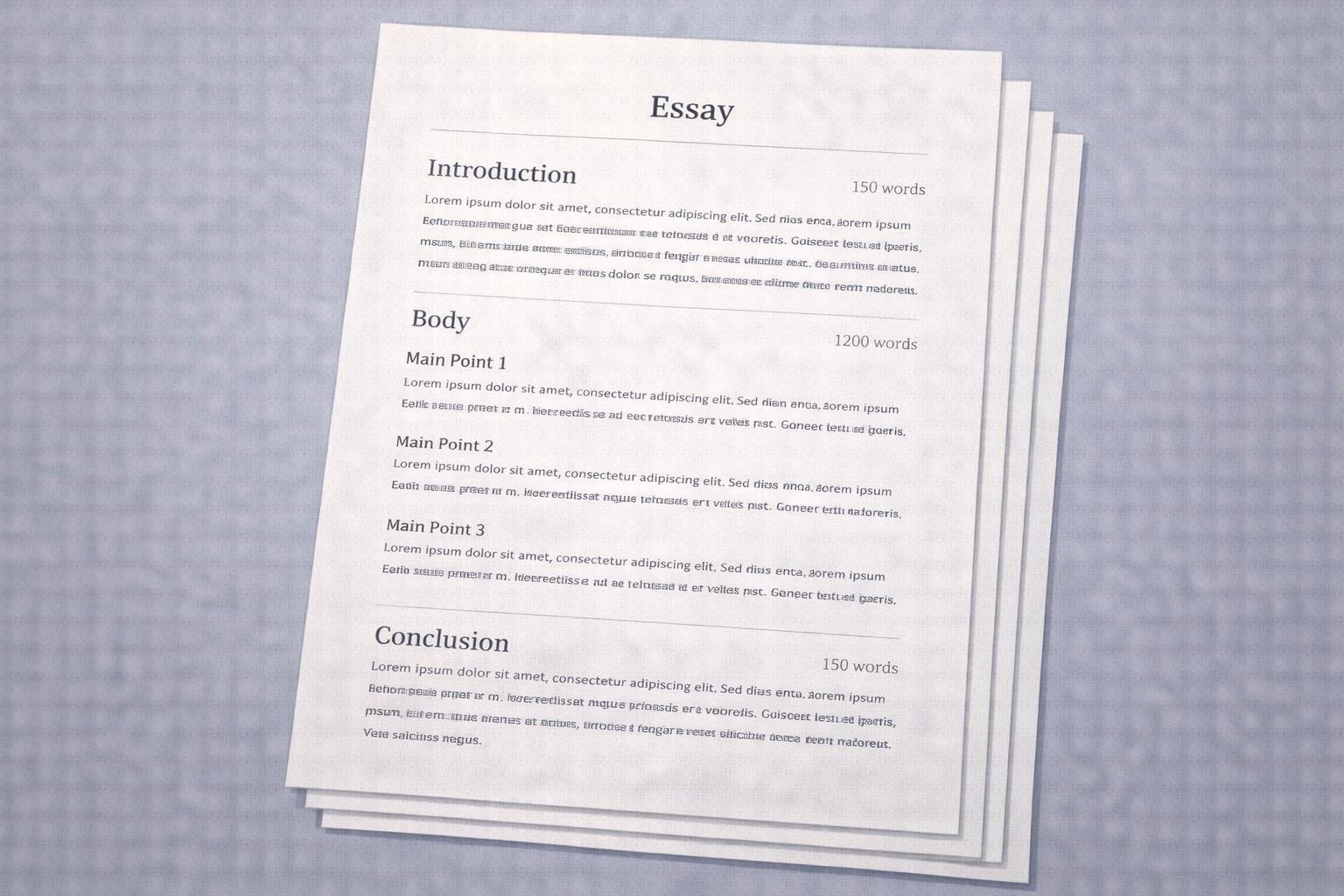
Many essays suffer from structural imbalance, where some sections are overly detailed while others are underdeveloped. Common examples include lengthy introductions paired with weak conclusions or excessively detailed background sections.
Academic essays should distribute attention proportionally across sections, prioritising analysis and argument development. Structural imbalance often signals poor planning or uncertainty about priorities.
Balanced structure helps guide the reader logically through the argument.
| Mistake | Academic Impact |
|---|---|
| Overlong introduction | Reduces space for analysis and argument development |
| Weak or rushed conclusion | Leaves argument unresolved or unclear |
| Excessive background information | Signals descriptive rather than analytical writing |
Structural awareness is a key marker of academic maturity.
Inconsistent or Incorrect Referencing
Referencing errors are among the most preventable essay mistakes. Inconsistent citation style, missing references, or incorrect formatting undermine academic credibility and can raise concerns about integrity.
Even when content is strong, poor referencing signals carelessness. Universities treat accurate citation as a fundamental academic skill rather than a technical detail.
Consistent adherence to the required referencing style is therefore essential.
Failure to Revise and Edit Properly
Many students submit essays without adequate revision, assuming that a completed draft is sufficient. This often results in unclear arguments, repetition, and avoidable language errors.
Effective revision focuses on structure and argument coherence before addressing grammar or formatting. Editing should refine expression, not compensate for weak organisation.
Time spent revising almost always translates into higher marks.
How to Systematically Avoid Common Essay Mistakes
Avoiding common essay mistakes requires a disciplined approach rather than last-minute corrections. Students who plan, draft, revise, and reflect on feedback improve consistently over time.
By understanding why these mistakes matter academically, students can write with greater confidence and control. Awareness transforms essay writing from guesswork into a structured academic process.
Strong essays are not accidental; they are the result of informed, deliberate writing choices.

Comments