
One of the most common and anxiety-provoking questions among doctoral candidates is how long a PhD thesis should be. While universities publish official word-count ranges, these numbers often feel abstract without clear explanation. Understanding what determines PhD thesis length is essential for planning, writing, and submitting a dissertation that meets academic expectations.
A PhD thesis is not assessed purely on length. Instead, word count functions as a boundary that encourages depth, originality, and coherence without unnecessary expansion. Writing significantly below or above the expected range can raise examiner concerns, even when the research itself is strong.
This article explains how long a PhD thesis typically is, why length varies across disciplines, what counts toward the word limit, and how examiners interpret thesis length during assessment.
Typical Word Count for a PhD Thesis
Most universities specify a maximum word count rather than a fixed target. This allows flexibility while ensuring the thesis remains a focused scholarly document rather than an unfocused compilation of material.
In general, a PhD thesis ranges between 70,000 and 100,000 words. However, this range is not universal and should always be interpreted in light of institutional regulations and disciplinary norms.
| Discipline | Common Word Count Range |
|---|---|
| Humanities | 80,000–100,000 words |
| Social Sciences | 75,000–90,000 words |
| Education | 70,000–90,000 words |
| Business & Management | 70,000–85,000 words |
| STEM (Science & Engineering) | 50,000–80,000 words |
These figures reflect common practice rather than rigid rules, but they provide a reliable planning benchmark.
Why PhD Thesis Length Varies by Discipline
Differences in PhD thesis length are largely driven by how knowledge is constructed and communicated within each academic field. Disciplines that rely heavily on theoretical argumentation and textual analysis naturally require more extended written discussion.
In humanities disciplines, such as history or philosophy, the thesis often develops sustained interpretive arguments across chapters. As a result, longer word counts are expected and accepted.
By contrast, science and engineering theses frequently prioritise experimental design, data presentation, and results. These dissertations may rely more on figures, equations, and tables, allowing them to remain shorter while still demonstrating originality.
Examiner expectation: A PhD thesis should be as long as necessary to demonstrate originality, rigor, and contribution—no longer.
What Counts Toward the PhD Thesis Word Limit
Understanding what is included in the official word count is critical. Many students unintentionally exceed limits by misunderstanding what sections are counted.
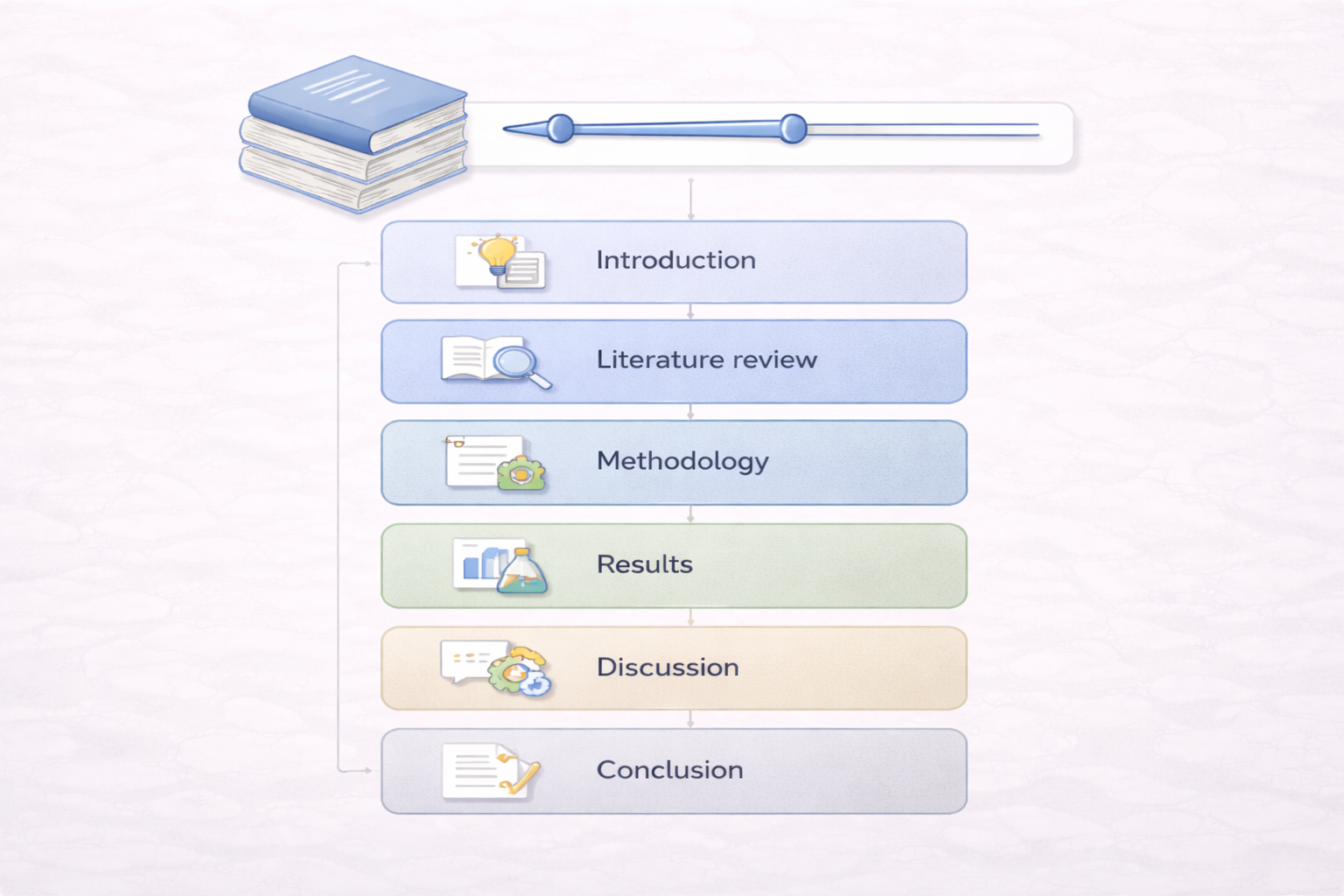
Although regulations vary slightly between universities, the main body of the thesis is almost always included in the word count.
- Introduction
- Literature review
- Methodology
- Findings or results
- Analysis and discussion
- Conclusion
Most institutions exclude certain elements from the word count, but these exclusions must be confirmed in official guidelines.
| Section | Usually Counted? |
|---|---|
| Abstract | No |
| References | No |
| Appendices | No |
| Footnotes | Sometimes |
| Tables & figures captions | Varies |
Students should always verify departmental rules, as assumptions can lead to costly last-minute revisions.
How Long Is Each Chapter in a PhD Thesis?
While total word count matters, examiners also assess balance across chapters. A disproportionately long or short chapter can signal weaknesses in design or argumentation.
Although exact distribution varies, many PhD theses follow a broadly similar pattern.
| Chapter | Typical Word Count |
|---|---|
| Introduction | 8,000–12,000 |
| Literature Review | 15,000–25,000 |
| Methodology | 10,000–15,000 |
| Findings / Results | 10,000–20,000 |
| Discussion | 10,000–20,000 |
| Conclusion | 5,000–8,000 |
These figures are indicative rather than prescriptive, but they help maintain structural coherence.
Does a Longer PhD Thesis Score Higher?
A common misconception is that longer theses are inherently stronger. In reality, examiners value precision, coherence, and originality far more than volume.
An excessively long thesis may indicate weak focus, repetition, or insufficient critical synthesis. Conversely, a shorter thesis that demonstrates clear contribution and methodological rigor can perform exceptionally well.
Critical warning: Writing to “reach the word count” rather than to answer the research question weakens academic quality.
Examiners assess whether the thesis justifies its length through sustained scholarly contribution.
Country-Specific Differences in PhD Thesis Length
PhD thesis length also varies internationally. Doctoral programs in the UK, Europe, and Australia often impose stricter word limits than those in North America.
For example, UK PhD theses commonly cap at 80,000 words, while US dissertations may exceed 100,000 words, especially in humanities disciplines.
These differences reflect variations in doctoral training models rather than differences in academic standards.
Managing Word Count Without Sacrificing Quality
Effective word-count management begins early. Planning chapter outlines and provisional word allocations helps prevent excessive rewriting late in the process.
Regular supervisor feedback is essential, particularly when chapters begin to expand beyond their intended scope.
Editing for clarity, removing redundancy, and tightening argumentation often improve quality while reducing length.
Final Guidance on PhD Thesis Length
So, how long is a PhD thesis? The most accurate answer is that it is long enough to demonstrate original contribution, rigorous methodology, and scholarly maturity within institutional guidelines.
Rather than aiming for a specific number, doctoral candidates should focus on clarity, coherence, and contribution. A well-structured thesis that respects word-count expectations signals professionalism and academic confidence.
Ultimately, examiners reward quality of thought, not quantity of words.


Comments