
• Successful students take responsibility for themselves and their actions.
• They take advantage of extra credit opportunities when offered, demonstrating their commitment to improving their grades.
• This presentation will cover four main areas:
- Time management
- Study techniques
- Participation and engagement
- Self-care and balance.
- Discipline
- Set goals

Time Management:
• Importance of time management
• Time management is crucial for balancing academics, social life, and personal activities.
• Effective time management can reduce stress and improve productivity
Key strategies include:
v creating schedules
v prioritizing tasks
v avoiding procrastination.

Time Management Tips
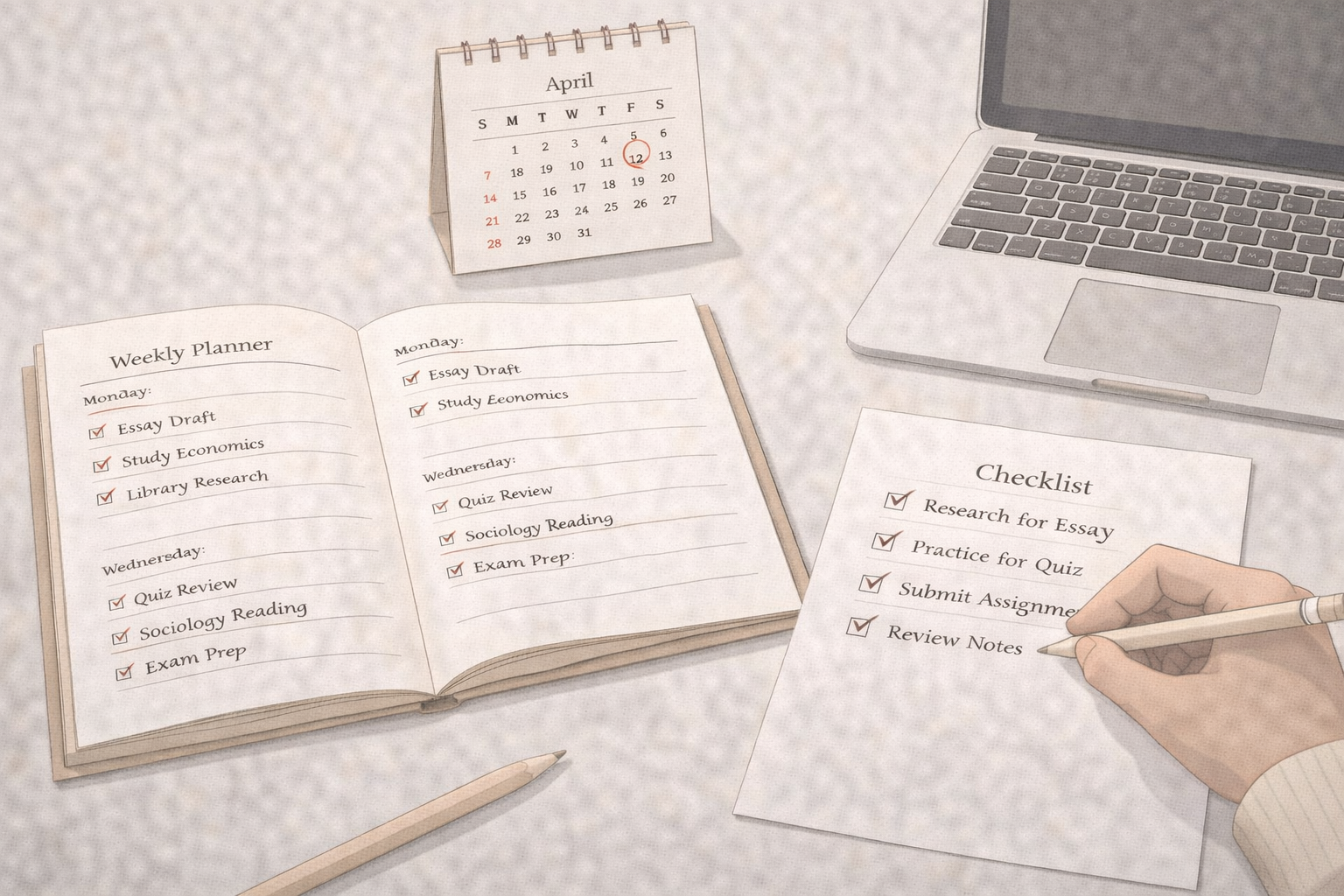
• Use a Planner or Digital Calendar: Helps keep track of assignments, deadlines, and activities.
• Set Specific Goals and Deadlines: Break down larger tasks into manageable steps with deadlines.
• Break Tasks into Smaller Steps: Makes tasks less overwhelming and more achievable.
• Allocate Time for Breaks and Leisure: Prevents burnout and maintains motivation.
Effective Study Techniques
• Effective study techniques can enhance learning and retention of information.
• Techniques include active reading, note-taking, and summarizing.
• Tailor study habits to fit different learning styles (visual, auditory, kinesthetic).

Study Techniques – Tips
• Create a Distraction-Free Study Environment: Find a quiet place to study with minimal interruptions.
• Use Mnemonic Devices: Help remember information through association.
• Practice Retrieval and Self-Testing: Regularly quiz yourself on the material.
• Join or Form Study Groups: Collaborative learning can provide new perspectives and motivation.
Participation and Engagement
• Active participation in class enhances understanding and retention of material.
• Benefits include better grades, improved critical thinking, and stronger relationships with instructors and peers.
• Ways to engage include asking questions, joining study groups, and attending office hours.

Tips for Participation
• Prepare Questions Before Class: Helps you engage with the material actively.
• Actively Listen and Take Notes: Stay engaged and retain information better.
• Engage in Class Discussions: Share your thoughts and learn from others.
• Seek Help When Needed: Utilize office hours and academic resources.

Self-Care and Balance
- Self-care is essential for maintaining physical and mental well-being.
- A balanced lifestyle helps manage stress and improves overall academic performance.
- Key aspects of self-care include regular exercise, a healthy diet, and adequate sleep.

Self-Care – Tips
- Get Regular Exercise: Physical activity boosts mood and energy levels.
- Maintain a Healthy Diet: Proper nutrition supports cognitive function and overall health.
- Practice Mindfulness and Relaxation Techniques: Reduces stress and enhances focus.
- Ensure Adequate Sleep: Essential for memory consolidation and cognitive function.

Goal Oriented
• Goals must be well defined and attainable. Goals can:
• Help you allocate time for important activities
• Improve your test preparation and study skills
• Help reduce stress related to academics
• Improve your problem identification and problem solving skills

Good Goals Entails:
• Characteristics of Good Goals:
v Basing them on your priorities
v Balance
v Being positive
v Being realistic, specific, and clear
v Being able to visualize your results

Discipline
• Self-discipline is indeed a crucial skill for success, as it involves the ability to regulate one's actions, emotions, and thoughts to achieve goals.
• Cultivating self-discipline: self-monitoring
• Consistent Routine:
• Establishing and maintaining a routine
• Self-accountability, rewards as motivation

Benefits of a daily routine
Here are the benefits of a daily routine:
v Reduces stress and anxiety.
v Improves sleep quality.
v Enhances physical health.
v Boosts mental health.
v Encourages discipline and consistency.
v Creates a sense of control and stability.
v Fosters better time management.
Conclusion
• In conclusion, we have explored key strategies for becoming an effective student, including time management, effective study techniques, active participation, and self-care.
• Each of these elements plays a crucial role in enhancing academic performance and overall well-being.
• By integrating these practices into your daily routine, you can improve productivity, reduce stress, and achieve a balanced lifestyle.
References
• Global Schools Foundation (2023). The importance of time management in a student’s life - GIIS Tokyo. [online] tokyo.globalindianschool.org. Available at: https://tokyo.globalindianschool.org/blog/importance-of-time-management-to-students#:~:text=Time%20management%20for%20students%20is.
• Gray, J. and Diloreto, M. (2017). The Effects of Student Engagement, Student Satisfaction, and Perceived Learning in Online Learning Environments. NCPEA International Journal of Educational Leadership Preparation, [online] 11(1). Available at: https://files.eric.ed.gov/fulltext/EJ1103654.pdf.
• Sparx Services (2024). Learning Styles Adaptation. [online] www.sparxservices.org. Available at: https://www.sparxservices.org/blog/learning-styles-adaptation [Accessed 25 Jul. 2024].
• Stony Brook University (2024). Academic Tips to Be a Sucessful Student | Academic and Transfer Advising Services. [online] www.stonybrook.edu. Available at: https://www.stonybrook.edu/commcms/advising/_students/students_support_tips.php#CharacteristicsofaSuccessfulStudent.
• Yadav, M. (2022). Diet, Sleep and Exercise: The Keystones of Healthy Lifestyle for Medical Students. Journal of Nepal Medical Association, 60(253), pp.841–843. doi:https://doi.org/10.31729/jnma.7355.

Comments