
Understanding how to build a conceptual framework is one of the most important skills in academic research. Whether you are writing a dissertation, thesis, or research proposal, your conceptual framework demonstrates how your study is grounded in theory and how key variables or constructs are logically connected. Without a strong framework, even well-designed research can appear fragmented or underdeveloped.
This guide explains how to build a conceptual framework step by step, clarifies common misconceptions, and provides structured examples across disciplines. By the end, you will understand not only what a conceptual framework looks like, but how to construct one that satisfies academic standards and examiner expectations.
What a Conceptual Framework Actually Does in Research
A conceptual framework is not simply a diagram placed in a methodology chapter. It is the intellectual foundation of your research. It identifies the core concepts, variables, or constructs relevant to your study and explains how they relate to one another based on theory and prior research.
In practical terms, a conceptual framework performs three key functions. First, it clarifies your research focus. Second, it connects your study to existing literature. Third, it guides methodological decisions by specifying what relationships you intend to investigate.
A conceptual framework organises theory into a structured model that explains how your research problem will be examined.
When constructed correctly, it acts as a roadmap that aligns your literature review, research questions, hypotheses, and methods.
Key Elements You Must Identify Before Building Your Framework
Before drawing any model or writing any explanation, you must clearly define the core components of your study. These components typically include:
- Key concepts or constructs derived from literature
- Independent and dependent variables (if applicable)
- Mediating or moderating variables
- Theoretical foundations supporting proposed relationships
Skipping this conceptual groundwork often leads to vague or incoherent frameworks. Academic clarity begins with precise definitions and careful reading of relevant theories.
Step-by-Step Process: How to Build a Conceptual Framework
The process of building a conceptual framework is systematic rather than creative guesswork. The following structured approach ensures theoretical consistency and academic rigour:
- Define your research problem clearly. A framework must respond directly to your research problem, not general topic interests.
- Conduct a focused literature review. Identify dominant theories and recurring constructs in existing scholarship.
- Select a guiding theory or combination of theories. These theories justify why relationships in your framework make sense.
- Identify key variables or constructs. Limit your framework to essential elements to avoid unnecessary complexity.
- Specify directional relationships. Clarify how variables influence, predict, or relate to one another.
- Present the framework visually and narratively. A diagram alone is insufficient; written explanation is essential.
Each step strengthens the logical structure of your research and ensures your framework is evidence-based rather than speculative.
Visual Structure of a Conceptual Framework
Conceptual frameworks are often presented as diagrams with boxes representing constructs and arrows indicating relationships. However, the diagram must reflect theoretical reasoning, not aesthetic design preferences.
The table below illustrates common structural relationships found in conceptual frameworks:
| Structure Type | Description | Example Relationship |
|---|---|---|
| Direct Effect | One variable directly influences another. | Study Time → Academic Performance |
| Mediated Effect | A third variable explains the relationship. | Leadership Style → Job Satisfaction → Productivity |
| Moderated Effect | The strength of the relationship depends on another factor. | Stress → Performance (moderated by Social Support) |
| Reciprocal Relationship | Variables influence each other. | Engagement ↔ Motivation |
This structural clarity ensures your conceptual framework aligns with empirical testing and theoretical justification.
Example: Education Research Framework
Consider a study examining the impact of digital learning tools on student academic achievement. A properly constructed conceptual framework might include digital tool usage as the independent variable, academic achievement as the dependent variable, and student engagement as a mediating variable.
The framework would be grounded in educational engagement theory, which explains how interactive learning increases motivation and cognitive investment. Arrows in the diagram would illustrate that digital tools influence engagement, which in turn influences performance.
Without theoretical grounding, such relationships would appear arbitrary. The framework’s strength lies in its academic justification.
Example: Business and Management Research Framework
In a study on employee innovation, constructs might include organisational culture, psychological safety, employee creativity, and innovation performance. Literature on organisational behaviour supports the claim that psychological safety mediates the relationship between culture and innovation outcomes.
The conceptual framework visually reflects this mediating pathway and clarifies how data collection and analysis will test these relationships.
Aligning Your Framework with Research Questions and Hypotheses
Your conceptual framework must align precisely with your research questions. Every arrow or relationship in the framework should correspond to a research question or hypothesis. If a relationship does not appear in your research questions, it should not appear in your framework.
Misalignment between framework and research questions is one of the most common academic weaknesses. Examiners often critique research proposals when the conceptual model does not match the stated objectives.
The table below illustrates how alignment works in practice:
| Framework Component | Linked Research Element | Example |
|---|---|---|
| Independent Variable | Research Question 1 | Does leadership style influence job satisfaction? |
| Mediator | Research Question 2 | Does psychological safety mediate this relationship? |
| Dependent Variable | Hypothesis Testing | Higher job satisfaction predicts improved productivity. |
This structured alignment enhances coherence across your entire study.
Common Mistakes When Building Conceptual Frameworks
Students frequently misunderstand the purpose of conceptual frameworks. Some treat them as decorative additions rather than analytical tools. Others overload the framework with too many variables, creating confusion rather than clarity.
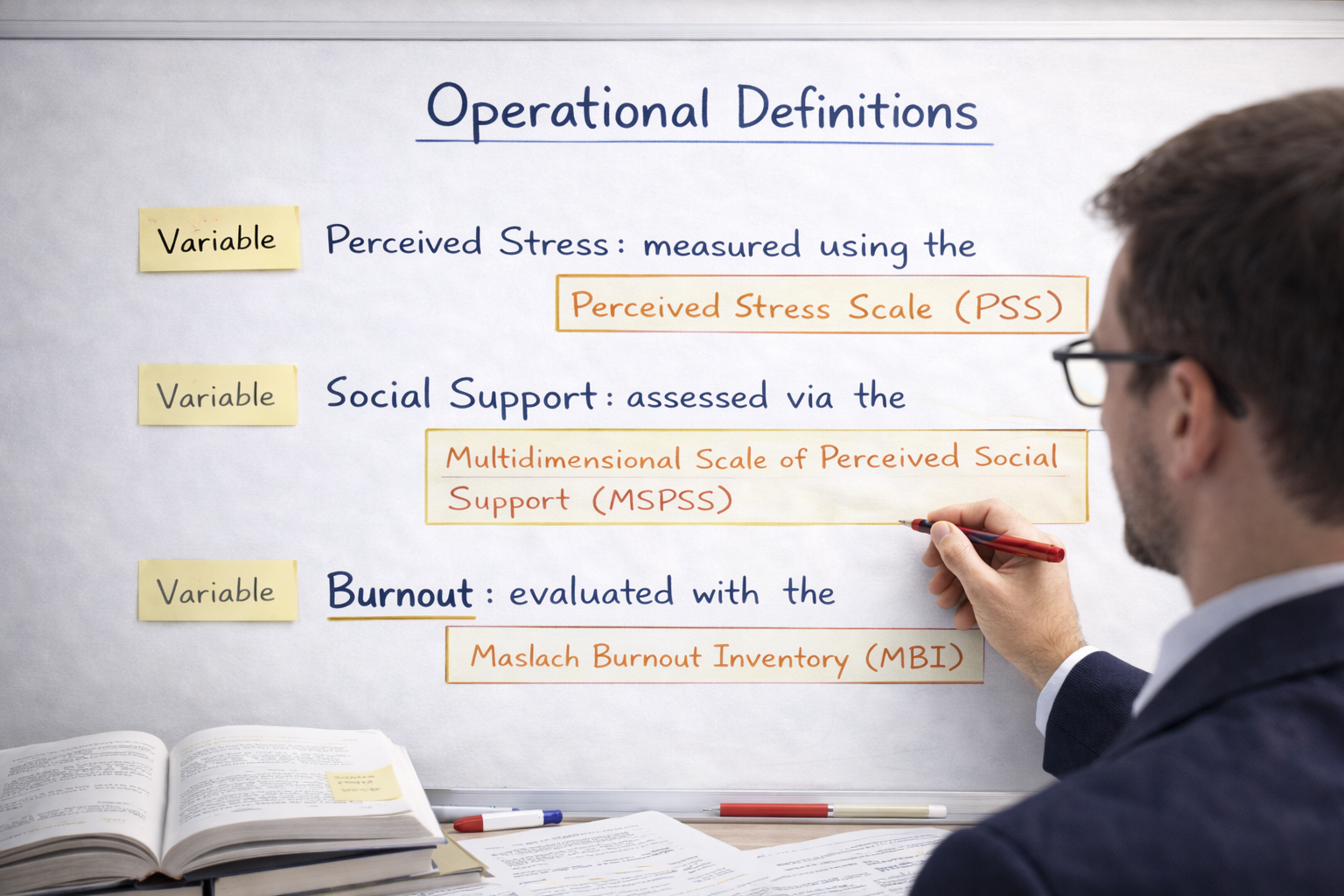
Another frequent mistake is failing to define constructs precisely. Vague terms such as “performance” or “effectiveness” require operational clarification within the narrative explanation accompanying the diagram.
A conceptual framework must be theoretically justified, clearly defined, and tightly aligned with research questions.
Conceptual Framework vs Theoretical Framework
Although often confused, conceptual and theoretical frameworks are not identical. A theoretical framework draws directly from established theories. A conceptual framework may incorporate multiple theories and empirical findings to construct a study-specific model.
In many postgraduate dissertations, the theoretical framework provides the foundation, while the conceptual framework operationalises that theory into measurable constructs and relationships.
Ensuring Academic Quality and Examiner Readiness
To ensure your framework meets academic standards, evaluate it against the following criteria:
- Are all constructs clearly defined?
- Are relationships grounded in peer-reviewed literature?
- Does the framework align with research questions and methodology?
- Is the model logically coherent and not unnecessarily complex?
If you can confidently answer yes to these questions, your framework is likely academically sound.
Final Academic Guidance: Building a Conceptual Framework with Confidence
Mastering how to build a conceptual framework transforms your research from descriptive writing into structured scholarly inquiry. A strong framework demonstrates intellectual control, theoretical awareness, and methodological clarity.
Rather than viewing the framework as a technical requirement, approach it as the backbone of your research design. When carefully constructed and clearly explained, your conceptual framework will strengthen every subsequent chapter of your thesis or dissertation and significantly improve academic credibility.
Comments