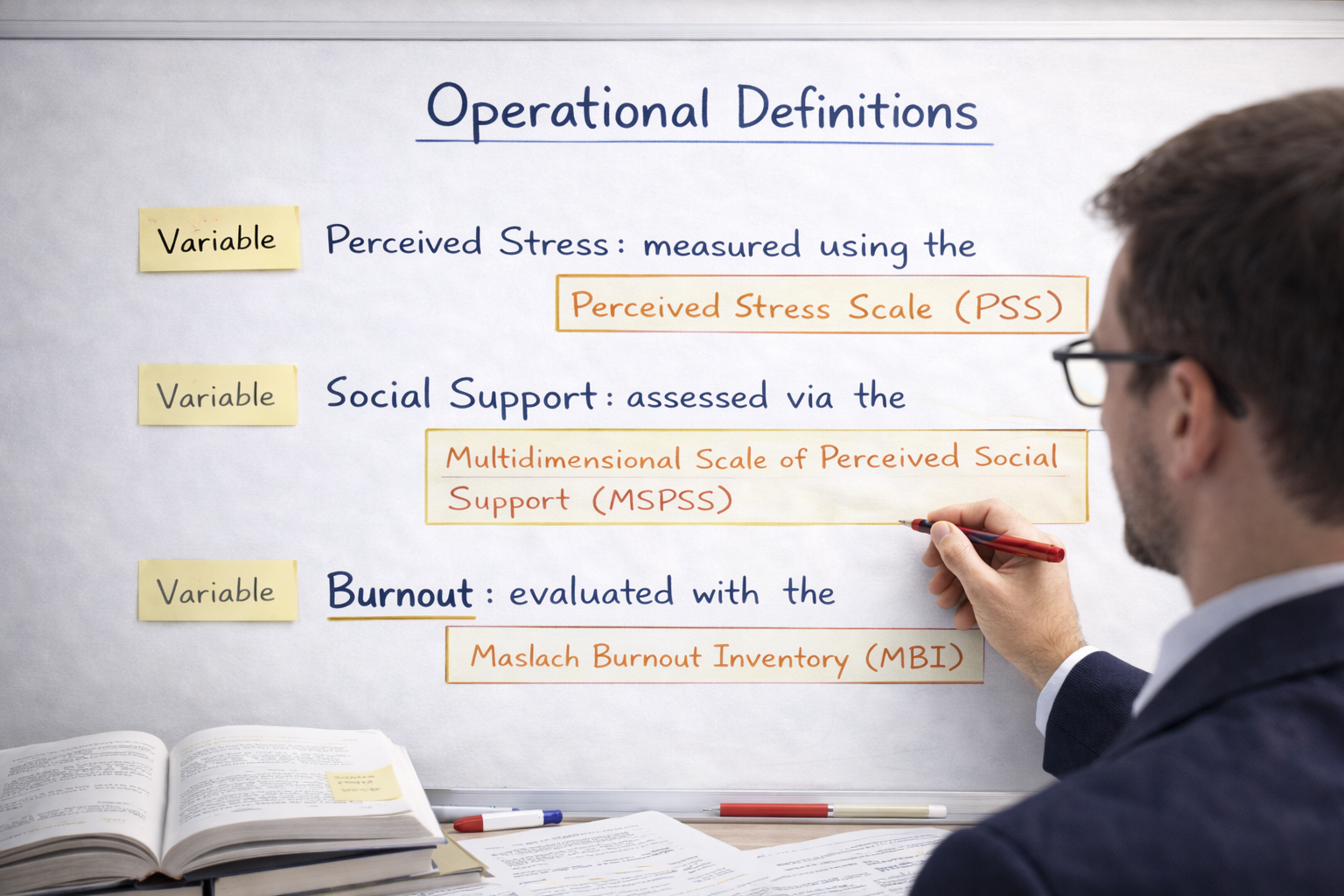
In academic research, one of the most critical tasks students must master is the operational definition of variables. Without clear definitions, studies risk ambiguity, poor measurement, and invalid conclusions. Many students confuse conceptual variables (like “motivation” or “stress”) with their measurable counterparts, resulting in weak research design and difficulty in data collection.
This article explains what operational definitions are, why they matter, and how to write them effectively. It offers multiple operational definition of variables example scenarios from different disciplines so that readers can understand how to define and measure variables in empirical research.
What Is an Operational Definition of Variables?
An operational definition of variables specifies how abstract concepts will be measured, observed, or manipulated in a research study. In simple terms, it translates theoretical constructs into observable and measurable elements that can be quantified or categorised.
Operational definitions make it possible for researchers and readers to understand exactly what is being studied and how it will be measured. Without operational definitions, research variables remain vague, leading to inconsistent findings and poor replicability.
An operational definition turns abstract research concepts into specific, measurable terms for empirical investigation.
For example, “academic performance” may conceptually refer to overall success in school, but operationally it could be defined as “student GPA at the end of the semester.” This specific definition clarifies what is measured and how.
Why Operational Definitions Matter in Research
Operational definitions are foundational to research quality and credibility. They ensure that variables are defined consistently for data collection and interpretation. In quantitative research, operational definitions are necessary to conduct statistical analysis. In qualitative research, they help clarify how constructs are observed or categorised.
Assessment panels and examiners often evaluate how well variables are defined because vague or inconsistent definitions undermine the validity of findings. Clear operational definitions also support transparency and replicability — two hallmarks of academic rigour.
Types of Variables That Require Operational Definitions
Not all variables are defined the same way. The most common types that require operationalisation include:
- Independent Variables: Variables that are manipulated or used to predict changes in another variable.
- Dependent Variables: Variables that are measured to assess the effect of the independent variable.
- Control Variables: Variables that are held constant to prevent confounding effects.
- Moderating/Mediating Variables: Variables that influence or explain the relationship between independent and dependent variables.
Operational definitions must be appropriate for the type of variable and aligned with research design.
How to Write Operational Definitions Step by Step
Creating an operational definition is a systematic process rather than guesswork. The following steps help ensure precision and academic coherence:
- Identify the conceptual variable: Begin with the theoretical term you intend to study.
- Review academic literature: Determine how other researchers have defined and measured similar variables.
- Select measurable indicators: Choose specific criteria, scores, or categories that represent the construct.
- Define measurement tools: Specify instruments, scales, tests, surveys, or observational protocols.
- Justify your choices: Explain why your operationalisation is appropriate for your study context.
Following these steps ensures that your operational definitions are grounded in both theory and practice.
Operational Definition of Variables Example in Psychology
Consider a study on the effect of sleep deprivation on cognitive performance. Here, “sleep deprivation” may conceptually refer to reduced sleep, but operationally it must be defined in measurable terms.
Operational Definitions:
- Sleep Deprivation (Independent Variable): Total hours of sleep < 6 hours for three consecutive nights measured via sleep diaries.
- Cognitive Performance (Dependent Variable): Score on a standardised cognitive assessment (e.g., reaction time test) administered in a controlled lab setting.
These definitions convert abstract concepts into measurable phenomena that can be systematically observed and statistically analysed.
Operational Definition of Variables Example in Education
In a study exploring the relationship between study habits and academic achievement, “study habits” may refer to various behaviours, but the researcher must decide how to measure them.
Operational Definitions:
- Study Habits (Independent Variable): Number of self-reported study hours per week using a validated study habits questionnaire.
- Academic Achievement (Dependent Variable): End-of-semester GPA obtained from official academic records.
This operationalisation ensures that both variables have clear, measurable indicators rooted in academic standards.
Operational Definition of Variables Example in Business Research
In research on employee motivation and productivity, “motivation” and “productivity” are abstract concepts requiring measurement clarity.
Operational Definitions:
- Employee Motivation (Independent Variable): Score on a validated workplace motivation scale (e.g., Likert scale survey).
- Employee Productivity (Dependent Variable): Number of tasks completed per week as recorded by the company’s performance tracking system.
These operational definitions allow researchers to collect and analyse data that directly reflect the constructs under study.
Operational Definition of Variables Example in Health Sciences
A health sciences study might investigate the relationship between physical activity and blood pressure. Conceptually, “physical activity” and “blood pressure” have broad meanings, but they must be operationalised precisely.
Operational Definitions:
- Physical Activity (Independent Variable): Minutes of moderate-to-vigorous physical activity per week as measured by wearable activity trackers.
- Blood Pressure (Dependent Variable): Average systolic and diastolic pressure measured using a standardised clinical device.
This operationalisation ensures that data collection is consistent and comparable across subjects.
How Operational Definitions Influence Research Design and Analysis
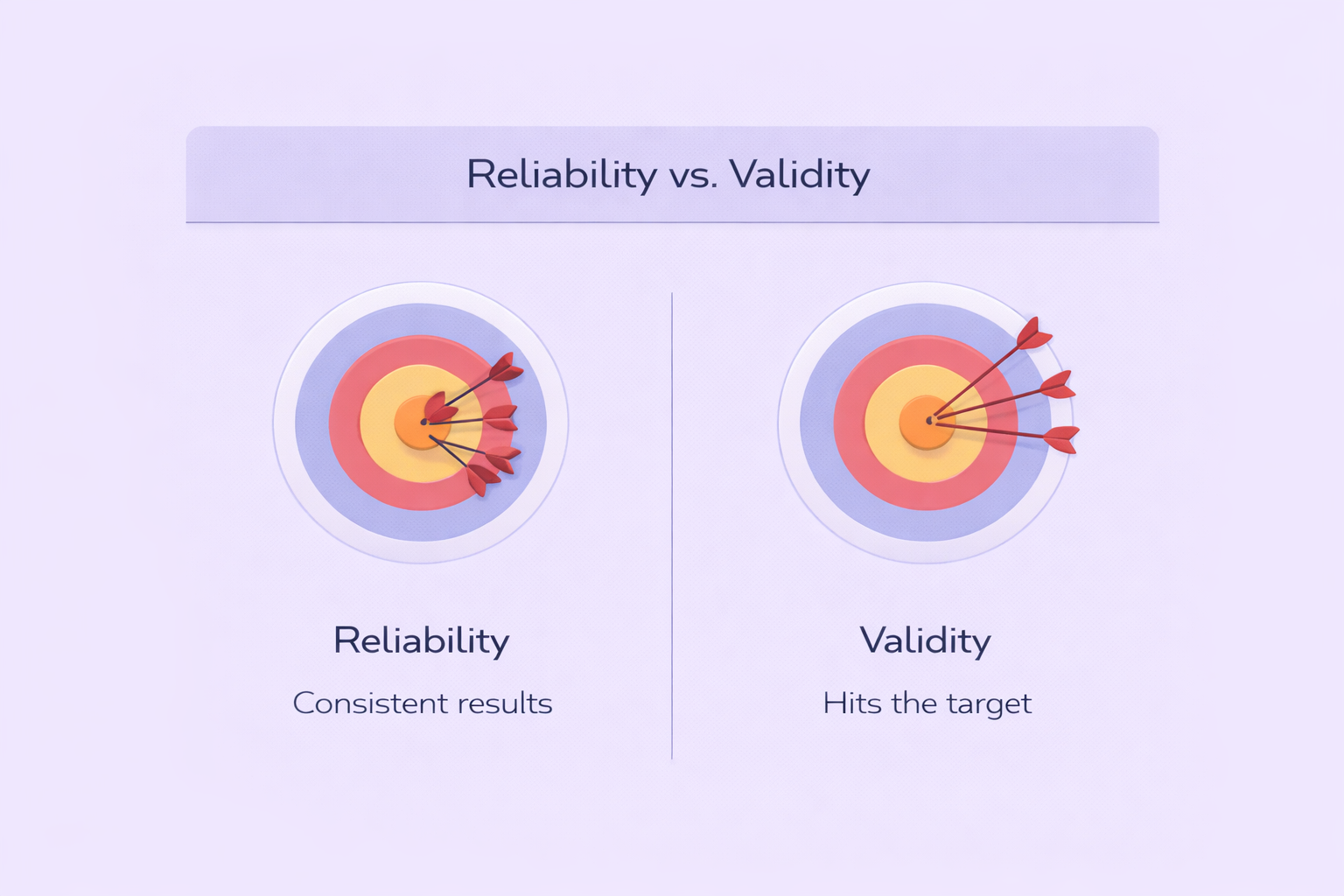
Operational definitions directly influence research design. They inform what instruments are used, what data are collected, and how results are interpreted. For example, choosing a self-report survey versus objective measures (e.g., physiological sensors) affects data quality, reliability, and validity.
Clear operational definitions also determine the type of statistical analysis that is appropriate. Nominal, ordinal, interval, and ratio data each require different analytical techniques. Without precise definitions, data may be misclassified, leading to incorrect conclusions.
Common Mistakes in Writing Operational Definitions
Students often make several avoidable mistakes when defining variables. One common error is defining variables conceptually without specifying how they will be measured. Another mistake is choosing inappropriate measurement tools that do not align with the construct. For example, using a general happiness scale to measure job satisfaction would be conceptually misaligned.
Another frequent issue is failing to reference prior studies when selecting operational definitions. Ignoring the literature can result in definitions that lack academic legitimacy and make comparison with other research difficult.
Operational definitions must be measurable, justified with literature, and aligned with research design to ensure validity and reliability.
Evaluating Your Operational Definitions
Before finalising your operational definitions, evaluate them against the following criteria:
- Are the definitions measurable with available tools or instruments?
- Are they grounded in academic literature?
- Do they align with your research questions and hypotheses?
- Are they specific rather than vague or broad?
Meeting these criteria ensures that your study is both academically credible and methodologically sound.
Linking Operational Definitions to Your Entire Study
Operational definitions are not isolated elements; they connect directly to every stage of research. They influence the data collection process, determine analytical methods, and affect how results are interpreted and presented. For example, operationalising “stress” as cortisol levels versus self-reported anxiety scores will lead to very different datasets and conclusions.
Therefore, operational definitions should be revisited throughout the research process to ensure consistency and accuracy.
Final Academic Guidance on Defining Variables
Understanding how to write operational definitions of variables is essential for quality academic research. Clear, justified, and measurable definitions strengthen research design, enhance validity, and improve the interpretability of findings. By studying operational definition of variables example scenarios and following a structured process, students can avoid common pitfalls and produce research that withstands academic scrutiny.

Comments