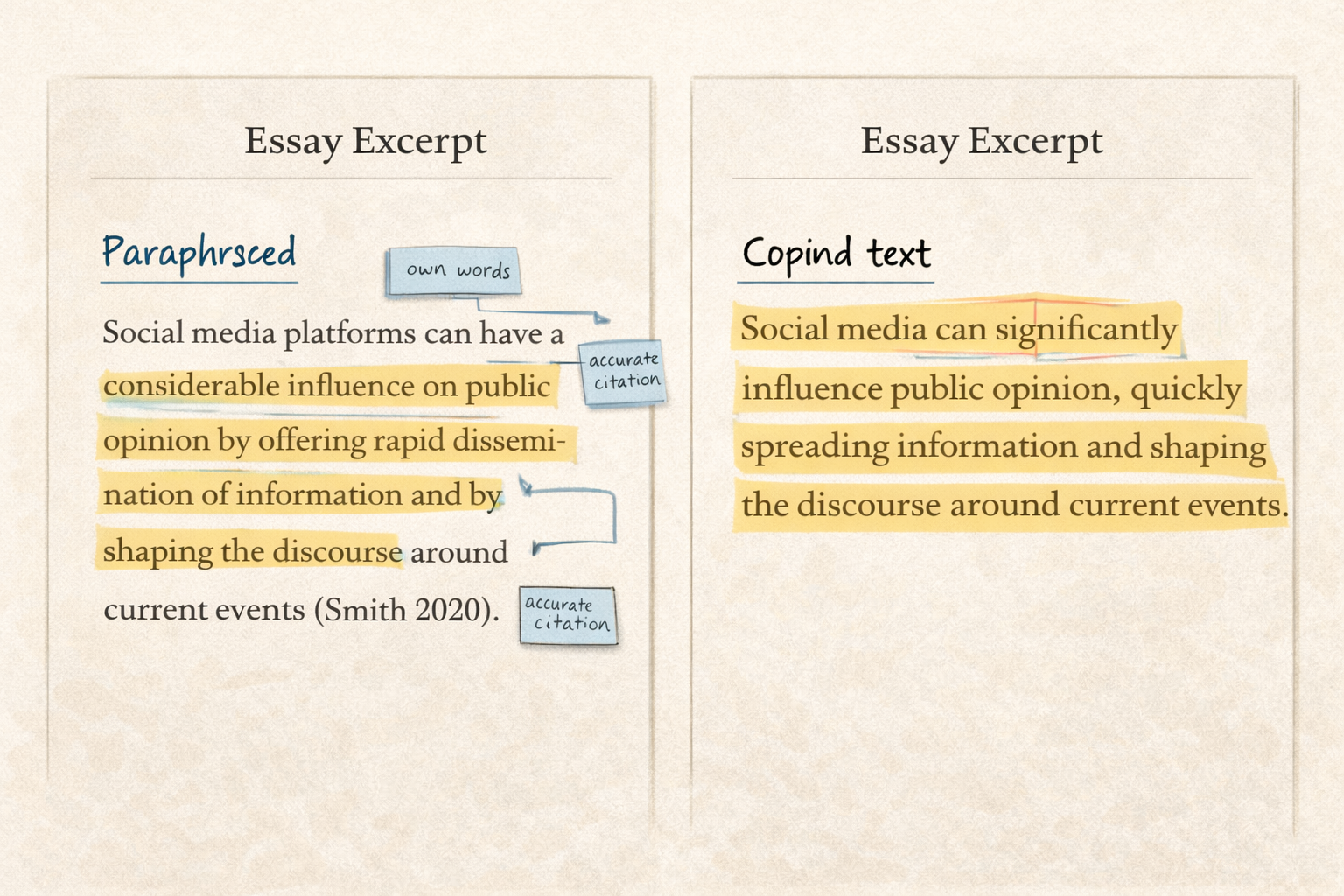
In academic writing, few distinctions are as important—and as frequently misunderstood—as the difference between paraphrasing and plagiarism. Many students assume that changing a few words is enough to make borrowed material acceptable, while others fear that using sources at all may expose them to misconduct allegations.
This confusion is understandable. Academic work requires constant engagement with existing scholarship, yet universities enforce strict standards on originality and attribution. This article clarifies the conceptual and practical boundary between paraphrasing and plagiarism, explains how examiners evaluate paraphrased material, and offers academically sound strategies for integrating sources responsibly.
Why the Difference Between Paraphrasing and Plagiarism Matters
Paraphrasing is not simply a writing technique; it is a demonstration of comprehension. When done correctly, it shows that a student has understood a source well enough to restate its ideas in a new analytical context.
Plagiarism, by contrast, undermines the fundamental purpose of academic assessment. It misrepresents another author’s intellectual labour as the student’s own, whether deliberately or through poor academic practice. Universities therefore treat plagiarism as a breach of academic integrity, regardless of intent.
Core principle: Paraphrasing transforms ideas; plagiarism reproduces them.
What Paraphrasing Actually Means in Academic Writing
Proper paraphrasing involves more than substituting synonyms or rearranging sentence structure. It requires a shift in wording, emphasis, and often perspective, while preserving the original meaning of the source.
Academically acceptable paraphrasing also requires citation. Even when no original phrasing remains, the underlying idea still belongs to the source author and must be acknowledged.
Paraphrasing as an Analytical Skill
Strong paraphrasing often embeds source material within the student’s own argument. Rather than standing alone, the paraphrased idea is interpreted, evaluated, or connected to other scholarship.
This integration signals intellectual engagement, which examiners value far more than surface-level originality.
What Constitutes Plagiarism Beyond Copying
Plagiarism is commonly associated with copying and pasting text, but academic misconduct extends beyond direct duplication. Patchwriting, close paraphrasing, and uncited idea borrowing all fall under plagiarism in most institutional policies.
Unintentional plagiarism is particularly common among students who understand the need to paraphrase but lack training in how to do so effectively.
| Practice | Description | Academic Status |
|---|---|---|
| Proper paraphrasing | Rewriting ideas in new language with citation | Acceptable |
| Close paraphrasing | Minor wording changes with original structure | Problematic |
| Patchwriting | Mixing copied phrases with edits | Often plagiarism |
| Uncited paraphrase | Restated ideas without attribution | Plagiarism |
| Direct copying | Verbatim text without quotation or citation | Plagiarism |
This comparison highlights why paraphrasing quality matters as much as citation accuracy.
Why Synonym Swapping Fails as Paraphrasing
One of the most persistent student errors is synonym substitution. Changing individual words while preserving sentence structure and sequencing leaves the original author’s linguistic fingerprint intact.
Similarity detection tools and human examiners can easily identify such patterns. More importantly, synonym swapping does not demonstrate understanding, which weakens academic credibility.
Examiner warning: If the sentence structure mirrors the source, the paraphrase is likely inadequate.
How Examiners Evaluate Paraphrased Material
Markers do not assess paraphrasing in isolation. They consider how sources function within the argument, whether citations are accurate, and whether the student’s voice remains dominant.
Paraphrased passages that merely replicate textbook explanations without interpretation often attract scrutiny, even when cited correctly.
The Role of Citation in Ethical Paraphrasing
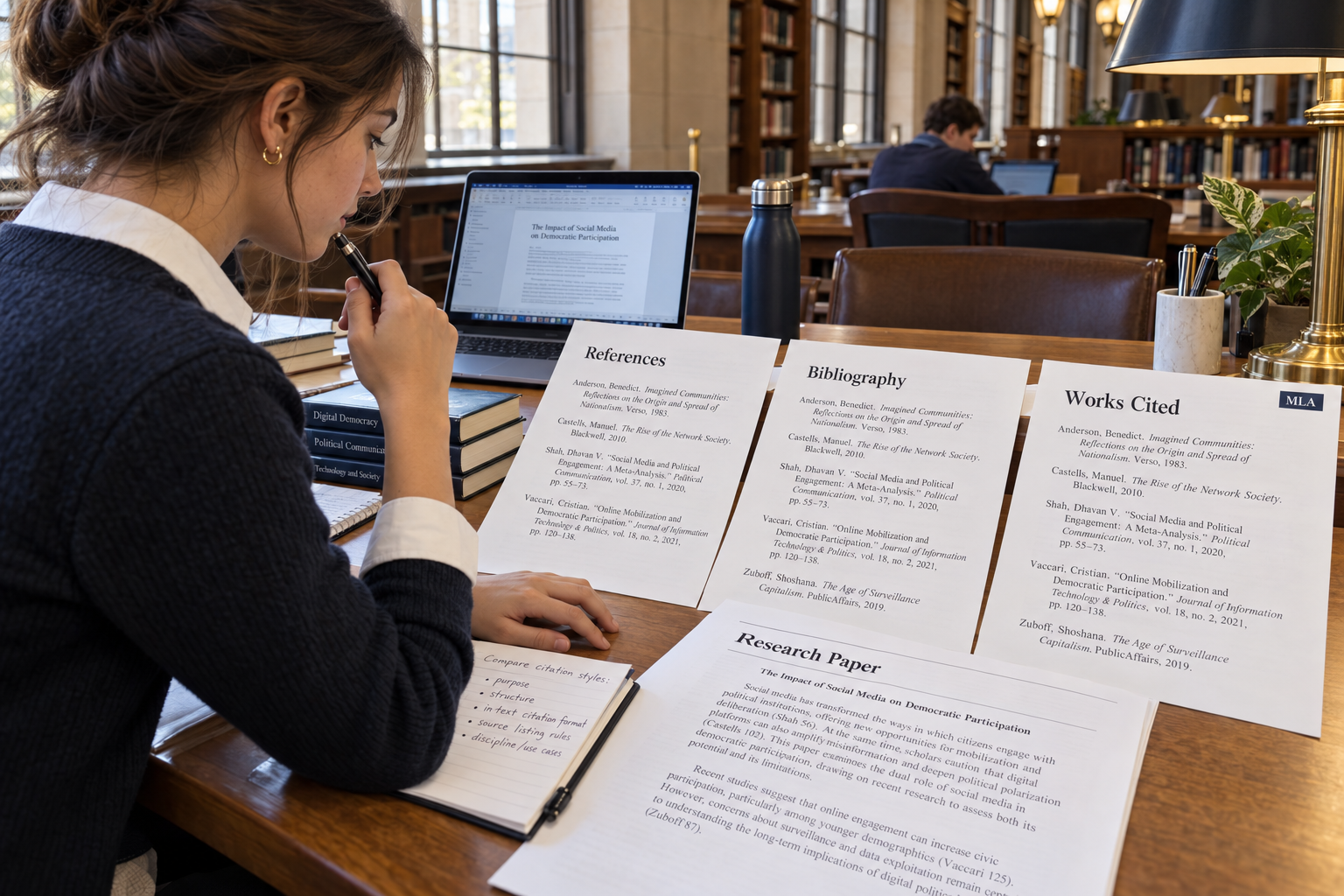
Citation is non-negotiable in paraphrasing. Regardless of wording changes, the intellectual origin of the idea must be acknowledged using the required referencing style.
Students who struggle with citation consistency often benefit from structured academic review, such as editing and proofreading support, which focuses on clarity, attribution, and disciplinary conventions.
Paraphrasing Across Disciplines
Expectations for paraphrasing vary by field. In scientific and technical disciplines, standardised language limits how much phrasing can be altered without losing precision.
In contrast, humanities and social sciences place greater emphasis on interpretive voice, making close paraphrasing more problematic.
Paraphrasing in Literature Reviews and Dissertations
Extended research projects require sustained engagement with existing scholarship, making paraphrasing unavoidable. Supervisors expect careful synthesis rather than extensive quotation.
Maintaining a clear distinction between source material and original contribution is essential, particularly in dissertations. Structured guidance, such as dissertation writing support, helps students develop this balance without ethical risk.
Using Similarity Reports to Improve Paraphrasing
Similarity reports can reveal overreliance on source phrasing, even when citations are present. When used diagnostically, they help students identify passages that need deeper reworking.
Critical mistake: Revising paraphrases only to reduce similarity percentages often leads to distorted meaning and weaker arguments.
Ethical Strategies for Strong Paraphrasing
Effective paraphrasing begins before writing. Taking notes without looking directly at the source encourages conceptual understanding rather than textual imitation.
- Read the source fully and identify its core claim
- Set the source aside before drafting
- Write the idea in your own argumentative context
- Check accuracy against the original
- Add precise citation
This process prioritises comprehension over mechanical rewriting.
Paraphrasing, AI Tools, and Academic Responsibility
AI-based paraphrasing tools raise additional ethical concerns. While they may reduce textual similarity, they do not guarantee academic integrity or conceptual accuracy.
Universities increasingly expect students to take responsibility for the intellectual content of their work, regardless of drafting tools used.
Drawing the Boundary with Confidence
The distinction between paraphrasing and plagiarism rests on understanding, attribution, and intellectual honesty. When students engage critically with sources and integrate them into original arguments, paraphrasing becomes an asset rather than a risk.
Mastering this skill not only protects academic standing but also strengthens analytical writing across disciplines.
Comments