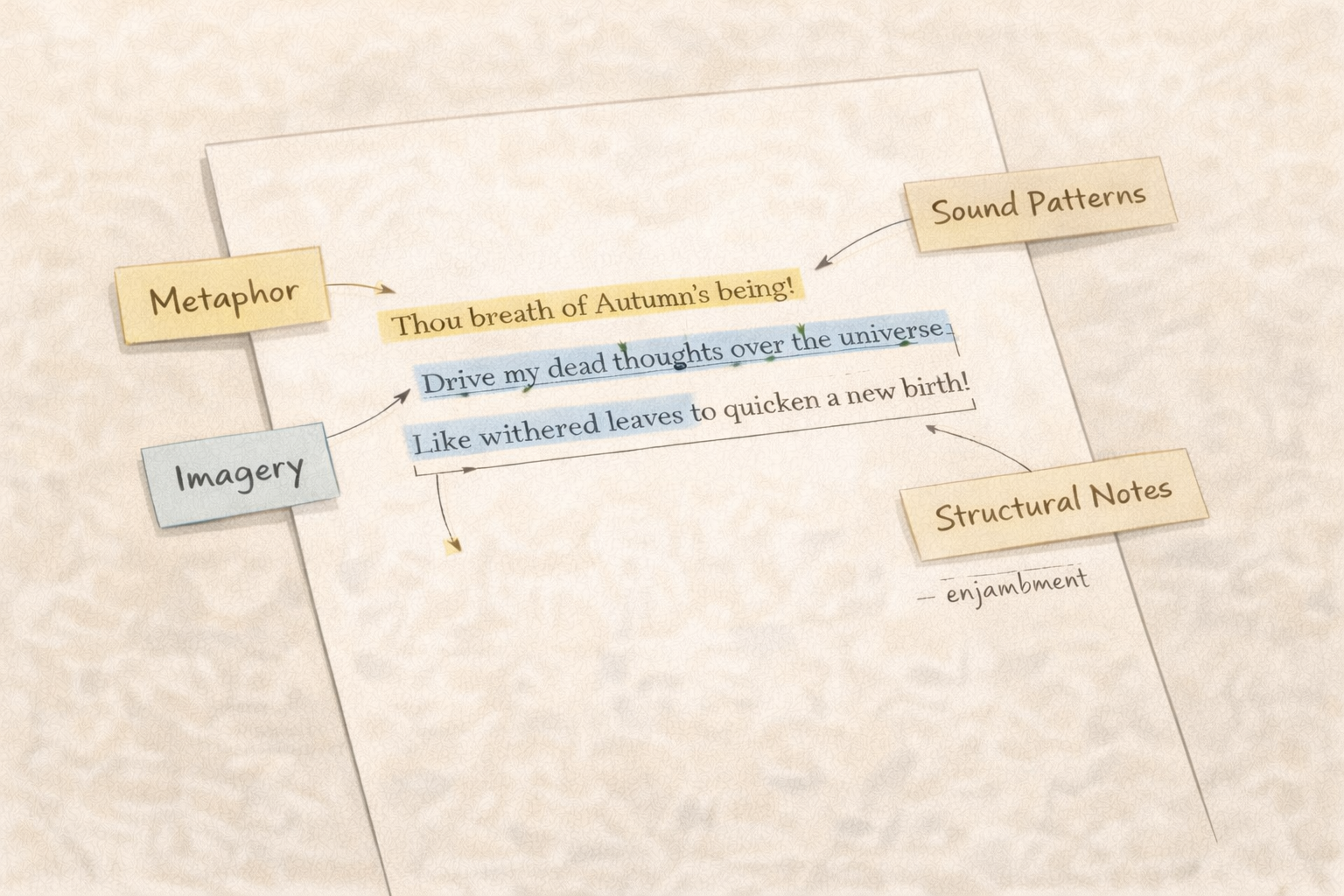
Poetic devices are central to how poetry communicates meaning beyond its literal words. While themes and ideas often receive the most attention, it is poetic technique that shapes how readers experience emotion, rhythm, imagery, and interpretation.
This article provides a comprehensive academic guide to poetic devices. It explains what poetic devices are, how they function, and how students should analyse them critically in essays, coursework, and examinations.
What Poetic Devices Mean in Literary Analysis
Poetic devices are deliberate techniques used by poets to enhance meaning, sound, structure, and emotional impact. They operate at multiple levels of language, including sound, imagery, syntax, and symbolism.
In academic study, poetic devices are not treated as decorative features. Instead, they are analysed as functional elements that shape interpretation and guide reader response.
Academic definition: A poetic device is a deliberate linguistic or structural technique that contributes directly to a poem’s meaning or effect.
Sound-Based Poetic Devices and Their Effects
Sound devices influence how a poem is heard, even when read silently. They contribute to rhythm, mood, and emphasis, shaping the poem’s emotional tone.
Analysing sound devices requires attention to how repetition, contrast, or musicality supports the poem’s themes rather than merely identifying the technique.
Alliteration, Assonance, and Consonance
Alliteration involves the repetition of initial consonant sounds, while assonance and consonance repeat vowel or consonant sounds within words. These techniques can create harmony, tension, or emphasis.
In academic analysis, students should explain how sound repetition reinforces meaning, such as mimicking movement, emotion, or atmosphere.
Rhyme and Rhythm
Rhyme links words through shared sounds, creating patterns that shape reader expectations. Rhythm emerges from stress patterns and pacing.
Disruptions in rhyme or rhythm often signal shifts in tone or meaning and should be analysed as intentional choices.
Imagery and Descriptive Poetic Devices
Imagery appeals to the senses and allows abstract ideas to be experienced concretely. It is one of the most powerful tools in poetry.
Effective analysis explains how imagery shapes interpretation rather than simply describing what is pictured.
Visual, Auditory, and Tactile Imagery
Poems often combine multiple sensory images to create immersive experiences. Visual imagery may dominate, but sound, touch, taste, and smell also contribute.
Academic writing should explore why certain senses are emphasised and how they relate to theme or speaker perspective.
Simile and Metaphor
Similes compare ideas explicitly using words such as “like” or “as,” while metaphors imply comparison directly. Both create layers of meaning.
Strong analysis moves beyond identifying comparisons to explaining their implications and limitations.
Figurative Language and Meaning Construction
Figurative devices allow poets to express complex ideas indirectly. They invite interpretation rather than offering fixed meanings.
Students should consider how figurative language opens multiple interpretive possibilities rather than seeking a single “correct” meaning.
Symbolism
Symbols are objects or images that carry meanings beyond their literal sense. Unlike metaphors, symbols often remain open-ended.
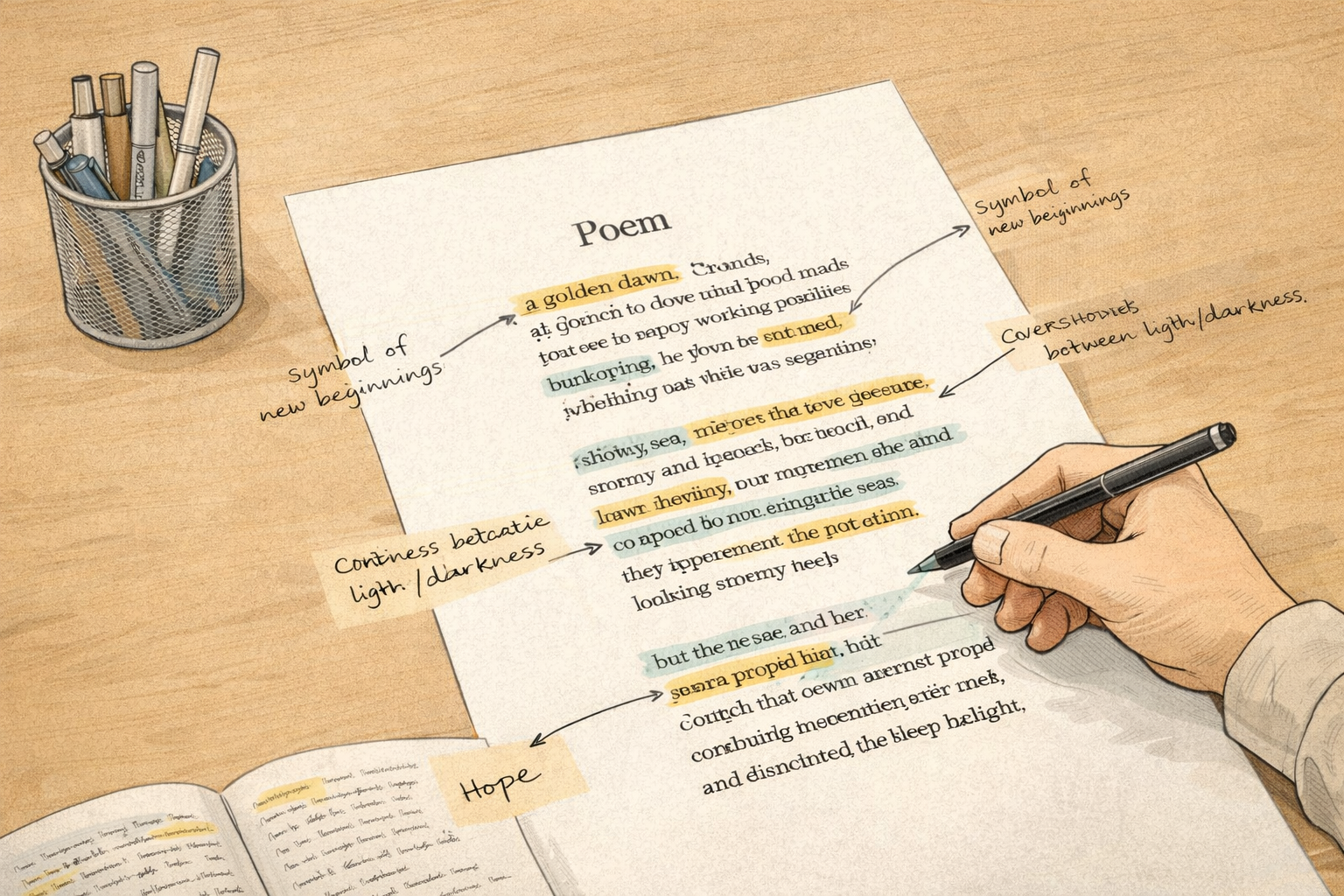
Academic analysis should justify symbolic interpretations with textual evidence and avoid unsupported assumptions.
Personification
Personification attributes human qualities to non-human entities. This device can create emotional connection or highlight abstract forces.
Analysis should focus on why the poet humanises an object and what this reveals about perspective or theme.
Structural Poetic Devices
Structure operates as a poetic device in its own right. Line breaks, stanza arrangement, and repetition shape how meaning unfolds.
Structural choices often mirror emotional or thematic development within the poem.
Repetition and Refrain
Repetition reinforces key ideas and can signal obsession, emphasis, or emotional intensity.
In academic essays, repetition should be analysed in relation to placement and variation, not treated as mere redundancy.
Enjambment and Caesura
Enjambment propels readers forward across line breaks, while caesura introduces pauses within lines.
These devices influence pacing and emphasis and often reflect emotional or psychological states.
| Poetic Device | Primary Function | Analytical Question |
|---|---|---|
| Metaphor | Conceptual comparison | What ideas are being linked? |
| Imagery | Sensory engagement | Which senses are emphasised? |
| Repetition | Emphasis and structure | Why is this idea repeated? |
| Sound devices | Rhythm and tone | How does sound shape mood? |
This table highlights how poetic devices should be analysed through purpose rather than identification alone.
Tone and Mood as Device Outcomes
Tone reflects the speaker’s attitude, while mood describes the emotional atmosphere experienced by the reader. Poetic devices collectively shape both.
Academic analysis should trace how multiple devices work together to establish tone and mood rather than attributing them to a single feature.
Irony and Ambiguity in Poetry
Irony occurs when meaning diverges from expectation, while ambiguity allows multiple interpretations to coexist. Both are common in poetry.
Students should acknowledge ambiguity rather than forcing definitive conclusions, supporting interpretations with careful textual reasoning.
Examiner warning: Listing poetic devices without explaining their effect does not constitute analysis.
Common Errors When Analysing Poetic Devices
A frequent mistake is “feature spotting,” where students identify devices without interpretation. This approach lacks analytical depth.
Another error is overgeneralisation, such as assuming a device always produces the same effect across different poems.
Integrating Poetic Devices into Academic Essays
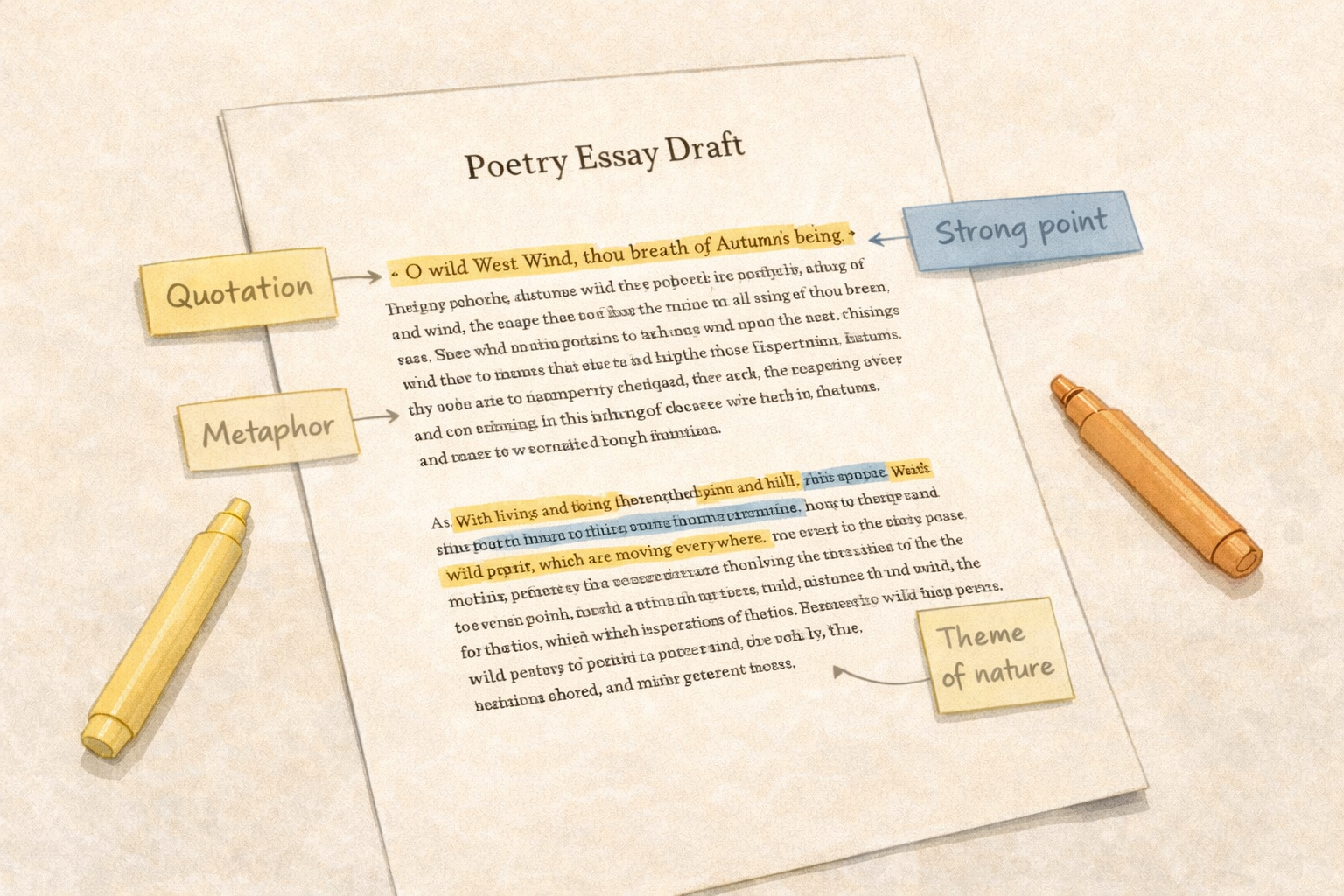
Poetic devices should be woven into argumentation rather than discussed in isolation. Each analytical paragraph should link technique to meaning.
Clear topic sentences and precise terminology strengthen academic credibility.
Developing Advanced Analytical Skill
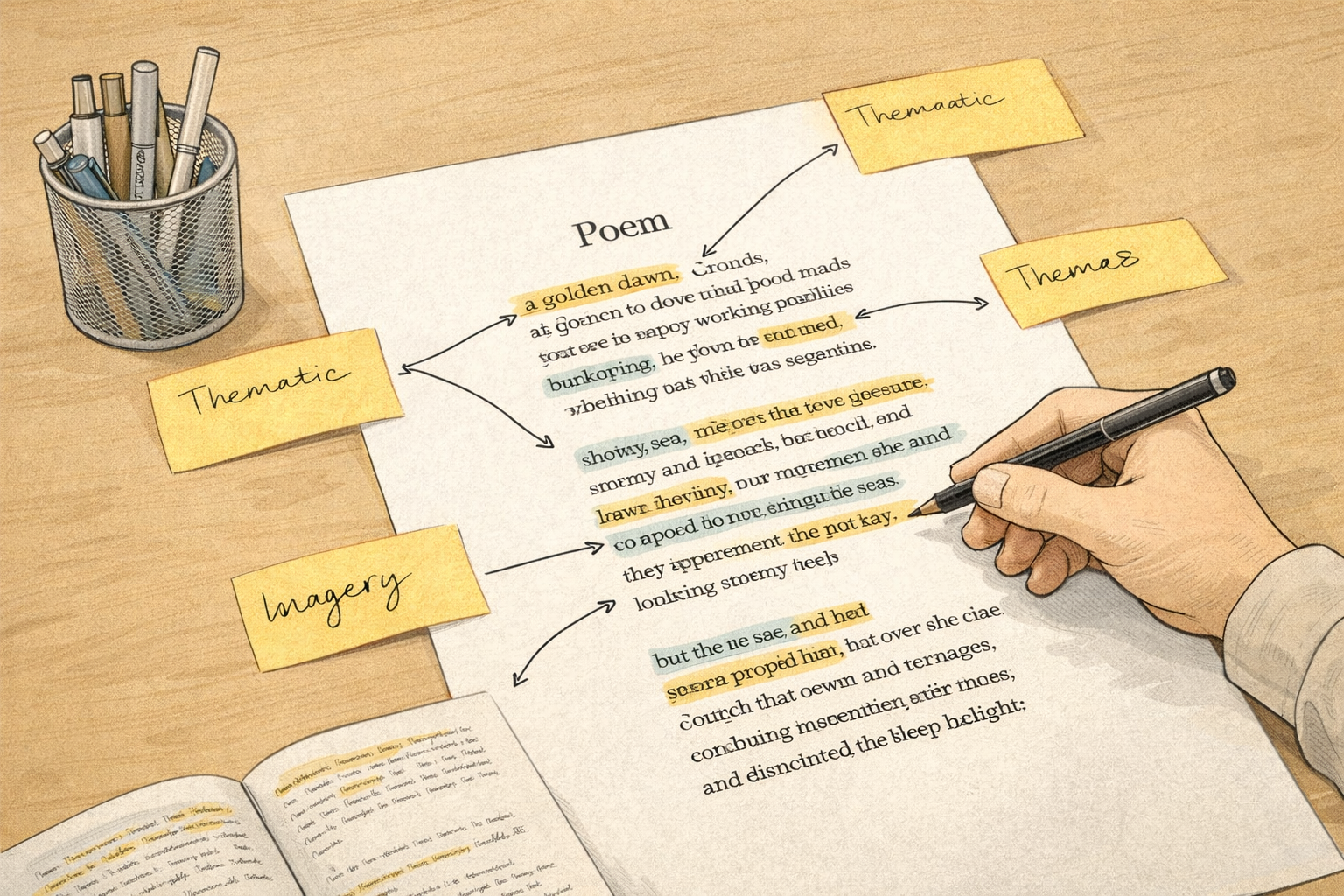
Advanced analysis recognises that devices interact rather than function independently. Sound, imagery, and structure often reinforce one another.
Students should aim to analyse patterns across the poem rather than isolated examples.
Final Guidance on Analysing Poetic Devices
Poetic devices are essential tools for understanding how poems create meaning, emotion, and complexity. Academic analysis requires explaining how these techniques function within the poem’s broader argument.
By focusing on purpose, interaction, and evidence, students can produce confident, high-quality literary analysis grounded in close reading.
Comments