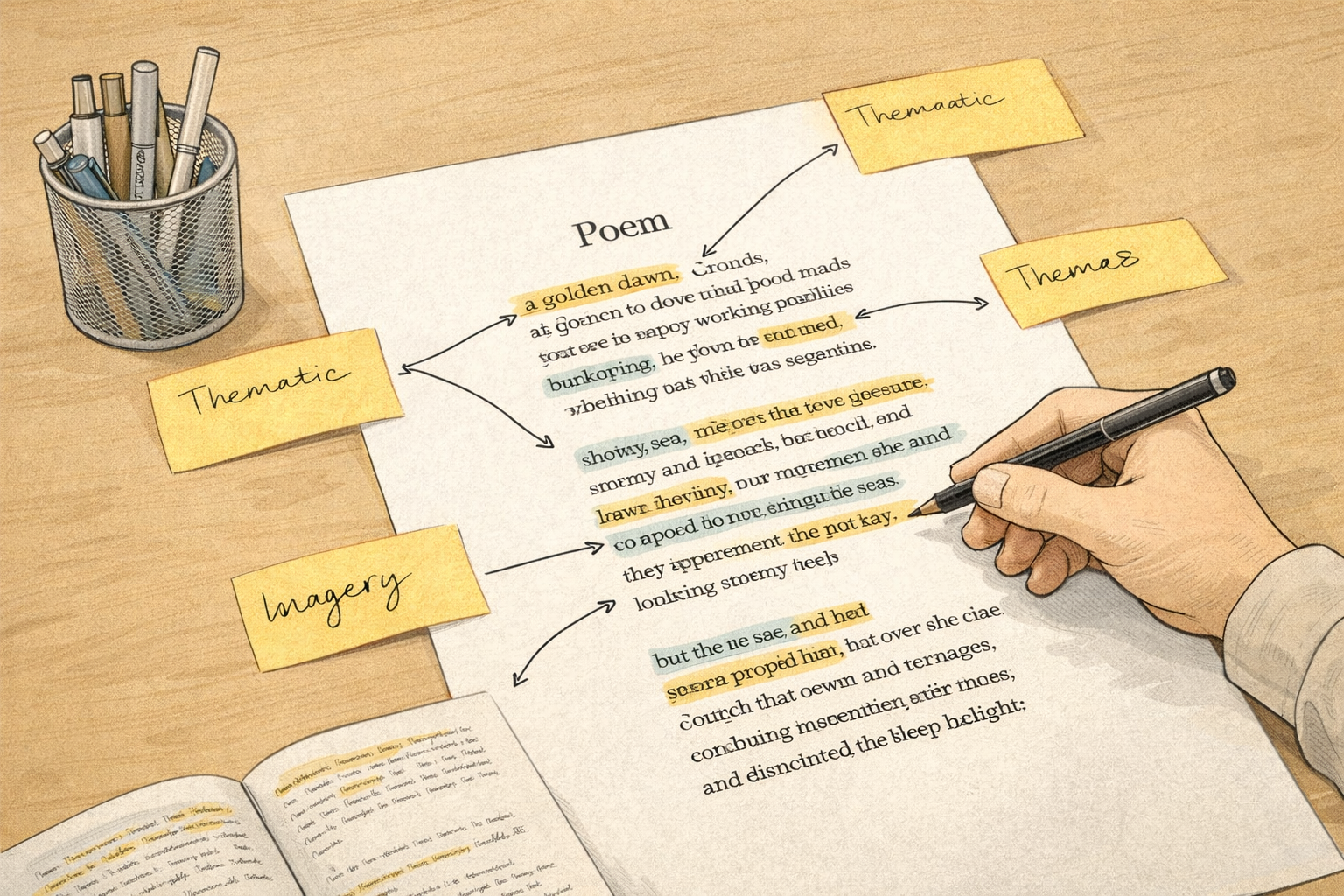
Themes in poetry represent the underlying ideas, concerns, or questions that a poem explores beyond its surface narrative. At university level, understanding poetic themes is essential because most poetry essays are assessed on how convincingly a student can identify, analyse, and interpret these deeper meanings.
Many students struggle with themes in poetry because they are rarely stated explicitly. Instead, themes emerge gradually through imagery, tone, structure, and poetic devices. This article explains how themes function in poetry, how they are developed, and how to analyse them in a rigorous academic way.
What Are Themes in Poetry?
Themes in poetry are the central ideas or conceptual concerns that give a poem its intellectual and emotional coherence. Unlike topics, which describe what a poem is about at a surface level, themes address what the poem is saying about that subject.
For example, a poem about war may explore themes such as loss, trauma, patriotism, or the futility of violence. Strong poetry analysis focuses on these thematic interpretations rather than simple description.
Key definition: A theme in poetry is an abstract idea developed through language, imagery, and form, not a single word or subject label.
Theme vs Subject: A Common Student Confusion
One of the most frequent errors in poetry analysis is confusing the poem’s subject with its theme. The subject refers to the literal content, while the theme reflects the poem’s interpretive meaning.
High-quality academic responses always move from subject to theme by asking what the poem suggests, questions, or critiques through its representation of that subject.
How Themes Are Developed in Poetry
Themes in poetry are rarely announced directly. Instead, poets develop them through a combination of formal and linguistic choices that accumulate meaning across the poem.
Recognising these methods helps students support their interpretations with textual evidence rather than unsupported opinion.
Language and Diction
Word choice plays a crucial role in shaping theme. Repeated words, emotive diction, and semantic fields often point toward underlying concerns.
For example, persistent references to darkness, silence, or fragmentation may suggest themes of isolation or despair.
Imagery and Symbolism
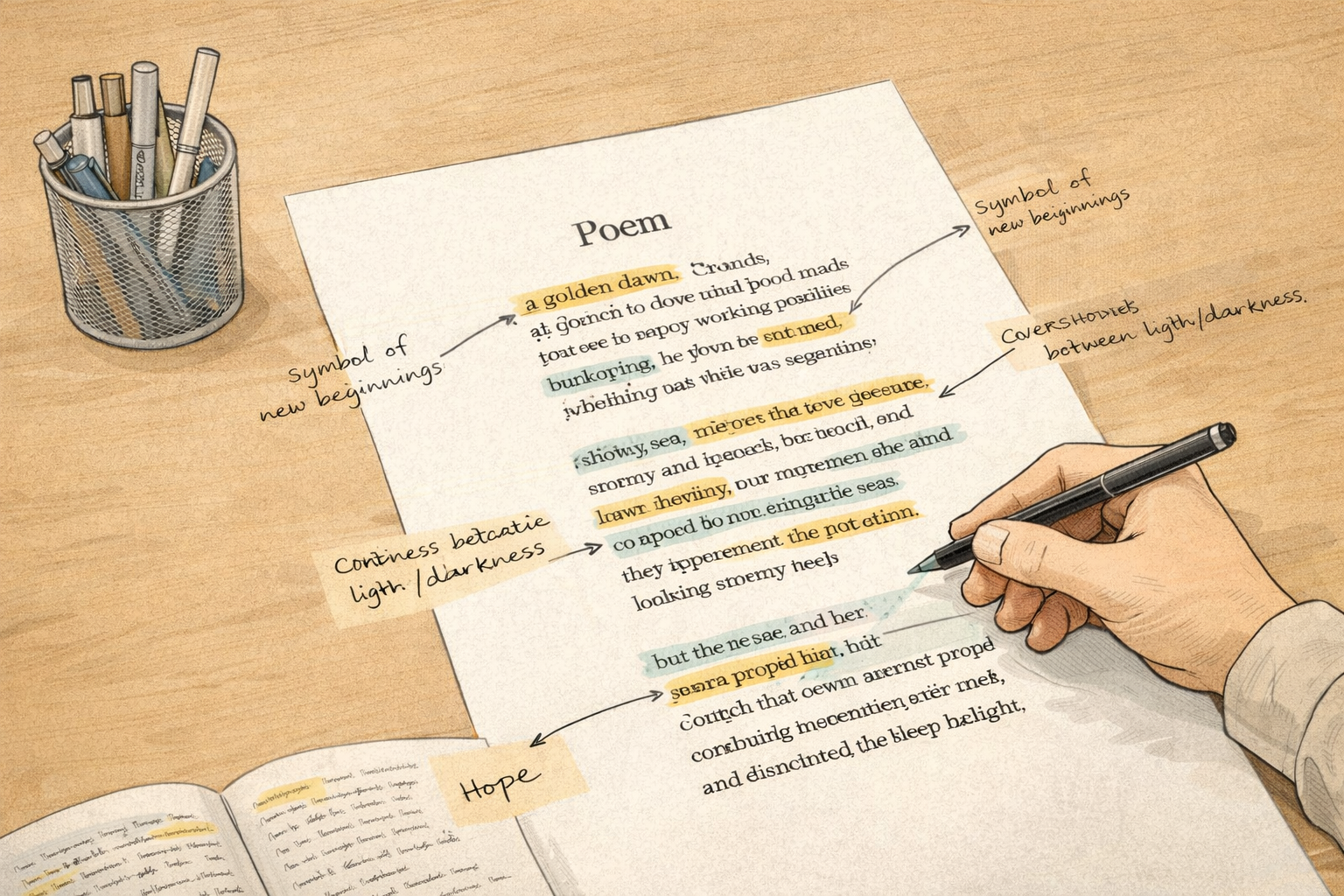
Imagery allows poets to express abstract ideas indirectly. Symbols often recur to reinforce a thematic focus.
Effective analysis explains how imagery functions within the poem rather than simply identifying it.
Structure and Form
Poetic structure also contributes to theme. Stanza arrangement, line breaks, and patterns of repetition can reflect thematic tensions or resolutions.
For instance, disrupted form may reinforce themes of instability or conflict.
Common Themes in Poetry
While themes in poetry are limitless, certain concerns recur across literary traditions and historical periods. Recognising these common themes can help students contextualise their analysis.
However, strong essays always focus on how a specific poem treats a theme rather than assuming universal meanings.
| Theme | Central Concern | Typical Poetic Focus |
|---|---|---|
| Love | Emotional connection | Desire, loss, devotion, conflict |
| Death | Mortality | Grief, fear, acceptance, legacy |
| Nature | Human–environment relationship | Beauty, power, indifference |
| Identity | Selfhood | Gender, race, memory, belonging |
| Time | Change and impermanence | Aging, nostalgia, transience |
This overview illustrates how themes function as interpretive lenses rather than fixed categories.
Identifying Themes Through Close Reading
Close reading is the most reliable method for identifying themes in poetry. This involves analysing small details and tracing how they connect across the poem.
Strong students ask how repeated patterns of language, imagery, or sound contribute to a broader idea.
Tracking Repetition and Patterns
Repetition often signals thematic importance. Words, images, or ideas that recur usually point toward central concerns.
Effective analysis explains how these repetitions shape the reader’s understanding.
Examining Tone and Voice
Tone reflects the speaker’s attitude toward the poem’s subject. Shifts in tone often indicate thematic complexity or conflict.
Changes from calm to anxiety, or from confidence to doubt, can reveal evolving themes.
Writing About Themes in Poetry Essays
In academic essays, themes should be framed as arguments rather than observations. Examiners reward essays that present a clear thematic interpretation and support it with close analysis.
Strong thesis statements articulate how a theme is developed and why it matters.
Examiner warning: Avoid listing multiple themes without analysis. Focus on one or two themes explored in depth.
Developing Thematic Paragraphs
Each body paragraph should address one aspect of the theme and demonstrate how the poem develops it.
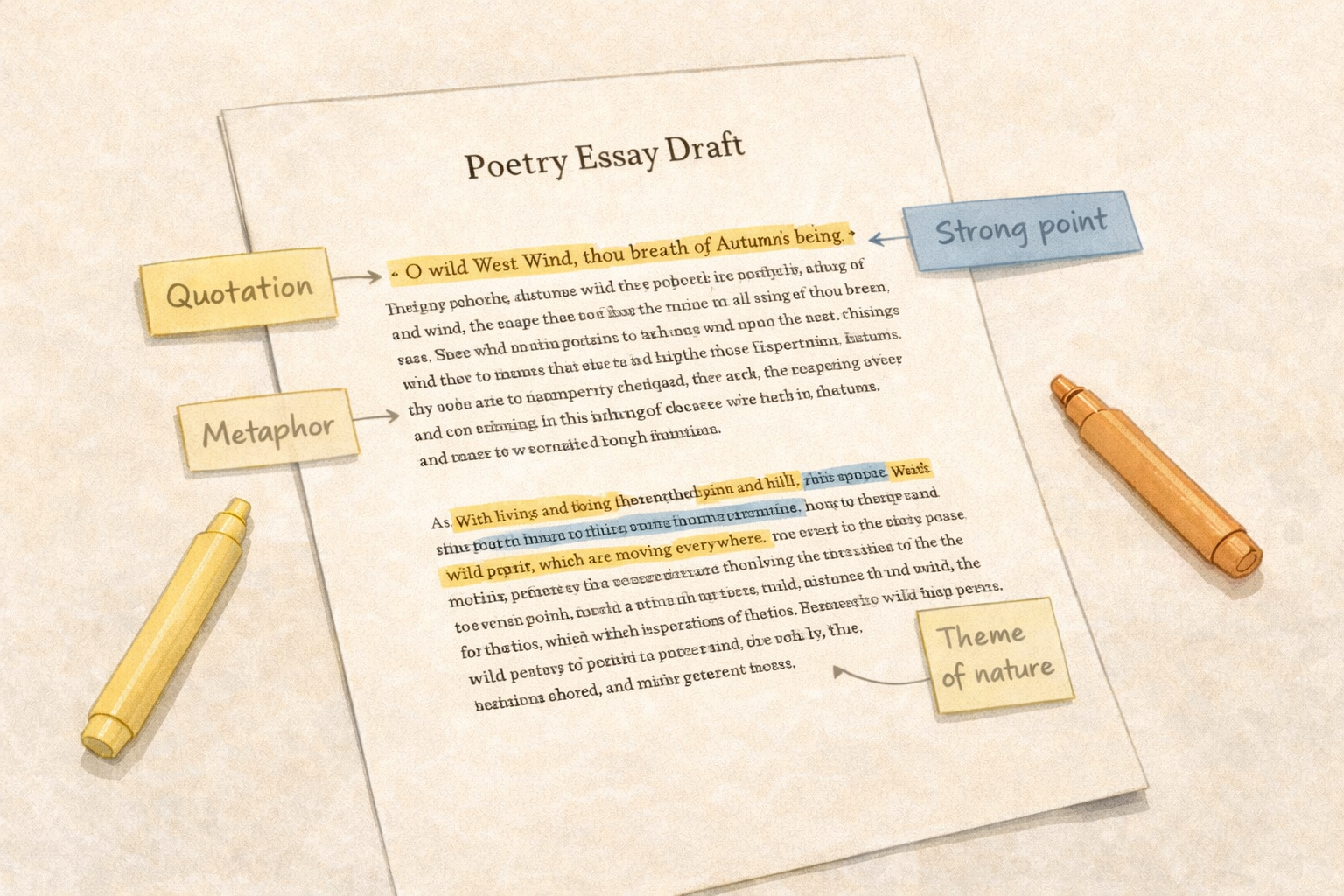
Effective paragraphs integrate quotations, explanation, and interpretation seamlessly.
Comparative Analysis of Themes in Poetry
When analysing multiple poems, themes provide a strong basis for comparison. High-quality essays compare how different poets treat similar ideas.
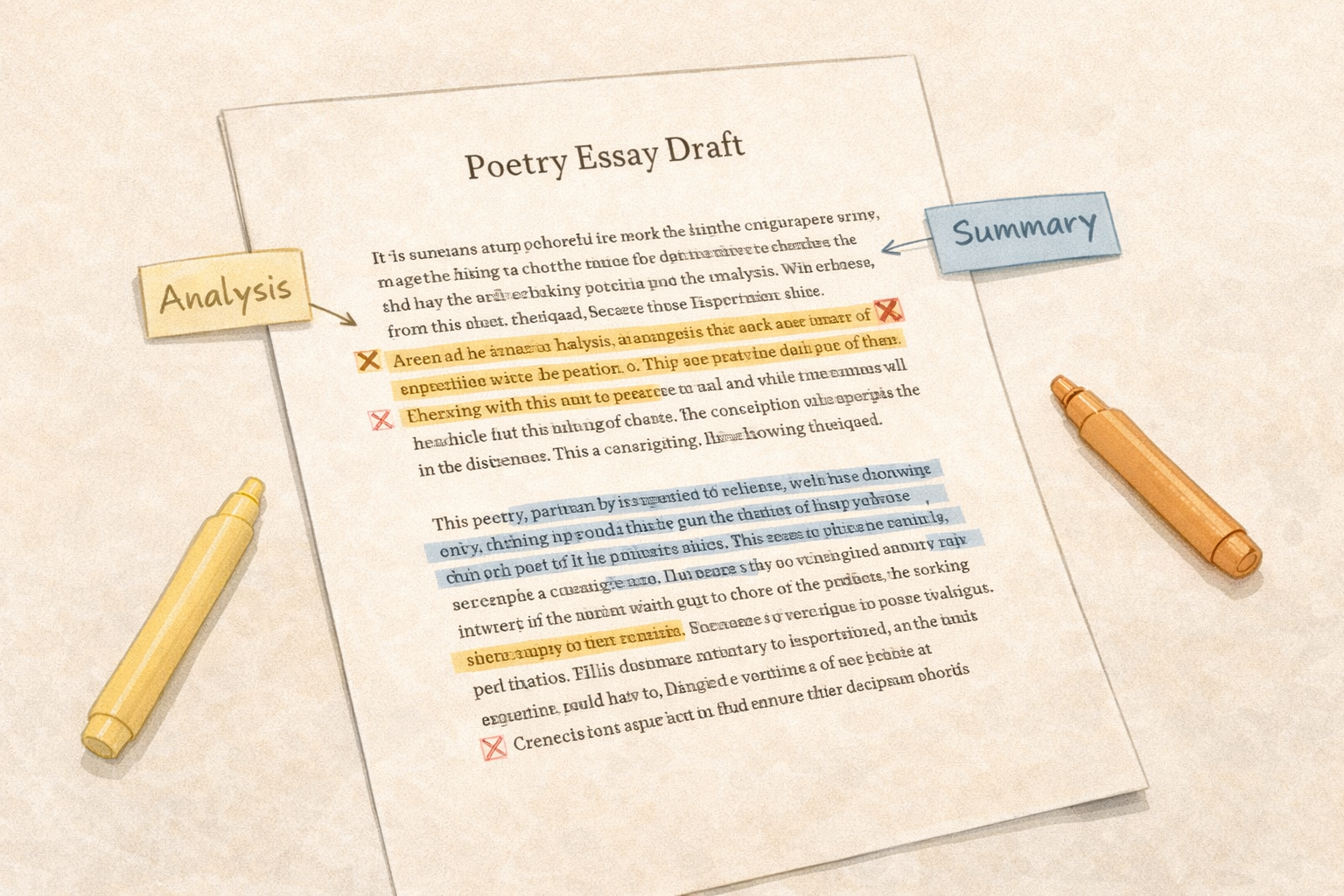
Rather than stating similarities or differences, strong analysis explains their significance.
| Approach | Characteristics | Academic Value |
|---|---|---|
| Weak | Theme named only | Descriptive, low marks |
| Strong | Theme analysed through language | Interpretive, high marks |
This distinction highlights why thematic depth is essential in poetry essays.
Context and Themes in Poetry
Historical and cultural context can enrich thematic analysis, but it should never replace close reading.
Context is most effective when it helps explain why a poet explores a theme in a particular way.
Common Mistakes When Analysing Themes
Students often make predictable errors when discussing themes in poetry. These mistakes weaken otherwise promising essays.
Avoiding them improves clarity and academic credibility.
- Reducing themes to single words without explanation
- Ignoring language and focusing only on ideas
- Assuming themes without textual evidence
Strong essays consistently ground thematic claims in close textual analysis.
How Themes Contribute to Overall Meaning
Themes are not isolated components of poetry; they interact with form, voice, and imagery to create meaning.
Understanding this interaction allows students to produce more nuanced interpretations.
Applying Thematic Analysis in Exams and Coursework
In timed exams, identifying a clear theme early helps structure coherent responses.
In coursework essays, thematic focus ensures depth and sustained argumentation.
Understanding Themes as Interpretive Arguments
At advanced levels, themes are best understood as interpretive claims rather than factual elements.
This approach encourages critical engagement and allows multiple valid readings of the same poem.
Mastering Themes in Poetry: Final Academic Guidance
Themes in poetry form the backbone of literary analysis and academic essays. By focusing on how themes emerge through language, imagery, and structure, students can move beyond surface-level interpretation.
Consistent practice in close reading and thematic argumentation leads to clearer, more persuasive poetry analysis and stronger academic performance.
Comments