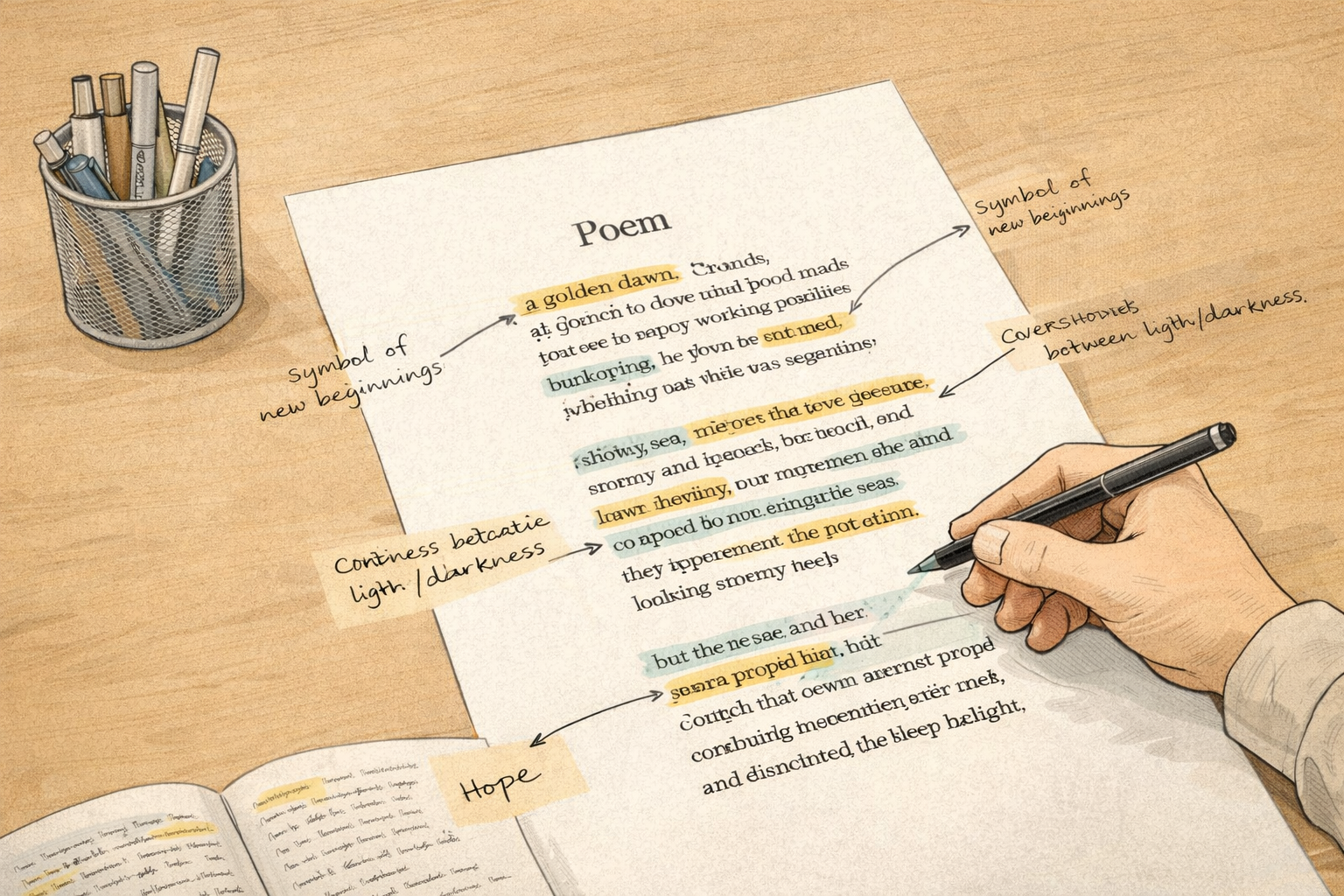
Close reading poetry is one of the most important analytical skills in literary studies. Unlike general interpretation or thematic discussion, close reading requires sustained attention to the poem’s language, structure, and formal choices, demonstrating how meaning emerges from precise textual details.
Many students struggle with close reading because it feels slow, technical, or overly subjective. In reality, close reading is a disciplined academic practice grounded in evidence, logical reasoning, and careful explanation. This article explains how to approach close reading of poetry methodically and confidently.
What Close Reading Means in Poetry Studies
Close reading refers to the detailed, line-by-line analysis of a poem’s language and form. It focuses on how words, sounds, images, and structures work together to create meaning.
Rather than relying on background context or author biography, close reading prioritises the poem itself as the primary source of evidence.
Academic definition: Close reading is the systematic analysis of a text’s formal and linguistic features in order to explain how meaning is produced.
Why Close Reading Is Central to Poetry Analysis
Poetry condenses meaning into highly controlled language. Every word, pause, and sound carries potential significance, making close reading essential rather than optional.
Examiners assess close reading to evaluate a student’s ability to interpret language precisely and support claims with textual evidence.
Preparing to Close Read a Poem
Effective close reading begins before any writing occurs. Initial preparation allows students to notice patterns and tensions that might otherwise be overlooked.
Reading the poem multiple times—silently and aloud—helps reveal rhythm, tone, and emphasis.
Annotating the Poem Systematically
Annotation involves marking significant words, images, repetitions, and structural shifts. These notes form the foundation of later analysis.
Students should avoid highlighting everything and instead focus on features that seem purposeful or unusual.
Analysing Diction and Word Choice
Diction refers to the poet’s choice of words. Close reading examines connotations, register, and semantic fields rather than dictionary definitions alone.
Seemingly simple words often carry emotional or symbolic weight when placed in poetic contexts.
Imagery and Figurative Language
Imagery appeals to the senses and shapes how readers visualise or experience the poem. Close reading explores how images interact and develop across the text.
Metaphors, similes, and symbols should be analysed for their function, not merely identified.
Sound, Rhythm, and Musical Effects
Poetry is an auditory form as well as a visual one. Close reading attends to sound devices such as alliteration, assonance, rhyme, and meter.
Sound patterns often reinforce mood, pace, or emotional intensity.
Lineation, Enjambment, and Form
The way a poem uses lines and breaks is central to meaning. Lineation controls emphasis, pauses, and interpretive tension.
Enjambment, where a line runs on without punctuation, often creates ambiguity or momentum.
Stanza Structure and Poetic Form
Stanza patterns influence how ideas are grouped and developed. Regular forms may suggest order or control, while irregular forms may signal disruption.
Close reading links form to meaning rather than treating structure as decorative.
Tone and Voice in Close Reading
Tone refers to the speaker’s attitude toward the subject, audience, or self. It emerges from word choice, syntax, and rhythm.
Identifying tonal shifts is often key to interpreting a poem’s argument or emotional trajectory.
Patterns, Repetition, and Development
Close reading tracks patterns across the poem, such as repeated images or phrases. These repetitions often indicate thematic emphasis.
Equally important is noticing when patterns break, as disruption often signals meaning.
From Observation to Interpretation
Observation identifies what is present in the poem; interpretation explains why it matters. Close reading connects these two stages carefully.
Interpretations must always return to textual evidence rather than personal reaction.
Examiner warning: Describing poetic techniques without explaining their effect does not count as close reading.
Organising Close Reading in Academic Writing
When writing, close reading should be organised around analytical claims, not a line-by-line paraphrase.
Each paragraph should focus on a specific feature or pattern and explain its contribution to meaning.
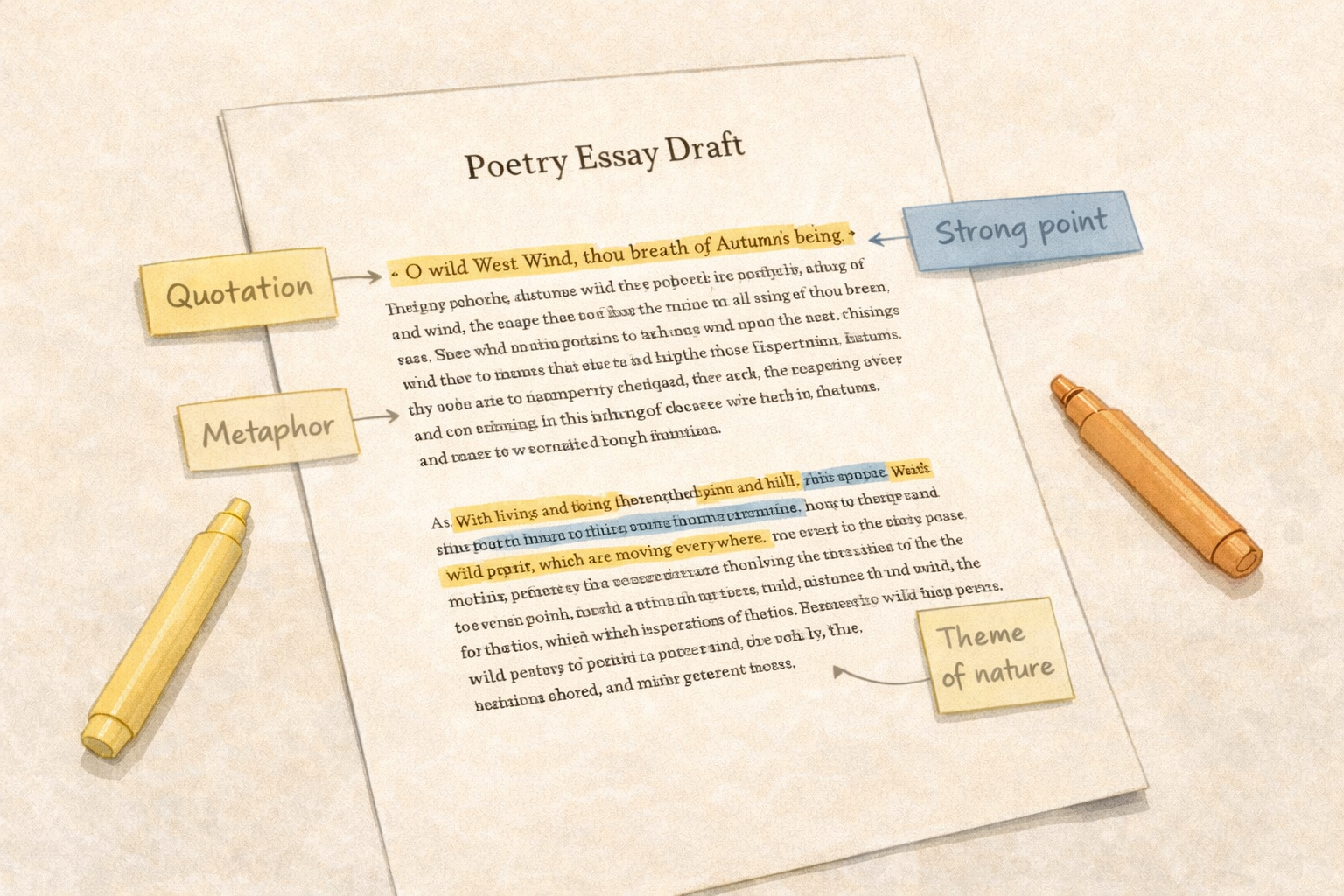
Integrating Quotations Effectively
Quotations should be short, precise, and embedded within analytical sentences.
Every quotation must be followed by explanation rather than left to “speak for itself.”
Common Problems in Close Reading Poetry
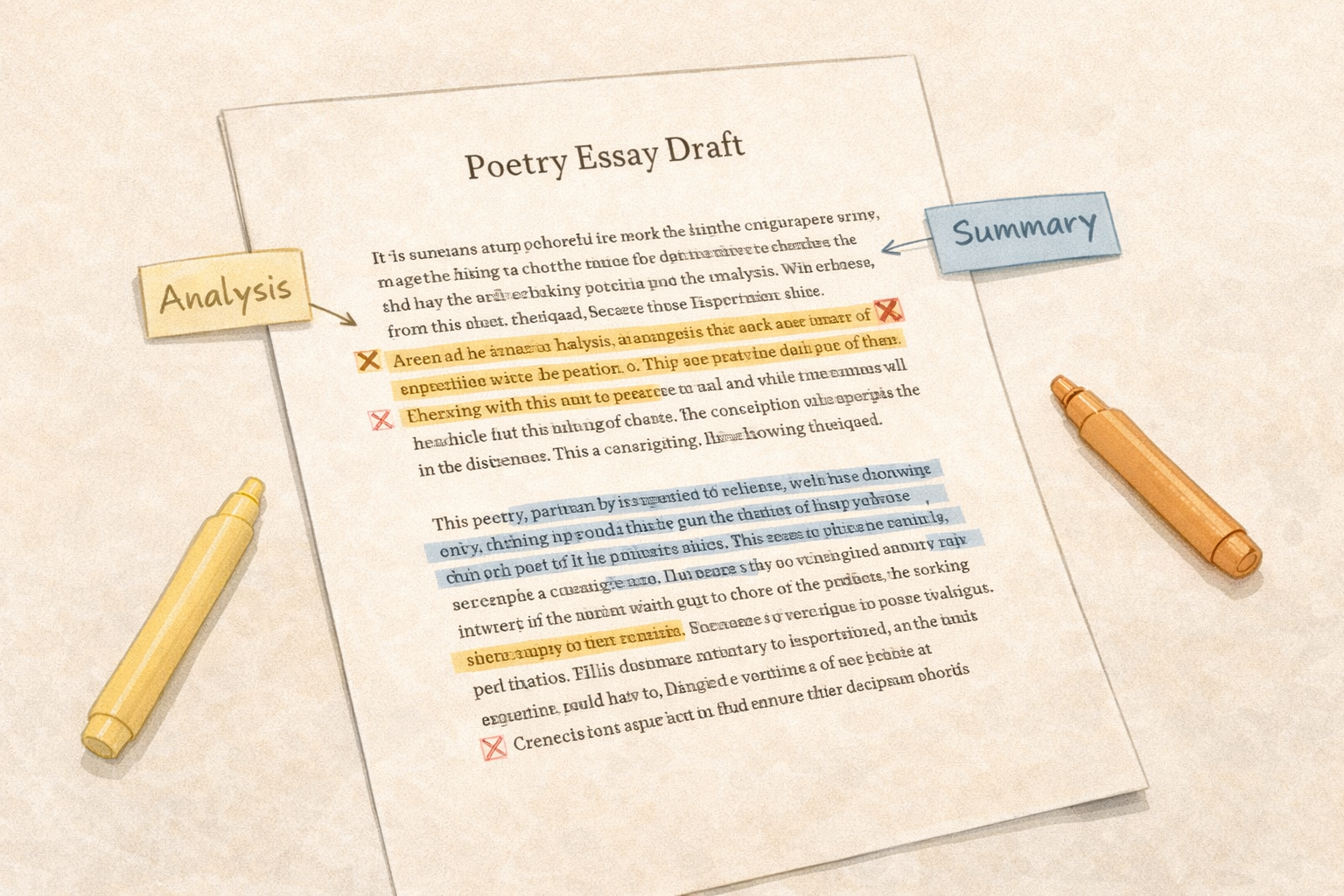
Students often confuse close reading with summary, resulting in descriptive rather than analytical writing.
Another common issue is over-reliance on terminology without meaningful interpretation.
| Issue | Why It Weakens Analysis | Improved Approach |
|---|---|---|
| Plot summary | Shows comprehension only | Analyse language and form |
| Technique listing | Lacks interpretation | Explain functional significance |
| Overgeneral claims | Insufficient evidence | Use precise textual examples |
This comparison illustrates how academic close reading prioritises explanation over identification.
Balancing Close Reading and Context
While close reading focuses on the text, limited contextual reference may support interpretation when used carefully.
Context should illuminate textual choices, not replace analysis.
Final Guidance on Close Reading Poetry
Close reading poetry is a skill developed through patience, precision, and practice. It requires attention to detail and disciplined explanation.
By grounding interpretations in language and form, students demonstrate the analytical depth expected in university-level literary study.

Comments