
Poetry occupies a distinctive position within academic study because it compresses meaning, emotion, and argument into highly concentrated language. Unlike prose, poems often resist straightforward interpretation, which makes poetry analysis challenging for many university and college students.
This article provides a structured, academically grounded approach to poetry analysis. It explains what examiners expect, how to read poems critically, and how to translate close reading into clear, well-evidenced analytical writing suitable for essays, coursework, and examinations.
What Poetry Analysis Means in Academic Study
In academic contexts, poetry analysis refers to the systematic interpretation of a poem’s language, structure, form, and context in order to explain how meaning is produced. It is not a personal reaction or summary, but a reasoned argument supported by textual evidence.
Examiners look for analytical control rather than emotional response. A strong poetry analysis demonstrates how specific features of the poem contribute to broader themes, ideas, or effects, and why those choices matter within literary and historical contexts.
Key academic rule: Poetry analysis explains how meaning is created, not simply what the poem is about.
Beginning with Close Reading Instead of Interpretation
Many students attempt to interpret a poem too quickly, before fully understanding its language. Close reading is the foundation of effective poetry analysis because it focuses attention on what the poem actually says and how it says it.
This process involves reading the poem multiple times, noting patterns, repetitions, shifts in tone, and unusual word choices. Interpretation should emerge gradually from these observations rather than being imposed prematurely.
Understanding the Speaker and Perspective
A common analytical mistake is assuming the speaker of a poem is the poet. In academic poetry analysis, the speaker is treated as a constructed voice that may or may not reflect the poet’s own views.
Identifying who is speaking, to whom, and under what circumstances helps clarify tone, intention, and emotional positioning. This distinction is essential for accurate interpretation, particularly in dramatic monologues or persona poems.
Analysing Language Choice and Diction
Poetic language is rarely neutral. Word choice, or diction, carries connotations that shape meaning beyond literal definitions. Academic poetry analysis examines why particular words are used and what associations they evoke.
For example, concrete nouns may ground a poem in physical experience, while abstract language may suggest philosophical reflection. Analysing diction allows students to demonstrate close engagement with the text.
Imagery and Sensory Detail in Poetry
Imagery is central to poetry because it appeals to the senses and creates emotional resonance. Effective analysis explores how visual, auditory, tactile, or symbolic images function within the poem.
Rather than listing images, students should explain how imagery reinforces themes, establishes mood, or contrasts with other elements of the poem.
| Type of Imagery | Description | Analytical Focus |
|---|---|---|
| Visual imagery | Appeals to sight | Creates setting or symbolism |
| Auditory imagery | Appeals to sound | Shapes rhythm and tone |
| Tactile imagery | Appeals to touch | Builds emotional immediacy |
Tables like this help clarify analytical categories, but interpretation must always return to the specific poem under discussion.
Form, Structure, and Organisation
Poetic form refers to how a poem is organised on the page, including stanza arrangement, line length, and overall structure. These features are not decorative; they shape how meaning unfolds.
For instance, irregular stanza patterns may reflect emotional instability, while tightly controlled forms can suggest restraint or order. Academic analysis should connect formal choices to thematic concerns.
Sound Devices and Their Effects
Sound devices such as rhyme, rhythm, alliteration, and assonance contribute to the poem’s musicality and emphasis. Students often identify these features but fail to explain their significance.
Effective poetry analysis links sound to meaning, showing how repetition, harmony, or disruption reinforces tone or emotional impact.
Figurative Language and Symbolism
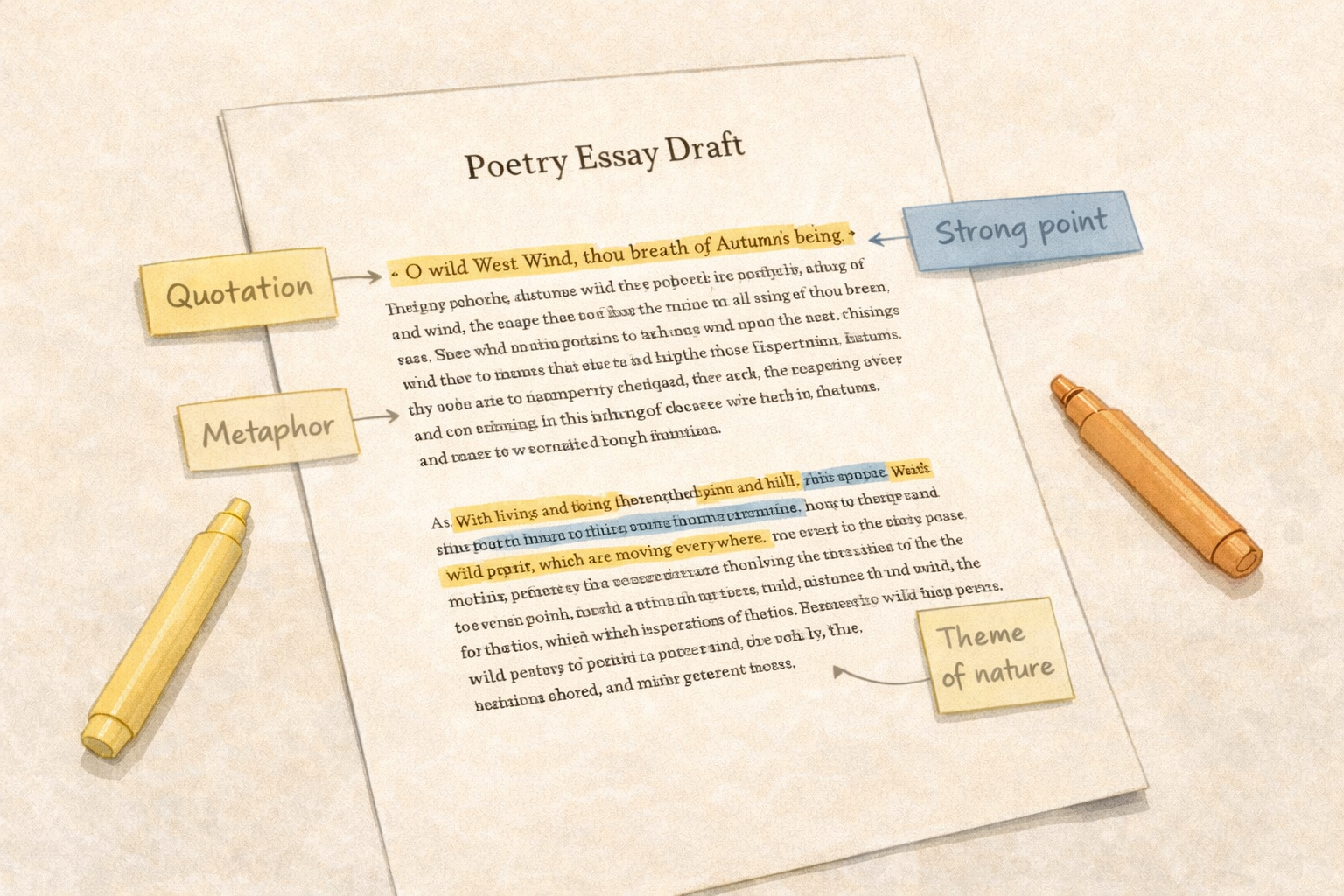
Metaphor, simile, and symbolism are among the most discussed elements in poetry analysis. However, interpretation must remain grounded in textual evidence rather than speculative readings.
Symbols gain meaning through context and repetition. A successful analysis explains how figurative language develops across the poem rather than isolating individual examples.
Contextualising Poetry Without Losing Focus
Historical, cultural, or biographical context can deepen poetry analysis, but it should never overshadow close reading. Context is used to illuminate the text, not replace analysis.
Students should introduce contextual information selectively, ensuring it directly supports their interpretation of specific textual features.
Developing a Clear Analytical Argument
Academic poetry analysis requires a coherent argument rather than a collection of observations. Each paragraph should contribute to a central claim about how the poem works.
This argument should be stated clearly in the introduction and refined throughout the essay as analysis deepens.
Structuring a Poetry Analysis Essay
Strong structure helps examiners follow analytical reasoning. While formats vary, most poetry analysis essays benefit from a clear progression from close reading to interpretation.
- Brief introduction outlining the analytical focus
- Paragraphs analysing language, imagery, and form
- Contextual integration where relevant
- Synthesised conclusion reinforcing the argument
This structure supports clarity and academic coherence.
Avoiding Common Mistakes in Poetry Analysis
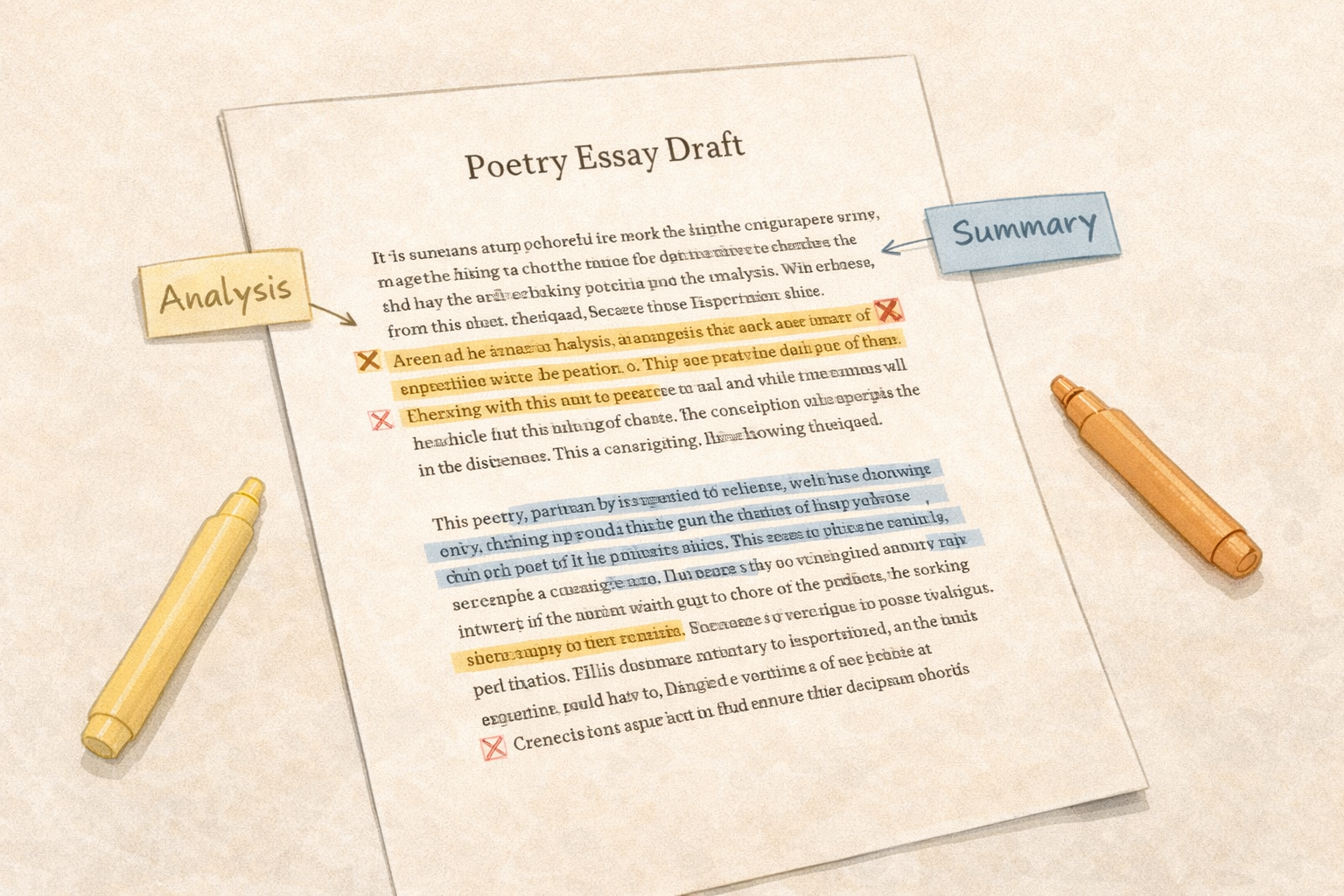
Students frequently lose marks by summarising poems instead of analysing them. Summary may demonstrate understanding but does not meet analytical criteria.
Another common issue is overgeneralisation, where claims are not supported by close textual evidence. Precision is essential in poetry analysis.
Examiner warning: Unsupported interpretations weaken analytical credibility.
Writing with Academic Precision and Confidence
Language choice in analysis essays should be formal, precise, and analytical. Vague phrases such as “the poet is trying to say” should be replaced with specific, evidence-based claims.
Quotations should be integrated smoothly and analysed rather than left to stand alone.
Concluding Poetry Analysis Effectively
An effective conclusion synthesises insights rather than repeating earlier points. It should reinforce the central argument and reflect on the poem’s overall significance.
Strong conclusions demonstrate control over interpretation and awareness of the poem’s complexity.
Final Guidance for Academic Poetry Analysis
Poetry analysis is a skill developed through practice, patience, and disciplined reading. By focusing on close textual evidence, structured argumentation, and academic clarity, students can approach poems with confidence rather than uncertainty.
Mastering poetry analysis not only improves literature grades but also strengthens critical thinking and interpretative skills across disciplines.

Comments