
Research proposals are foundational documents in academic life: they articulate the purpose, design, and scholarly significance of a proposed study. Whether required for thesis projects, capstone courses, grant applications, or advanced seminars, a structured research proposal helps students clarify their research intentions and receive formal approval prior to implementation.
This article presents a detailed research proposal outline template that students can adapt to their discipline and assignment requirements. Each section is explained with academic precision, showing why it matters and how it contributes to a compelling proposal.
What Is a Research Proposal
A research proposal is an academic document that outlines a research project’s scope, rationale, methodology, and expected contributions. It is both a planning tool and a method of communicating research ideas to supervisors, committees, or funding bodies. Importantly, it demonstrates that the proposed research is feasible, significant, and grounded in existing scholarship.
Unlike final research papers, a proposal does not present results; instead, it focuses on what will be studied and how the investigation will be carried out. Well-written proposals show methodological rigour and conceptual clarity.
A research proposal outlines the “what,” “why,” and “how” of a study — providing a roadmap for successful research execution.
Why a Structured Outline Matters
Without a clear structure, proposals can become unfocused or repetitive. Academic assessors look for proposals that follow a logical sequence, demonstrating both scholarly depth and organisational clarity. A structured outline ensures that essential components — such as literature engagement and methodological justification — are not omitted.
For students, developing a coherent proposal outline early in the process helps organise thoughts, set realistic objectives, and communicate research plans effectively to reviewers.
Standard Research Proposal Outline Template
The following outline represents a widely accepted format across disciplines. Some programmes may require minor variations, but the core sections remain consistent in purpose and academic function:
| Section | Purpose |
|---|---|
| Title | Identifies the focus of the research |
| Introduction / Background | Contextualises the research problem |
| Problem Statement | Defines the specific issue to be investigated |
| Research Aim and Questions | Clarifies research purpose and specific queries |
| Literature Review | Engages with existing scholarship |
| Methodology | Explains research design and methods |
| Scope and Limitations | Outlines boundaries of the study |
| Ethics and Considerations | Addresses ethical issues where applicable |
| Proposed Timeline | Shows feasibility over time |
| References | Cites academic sources used |
Title and Background Section
The title of a research proposal must be concise, specific, and indicative of the study’s main variables or focus. A strong title helps readers immediately understand what the project addresses and how it frames the research scope.
The background section situates the research within a broader academic or practical context. It explains why the topic is significant, discusses relevant developments or debates, and leads naturally into the problem statement. This section signals to reviewers that the student understands the terrain of the proposed study.
Problem Statement and Research Aims
The problem statement delineates the specific issue the research will explore. It should be clear, evidence-based, and directly linked to gaps or unresolved questions in the literature. A vague or overly broad problem statement weakens the proposal’s focus and makes methodological choices harder to justify.
Following the problem statement, the research aim outlines the overarching purpose of the study. This is then broken down into research questions — precise questions the study will answer. Research questions should be specific, researchable, and aligned with the methodology.
Literature Review in a Proposal
The literature review demonstrates that the student has engaged critically with existing academic research related to the topic. Rather than summarising sources individually, a strong literature section synthesises key findings, identifies debates or gaps, and positions the proposed study within scholarly conversations.
In a proposal, the literature review need not be exhaustive, but it must show depth of engagement and provide justification for the chosen research focus.
Effective literature reviews connect theory, evidence, and research gaps to justify the proposed study.
Methodology Section
The methodology section explains how the research will be conducted. This includes the overall research design (qualitative, quantitative, or mixed methods), data collection strategies, sampling approaches, and planned data analysis. Each methodological choice must be justified with academic reasoning.
For example, if a student plans to conduct interviews, they should explain why interviews are appropriate for answering the research questions and how participants will be selected and engaged ethically.
Scope and Limitations
Defining the scope of a study clarifies what the research will cover and what it will not. This helps manage expectations and demonstrates that the project is feasible within time and resource constraints. Limitations acknowledge potential weaknesses or constraints — such as access to data or sample size — that may affect the research outcomes.
Addressing limitations proactively shows academic maturity and understanding of research challenges.
Ethical Considerations
Many research projects require ethical oversight. This section should describe any ethical issues related to the study, such as informed consent, confidentiality, or data protection. Even if ethics approval is not required, explaining how ethical principles will be upheld strengthens the proposal’s credibility.
Proposed Timeline and Feasibility
A proposed timeline outlines key stages of the research process, such as literature review, data collection, analysis, and writing. This section reassures reviewers that the project is feasible within the academic schedule and that the student has planned the workload realistically.
Timelines can be presented as narrative text or simple tables that map tasks against a semester or year.
Research Proposal Outline Example
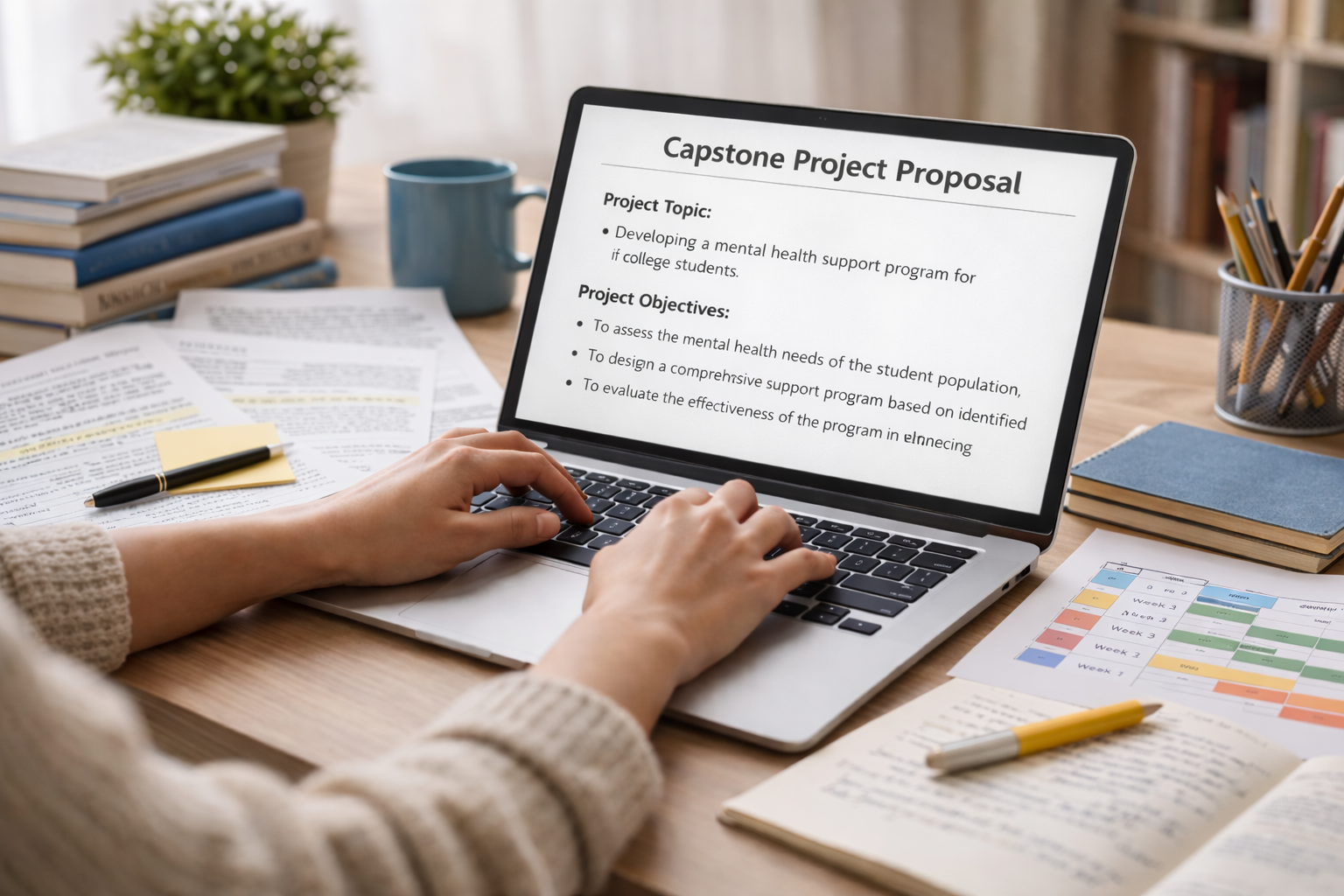
To illustrate how this template works in practice, consider a research proposal focused on university student wellbeing during remote learning. The introduction might describe the rise of remote learning and its implications for mental health. The problem statement would identify specific gaps in knowledge, such as limited data on how remote learning affects wellbeing in different demographic groups.
The literature review synthesises research on stress, engagement, and digital learning. Methodology could propose a mixed-methods approach combining surveys and focus groups. The timeline would map tasks from ethics approval to data analysis and final writing, showing feasibility within a semester.
Crafting Academic Proposals for Assessment
Academic proposals must balance clarity with depth. Reviewers assess whether the research problem is compelling, whether the methodology is appropriate, and whether the project is feasible. Clear writing, logical organisation, and strong justification are essential.
Students should also pay careful attention to institutional guidelines regarding formatting, length, and submission deadlines. Failure to follow these often results in avoidable revisions or delays.
Common Proposal Writing Mistakes
Students frequently weaken proposals by defining overly broad topics, failing to link research questions to methodology, or providing superficial literature engagement. Another common issue is presenting methods without justification or ethical planning.
- Overly broad problem statements
- Weak linkage between questions and methods
- Superficial literature review
- Absence of ethical considerations
A well-structured outline and careful revision can help avoid these pitfalls.
Final Practical Guidance for Students
A strong research proposal forms the foundation of successful academic research. By following a clear outline, justifying methodological choices, and grounding the proposal in existing literature, students can create compelling documents that gain approval and guide their research effectively.
Early planning, feedback from supervisors, and iterative refinement are key practices for producing high-quality research proposals that withstand academic scrutiny.


Comments