
Formatting plays a crucial role in how a thesis is perceived and evaluated. While strong research and analysis are essential, poor formatting can undermine the overall quality of your work and negatively influence examiner judgment. Following clear thesis formatting guidelines ensures that your work is presented professionally, consistently, and in line with institutional expectations.
Many students focus heavily on writing and overlook formatting until the final stages, often leading to rushed corrections and avoidable errors. This guide provides a comprehensive overview of thesis formatting guidelines, helping students structure and present their work effectively while avoiding common mistakes.
Why Thesis Formatting Guidelines Matter in Academic Assessment
Thesis formatting is not merely a technical requirement; it reflects your attention to detail and adherence to academic conventions. Examiners expect a thesis to be clear, organised, and easy to navigate. Inconsistent formatting can distract from your argument and reduce the overall impact of your research.
Proper formatting enhances readability by ensuring that headings, paragraphs, and visual elements are structured logically. It also allows examiners to locate key sections quickly, which is particularly important in lengthy academic documents.
Formatting errors can reduce the perceived quality of even the strongest academic research.
By following established guidelines, students can present their work in a way that supports clarity and professionalism.
Core Elements of Thesis Formatting You Must Get Right
Thesis formatting guidelines typically cover several core elements, each of which contributes to the overall presentation of your work. Understanding these elements is essential for producing a consistent and professional document.
| Element | Requirement | Purpose |
|---|---|---|
| Font | Standard fonts such as Times New Roman or Arial | Ensure readability |
| Spacing | 1.5 or double spacing | Improve clarity and review process |
| Margins | Typically 1 inch (2.54 cm) | Allow for binding and layout |
| Headings | Consistent hierarchy | Maintain structure and organisation |
| Page Numbers | Sequential and consistent | Enable easy navigation |
Each of these elements must be applied consistently throughout the thesis to ensure a cohesive presentation.
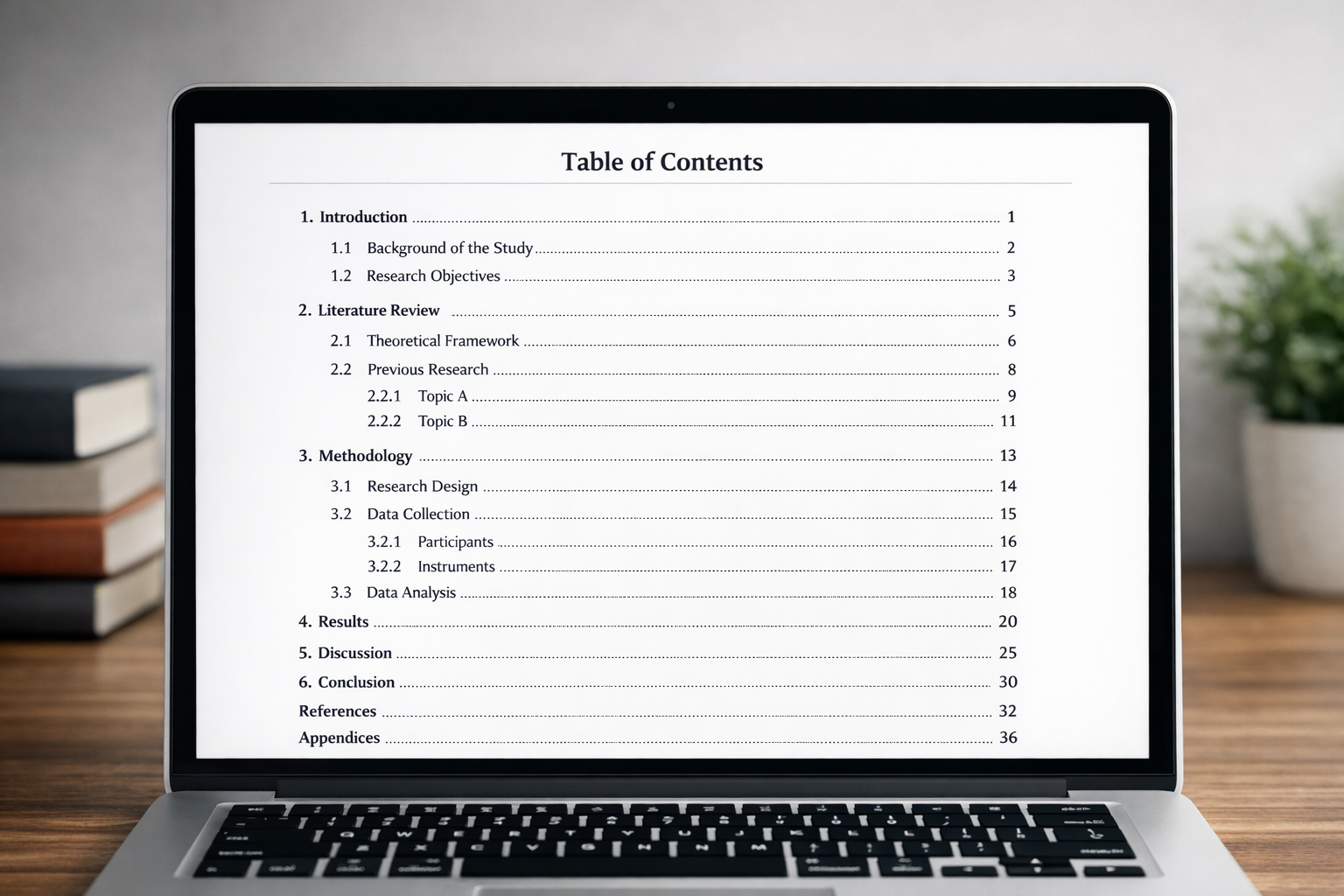
Structuring Headings and Sections for Logical Flow
Headings are a fundamental component of thesis formatting guidelines, as they organise content and guide the reader through your work. A clear hierarchy of headings ensures that your thesis is logically structured and easy to follow.
Students should use a consistent system of headings and subheadings, typically following a numerical or hierarchical format. Each level of heading should be clearly distinguishable through formatting, such as font size or boldness.
To improve heading structure:
- Use consistent formatting for each heading level
- Avoid excessive levels of subheadings
- Ensure headings accurately reflect section content
- Maintain logical progression throughout the thesis
A well-structured heading system enhances readability and strengthens the overall organisation of your thesis.
Formatting Tables, Figures, and Visual Elements Correctly
Tables and figures are essential for presenting data clearly and effectively. Thesis formatting guidelines require that all visual elements are properly labelled, numbered, and referenced within the text.
Each table or figure should include a descriptive caption and be placed close to the relevant content. Consistent formatting ensures that visual elements support your argument rather than distract from it.
Students who need assistance with refining presentation and consistency may explore academic proofreading and editing services, which help ensure that formatting meets academic standards.
Properly formatted visual elements enhance clarity and improve the overall quality of your thesis.
Maintaining Consistency in Referencing and Citation Style
Referencing is a critical aspect of thesis formatting guidelines. Each citation must follow the required academic style consistently, whether APA, Harvard, or another format. Inconsistencies in referencing can reduce the credibility of your work and lead to mark deductions.
Students should carefully review both in-text citations and the reference list to ensure accuracy. This includes verifying author names, publication details, and formatting conventions.
Consistency in referencing not only supports academic integrity but also demonstrates professionalism and attention to detail.
Aligning Your Thesis with Institutional Formatting Requirements
While general formatting principles apply across disciplines, each university may have specific thesis formatting guidelines that must be followed. These guidelines often include detailed instructions on layout, structure, and submission requirements.
It is essential to review your institution’s official guidelines early in the writing process. This allows you to format your thesis correctly from the beginning rather than making extensive changes later.
Students can also review structured academic examples through dissertation writing guidance, which demonstrate how institutional requirements are applied in practice.
Aligning your thesis with institutional standards ensures compliance and avoids unnecessary revisions.
Common Thesis Formatting Mistakes to Avoid
Despite careful preparation, many students make avoidable formatting mistakes. Recognising these issues can help you prevent them and improve the overall quality of your work.
Common mistakes include:
- Inconsistent font styles and sizes
- Incorrect heading hierarchy
- Improper table and figure formatting
- Inconsistent referencing style
- Misaligned margins and spacing
Addressing these issues requires careful attention to detail and a systematic approach to formatting.
Formatting should be consistent from the first page to the last—partial consistency is not acceptable.
Final Formatting Checklist Before Submission
Before submitting your thesis, it is essential to complete a final formatting review. A structured checklist ensures that all elements meet academic and institutional requirements.
Essential Formatting Checklist
- Confirm font type and size consistency
- Check spacing and margin alignment
- Verify heading hierarchy and formatting
- Ensure proper numbering of tables and figures
- Review referencing style consistency
- Check page numbering and layout
This checklist helps ensure that your thesis is professionally formatted and ready for submission.
Presenting a Professionally Formatted Thesis with Confidence
Following thesis formatting guidelines is essential for presenting your research in the best possible way. A well-formatted thesis enhances readability, demonstrates professionalism, and supports the clarity of your argument.
Formatting should not be treated as a final step but as an integral part of the writing process. By applying formatting principles consistently from the beginning, students can avoid last-minute stress and ensure a high-quality final document.
Ultimately, strong formatting reflects the care and effort invested in your work. By following the strategies outlined in this guide, students can submit their thesis with confidence, knowing that it meets academic standards and presents their research effectively.


Comments