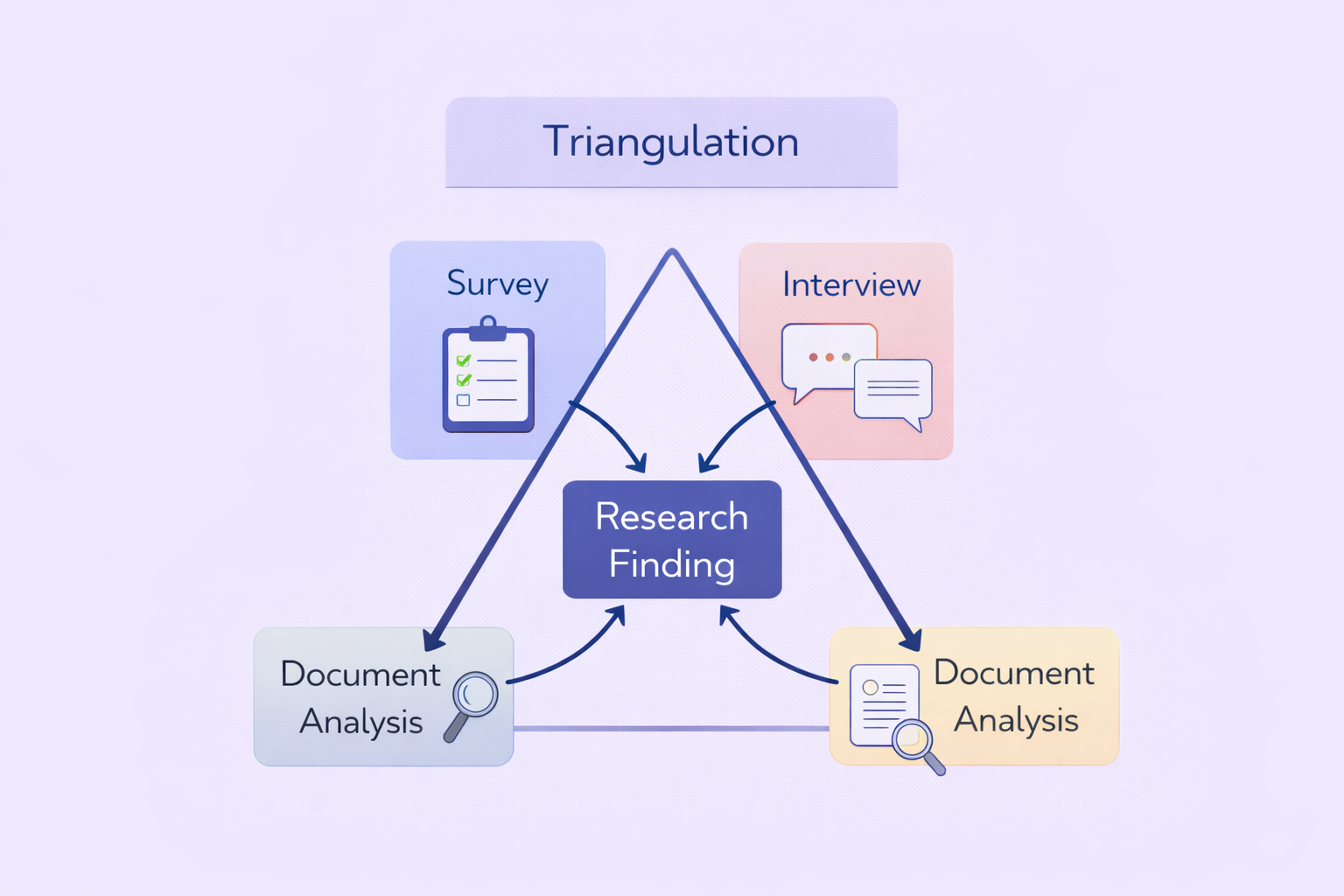
In academic research, credibility and validity are central to producing trustworthy findings. One of the most powerful strategies for strengthening research quality is triangulation in research methods. Triangulation refers to the deliberate use of multiple methods, data sources, theories, or researchers to study the same phenomenon. Rather than relying on a single perspective, triangulation enhances confidence in results by cross-verifying evidence.
Many students encounter triangulation when writing dissertations or methodology chapters but struggle to explain it clearly. Is triangulation only about mixing qualitative and quantitative methods? Does it automatically improve validity? How should it be reported? This guide explains triangulation in research methods in a structured, academically rigorous way, helping students apply it effectively in their own research.
What Is Triangulation in Research Methods?
Triangulation in research methods is a strategy that uses multiple approaches to examine a single research problem. The term originates from navigation and surveying, where triangulation determines a precise location by measuring it from different points. In research, the principle is similar: examining a topic from multiple angles increases the likelihood of accurate interpretation.
Triangulation strengthens research credibility by cross-checking findings through multiple perspectives.
Importantly, triangulation does not mean simply using more data. It involves deliberate methodological design to compare, contrast, or integrate evidence. When findings converge, confidence increases. When they diverge, deeper analytical insight may emerge.
Types of Triangulation in Research
There are four widely recognised types of triangulation in research methods. Understanding these distinctions helps students design robust and defensible methodology chapters.
| Type | Description | Purpose |
|---|---|---|
| Methodological | Using multiple research methods | Enhance validity through method comparison |
| Data | Using multiple data sources | Confirm consistency across contexts |
| Theoretical | Applying multiple theoretical perspectives | Broaden interpretative insight |
| Investigator | Involving multiple researchers | Reduce individual researcher bias |
Each type serves a distinct purpose, and researchers may use one or combine several depending on research design and objectives.
Methodological Triangulation
Methodological triangulation is the most common form used in student research. It involves combining qualitative and quantitative approaches, such as surveys and interviews. For example, a study exploring employee engagement might analyse survey data while conducting focus groups to interpret numerical patterns more deeply.
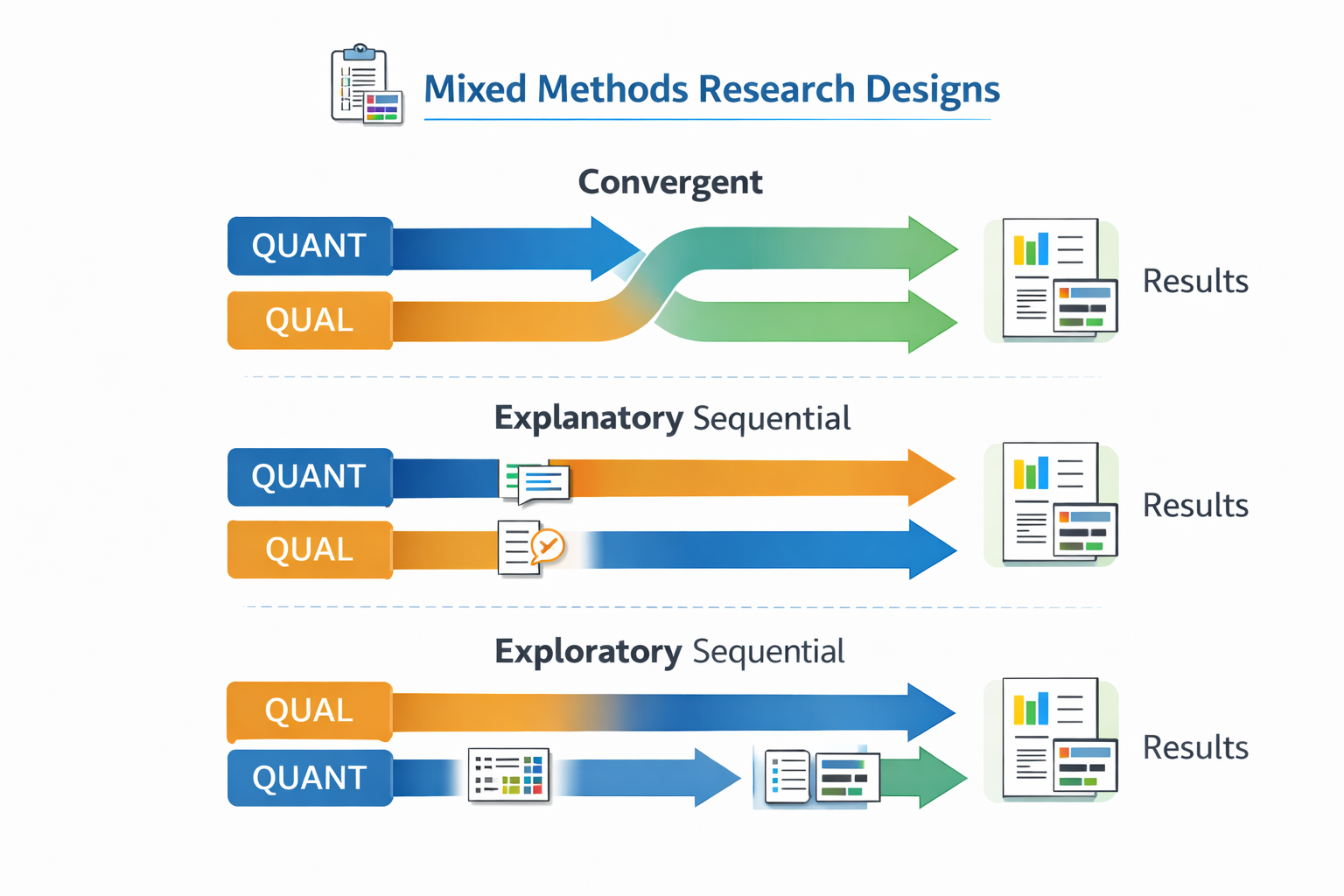
This form of triangulation is often embedded within mixed methods research designs. However, triangulation and mixed methods are not identical concepts. Mixed methods is a research design framework, while triangulation is a strategy to enhance credibility.
Data Triangulation
Data triangulation involves collecting information from different groups, times, or settings. For instance, a researcher studying educational policy implementation might gather data from teachers, students, and administrators. If similar themes emerge across these groups, findings are strengthened.
This approach is particularly useful in case study research, where multiple data sources contribute to comprehensive analysis.
Theoretical and Investigator Triangulation
Theoretical triangulation applies different theoretical lenses to interpret findings. For example, workplace behaviour might be analysed using both motivational theory and organisational culture theory. This broadens explanatory depth.
Investigator triangulation involves multiple researchers analysing the same data independently and then comparing interpretations. This reduces subjective bias and strengthens reliability.
Why Triangulation Matters in Academic Research
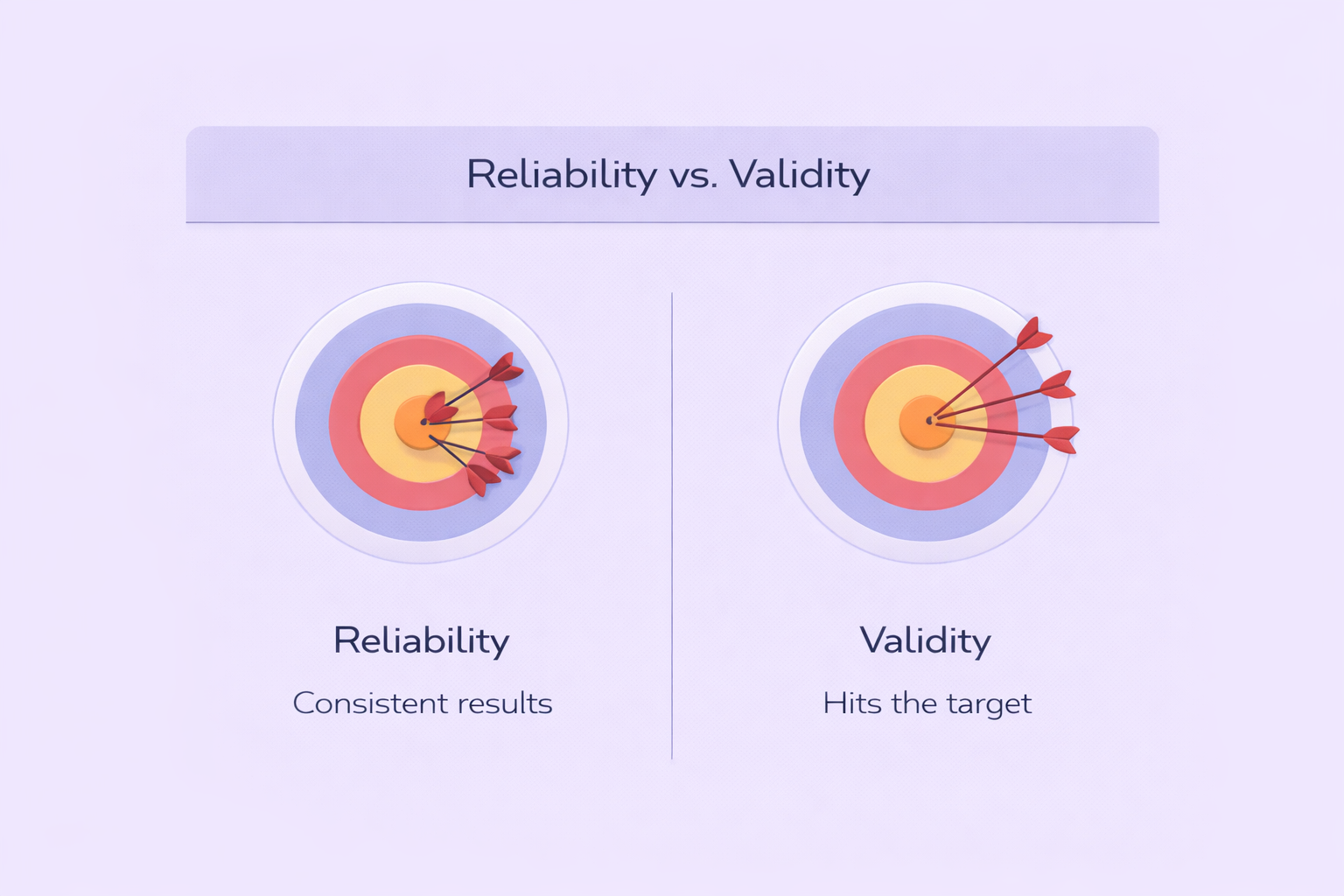
Triangulation plays a crucial role in enhancing research validity, reliability, and credibility. In qualitative research, it strengthens trustworthiness. In quantitative research, it may validate findings through additional evidence sources.
Examiners often look for triangulation when evaluating dissertations because it demonstrates methodological sophistication. However, triangulation must be purposeful and justified — simply adding extra methods without integration does not strengthen a study.
Triangulation must be strategically planned, not retroactively added to justify weak findings.
Effective triangulation increases depth of insight, clarifies inconsistencies, and improves overall analytical rigour.
How to Apply Triangulation in a Dissertation
Applying triangulation requires careful design at the proposal stage. The research question should justify the need for multiple perspectives. Each method or data source must serve a clear purpose aligned with the research objectives.
A structured approach to triangulation includes:
- Clearly identifying which type of triangulation will be used.
- Explaining why triangulation is necessary for the research problem.
- Describing how data will be compared or integrated.
- Discussing potential convergence or divergence of findings.
These elements should appear explicitly in the methodology chapter to ensure clarity and coherence.
Challenges and Limitations of Triangulation
Although triangulation enhances credibility, it also introduces complexity. Managing multiple datasets requires time, skill, and careful organisation. Students must avoid superficial integration where findings are simply reported separately without analytical comparison.
| Benefits | Challenges |
|---|---|
| Enhanced credibility | Increased methodological complexity |
| Reduced bias | Time-intensive analysis |
| Deeper analytical insight | Risk of conflicting findings |
Addressing these challenges in the methodology chapter demonstrates critical awareness and strengthens academic evaluation.
Triangulation and Mixed Methods: Clarifying the Difference
Students frequently confuse triangulation in research methods with mixed methods research. While related, they are not identical. Mixed methods refers to combining qualitative and quantitative approaches within a design framework. Triangulation is a strategy used to validate findings through cross-verification.
Mixed methods studies often use methodological triangulation, but triangulation can also occur within purely qualitative or purely quantitative research. Understanding this distinction prevents conceptual confusion in academic writing.
Strengthening Research Quality Through Triangulation
Triangulation in research methods provides a powerful strategy for enhancing credibility, validity, and interpretative depth. By examining research problems from multiple angles, students can produce findings that are more robust and analytically convincing.
When thoughtfully designed and transparently reported, triangulation demonstrates methodological maturity and strengthens dissertation quality. Students who master triangulation develop advanced research skills that support both academic excellence and professional research competence.

Comments