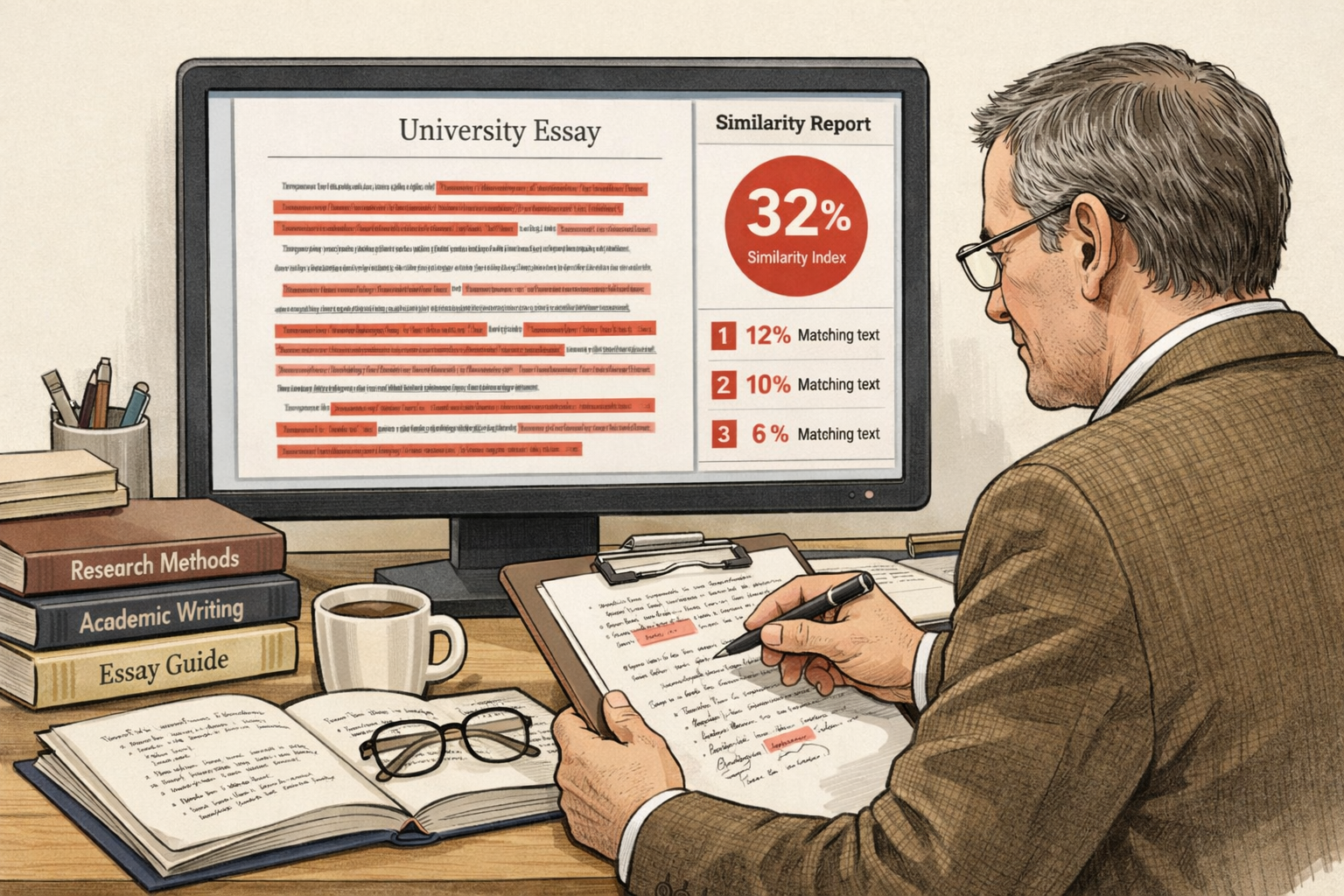
Few elements of academic assessment generate as much anxiety as the Turnitin similarity score. Students frequently encounter percentage figures without sufficient explanation, leading to assumptions that a “high score” automatically signals plagiarism or academic misconduct.
In reality, a Turnitin similarity score is a diagnostic indicator, not a verdict. Understanding how the score is generated, what it includes, and how examiners interpret it is essential for producing confident, defensible academic work. This article clarifies what the Turnitin similarity score means, why it varies across assignments and disciplines, and how students should respond to it.
What a Turnitin Similarity Score Actually Measures
A Turnitin similarity score represents the proportion of a submitted document that matches text found in Turnitin’s comparison databases. These databases include published academic sources, student submissions, and selected web content.
The score does not measure plagiarism, intent, or academic dishonesty. It simply highlights textual overlap that may require human review. Two papers with identical scores can represent very different academic situations.
Key definition: A Turnitin similarity score indicates textual similarity, not plagiarism.
Why Similarity Is Not the Same as Plagiarism
Plagiarism involves presenting another person’s ideas or words as one’s own without proper acknowledgment. Similarity, by contrast, refers only to matching strings of text, regardless of whether those matches are cited correctly.
Correctly quoted material, reference lists, methodology descriptions, and commonly used technical phrases all contribute to similarity. In many disciplines, some degree of similarity is both expected and unavoidable.
Disciplinary Differences in Acceptable Similarity
Acceptable similarity thresholds vary widely across faculties and institutions. A laboratory report in engineering or medicine will naturally produce higher similarity than a reflective essay in the humanities.
Universities therefore assess similarity scores contextually, taking into account genre, level of study, and assignment design rather than applying a universal numerical rule.
How Turnitin Generates the Similarity Percentage
When a document is submitted, Turnitin compares it against its databases and highlights matched passages. These matches are grouped into a similarity report, from which the overall percentage is calculated.
The percentage reflects the cumulative length of matched text relative to the total document length. Importantly, it does not weigh matches by importance, quality, or academic relevance.
| Source Type | Typical Examples | Academic Risk Level |
|---|---|---|
| Quoted material | Direct quotations with citation | Low |
| References | Bibliography and reference lists | Low |
| Technical phrasing | Standard definitions or formulas | Low |
| Paraphrased content | Poorly reworded source material | Moderate |
| Copied passages | Uncited or minimally altered text | High |
This breakdown illustrates why examiners focus on the nature of matches rather than the percentage alone.
Common Misconceptions About Turnitin Scores
One of the most persistent myths is that there is a “safe” similarity percentage, such as 10% or 15%. In practice, no universal threshold exists.
Another misconception is that reducing similarity automatically improves academic quality. Excessive paraphrasing aimed solely at lowering percentages can distort meaning and weaken argumentation.
Examiner expectation: Clear reasoning and proper citation matter more than achieving an arbitrarily low similarity score.
Why a High Similarity Score Is Not Automatically a Problem
High similarity scores are common in literature reviews, policy analyses, and technical reports where engagement with existing scholarship is central. In such cases, extensive citation is academically appropriate.
Examiners review similarity reports to determine whether sources are integrated analytically or merely reproduced. Proper attribution and synthesis usually mitigate concerns, even when percentages appear high.
How Universities and Lecturers Interpret Reports
Most institutions treat Turnitin as a screening and learning tool rather than a disciplinary instrument. Academic staff examine highlighted passages, not just summary figures.
They assess whether the student demonstrates understanding, original analysis, and correct referencing. This human judgment remains decisive in academic integrity cases.
Reducing Problematic Similarity Without Compromising Integrity
When similarity raises concerns, the solution is not cosmetic rewriting but deeper engagement with sources. Students should focus on interpretation, evaluation, and synthesis.
For language refinement that preserves meaning and citation integrity, structured academic support such as editing and proofreading services can help improve clarity without introducing ethical risk.
- Use quotations selectively and purposefully
- Paraphrase by re-conceptualising ideas, not swapping words
- Integrate sources into your own analytical framework
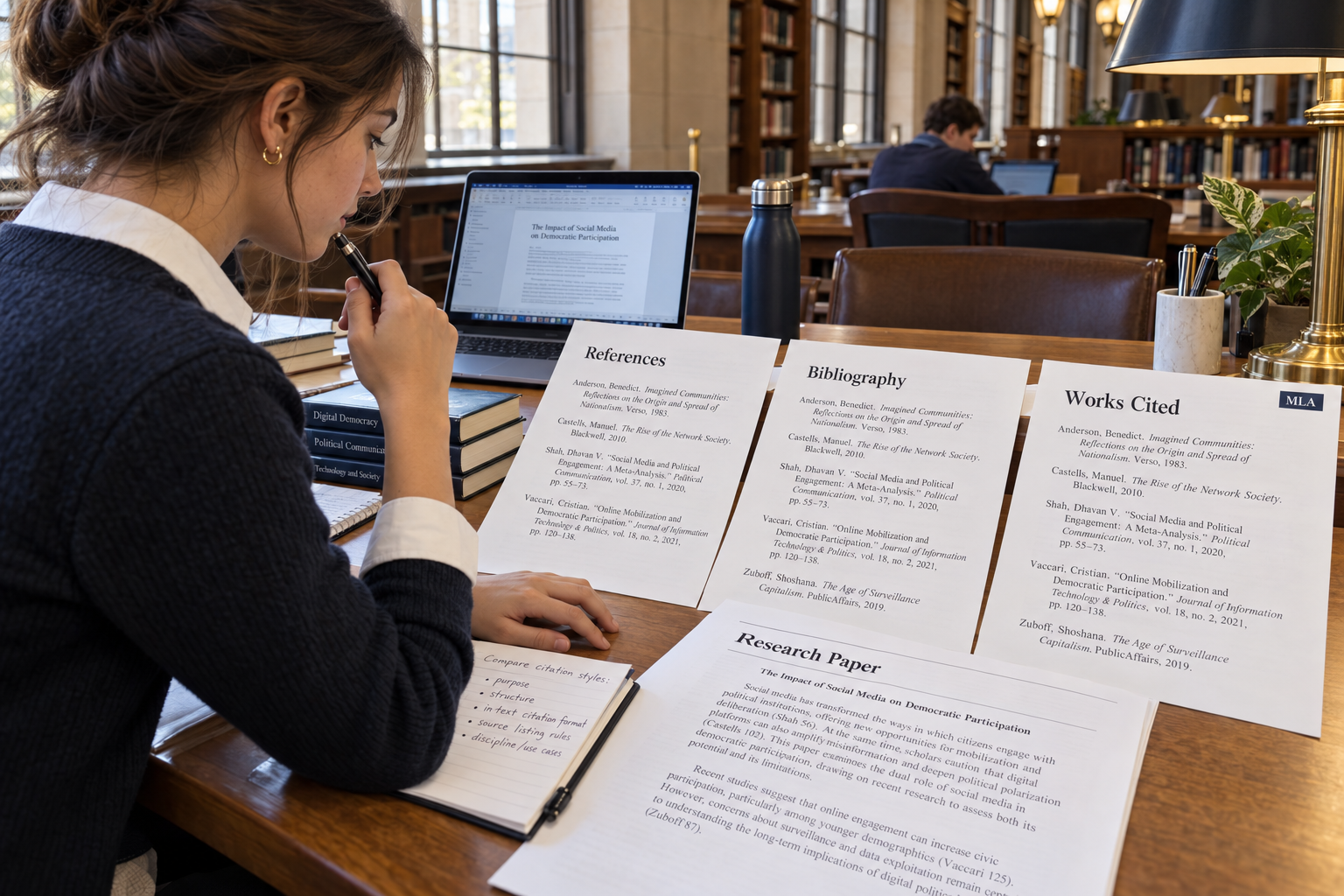
- Check citation accuracy and consistency
These practices address underlying academic issues rather than surface-level metrics.
Turnitin Similarity in Dissertations and Major Projects
Long-form research projects often generate higher similarity due to extensive literature engagement and methodological consistency. Supervisors expect this and interpret reports accordingly.
What matters most is whether the student’s voice, argument, and research contribution are clearly distinguishable from cited sources. Structured guidance, such as dissertation writing support, helps students maintain this balance.
Ethical Use of Similarity Reports by Students
Similarity reports should be treated as diagnostic feedback rather than targets to manipulate. Used properly, they help students identify citation issues, over-reliance on sources, or unclear paraphrasing.
Critical mistake: Editing solely to “beat” Turnitin often leads to poorer academic writing and increased scrutiny.
Turnitin, AI, and Evolving Academic Integrity
As universities confront AI-assisted writing, Turnitin’s role continues to evolve. Similarity detection remains distinct from AI detection, and neither replaces academic judgment.
Institutions increasingly emphasise transparency, documentation of the writing process, and reflective assessment rather than reliance on numerical indicators alone.
Understanding Your Turnitin Score with Confidence
A Turnitin similarity score is best understood as a prompt for academic reflection, not a measure of guilt or failure. When interpreted correctly, it supports learning rather than undermines it.
Students who focus on sound research practices, clear argumentation, and ethical source use can approach similarity reports with confidence and academic maturity.

Comments