Academic writing is governed by conventions that go beyond grammar or referencing style. One of the most frequently misunderstood yet heavily assessed elements is academic essay format. Examiners expect essays to follow a recognisable structural logic that supports argument development, critical engagement, and scholarly credibility.
Students often lose marks not because their ideas are weak, but because those ideas are presented in a format that obscures clarity or disrupts academic flow. This article explains academic essay format as a functional system rather than a rigid template, showing how structure, sectioning, and formatting choices directly affect interpretation and grading.
What Academic Essay Format Means in University Assessment
Academic essay format refers to the standardised way an essay is organised, presented, and structured to meet disciplinary and institutional expectations. It includes the logical arrangement of sections, paragraph construction, academic tone, and adherence to formal presentation norms such as spacing, headings, and citation placement.
From an examiner’s perspective, format acts as a cognitive guide. A well-formatted essay allows markers to follow the argument easily, locate key claims, and assess critical engagement without unnecessary effort. Poor formatting, by contrast, increases cognitive load and often leads to lower perceived quality even when content is strong.
Importantly, academic essay format is not identical across all disciplines, but the underlying principles of coherence, hierarchy, and logical progression remain consistent.
Examiner expectation: Academic format should make the argument easier to follow, not draw attention to itself.
Standard Structural Components of an Academic Essay
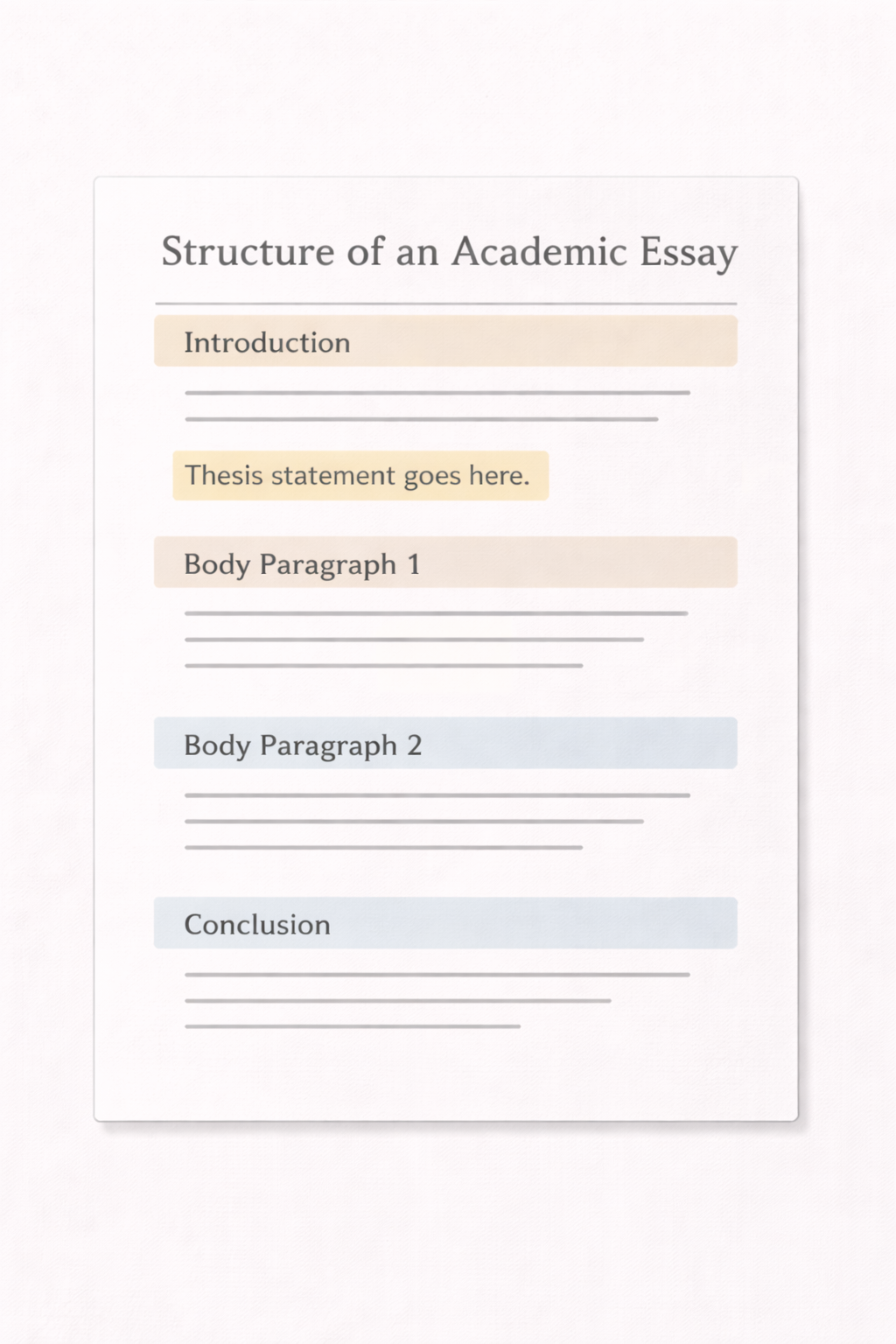
Although essays vary by subject, most academic essays follow a broadly consistent macro-structure. This structure reflects how arguments are built and evaluated in scholarly contexts, moving from contextual framing to analysis and synthesis.
The core components typically include an opening section that establishes context and direction, a series of analytical body paragraphs, and a closing section that synthesises findings rather than introducing new material. Each component serves a distinct academic purpose.
Failure to respect this structure often results in essays that feel descriptive, repetitive, or logically disjointed.
| Section | Primary Function | Common Student Error |
|---|---|---|
| Opening section | Contextualise topic and establish direction | Overly broad or vague background |
| Body paragraphs | Develop and support analytical claims | Description without critical engagement |
| Closing section | Synthesise argument and reinforce position | Introducing new ideas or evidence |
Paragraph Structure as the Core of Academic Format
At university level, paragraph structure is as important as overall essay structure. Each paragraph is expected to function as a complete unit of argument rather than a collection of loosely related sentences.
A well-constructed academic paragraph introduces a clear claim, explains its relevance, supports it with evidence, and links it back to the overall argument. This internal logic allows the essay to progress cumulatively rather than episodically.
Paragraphs that lack focus or contain multiple competing ideas are a common reason essays are described as “unclear” or “poorly structured” in feedback.
- One central analytical idea per paragraph
- Explicit explanation of evidence, not just citation
- Clear connection to the essay’s main argument
When paragraphs are used as analytical units rather than containers for information, the entire essay becomes more persuasive and academically coherent.
Use of Headings in Academic Essay Format
Whether headings are permitted in an academic essay depends on discipline and level of study. In many humanities subjects, short essays are written without headings, relying on paragraph transitions for structure. In longer or more technical assignments, headings may be encouraged to guide the reader.
When headings are used, they must be functional rather than decorative. Academic headings signal shifts in argument or analytical focus and should be phrased to reflect content rather than generic labels.
Improper use of headings, such as overly informal phrasing or excessive fragmentation, can undermine academic tone.
Formatting Rules for Headings
Headings should follow a clear hierarchy and remain consistent throughout the essay. Mixing heading levels or styles without purpose creates visual and logical confusion.
Critical warning: Headings should organise analysis, not replace it.
Formatting Conventions Examiners Expect
Beyond structure, academic essay format includes presentation conventions that signal professionalism and scholarly awareness. These conventions are often outlined in departmental handbooks but are frequently overlooked.
Common expectations include consistent font usage, appropriate line spacing, standard margins, and correct alignment of references. While these elements may seem minor, they influence first impressions and readability.
Students who ignore formatting guidelines risk being perceived as careless, regardless of analytical quality.
| Element | Typical Requirement | Academic Rationale |
|---|---|---|
| Line spacing | Double or 1.5 spacing | Improves readability and annotation |
| Font | Standard serif or sans-serif | Ensures accessibility and neutrality |
| Margins | Consistent on all sides | Allows space for examiner comments |
Relationship Between Format and Critical Thinking
Academic essay format is often mistaken for a cosmetic requirement, but it directly supports critical thinking. Structured writing forces clarity of reasoning, logical sequencing, and explicit engagement with sources.
An essay with weak format often reflects weak conceptual organisation. Ideas may be present, but their relationships remain implicit or confused. Format acts as a scaffold for critical analysis.
For this reason, improving format often leads to immediate improvements in argument quality and assessment outcomes.
Common Formatting Mistakes That Lower Grades
Certain formatting mistakes recur across institutions and levels of study. These errors are rarely fatal in isolation but accumulate to create a negative impression of academic competence.
- Inconsistent paragraph length and structure
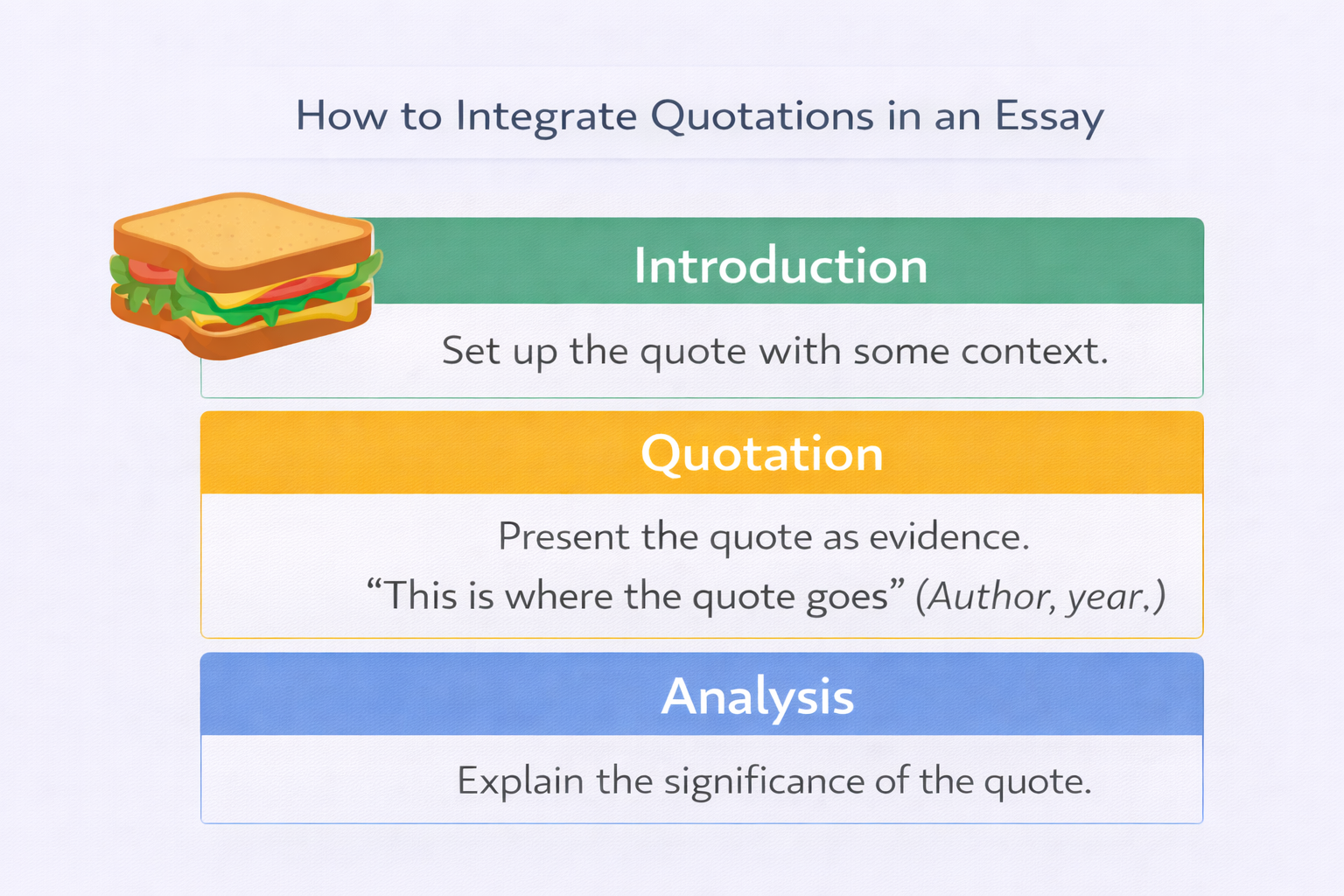
- Overuse of quotations without analysis
- Lack of clear progression between sections
- Ignoring departmental formatting guidelines
Addressing these issues early in the writing process is more effective than attempting superficial fixes during final editing.
Applying Academic Essay Format Across Disciplines
While core principles remain stable, academic essay format adapts to disciplinary norms. Essays in history, sociology, psychology, or business studies may differ in emphasis, but they share expectations regarding clarity, coherence, and critical engagement.
Students should always consult assignment briefs and marking criteria to identify discipline-specific adaptations. However, abandoning core structural principles in the name of disciplinary difference is rarely justified.
Mastery of academic essay format therefore provides transferable writing competence across subjects and levels.
Using Format as a Tool for Higher Marks
Students who treat format as part of their argument rather than an afterthought gain a strategic advantage. Clear structure allows examiners to see analytical depth quickly and reduces the risk of misinterpretation.
Academic essay format should be planned alongside content, not applied retrospectively. Outlining sections and paragraph purposes before writing often results in stronger, more coherent essays.
Ultimately, format is not about restriction but about enabling effective scholarly communication.
Writing with Academic Confidence and Precision
Understanding academic essay format empowers students to write with greater confidence, precision, and authority. Rather than guessing what examiners want, students can align their work with established academic norms.
Consistent application of these principles leads to clearer arguments, stronger critical engagement, and more predictable assessment outcomes. Format becomes a support system for thinking, not a bureaucratic obstacle.
When academic essay format is used deliberately, it transforms writing from a task into a controlled intellectual process.


Comments