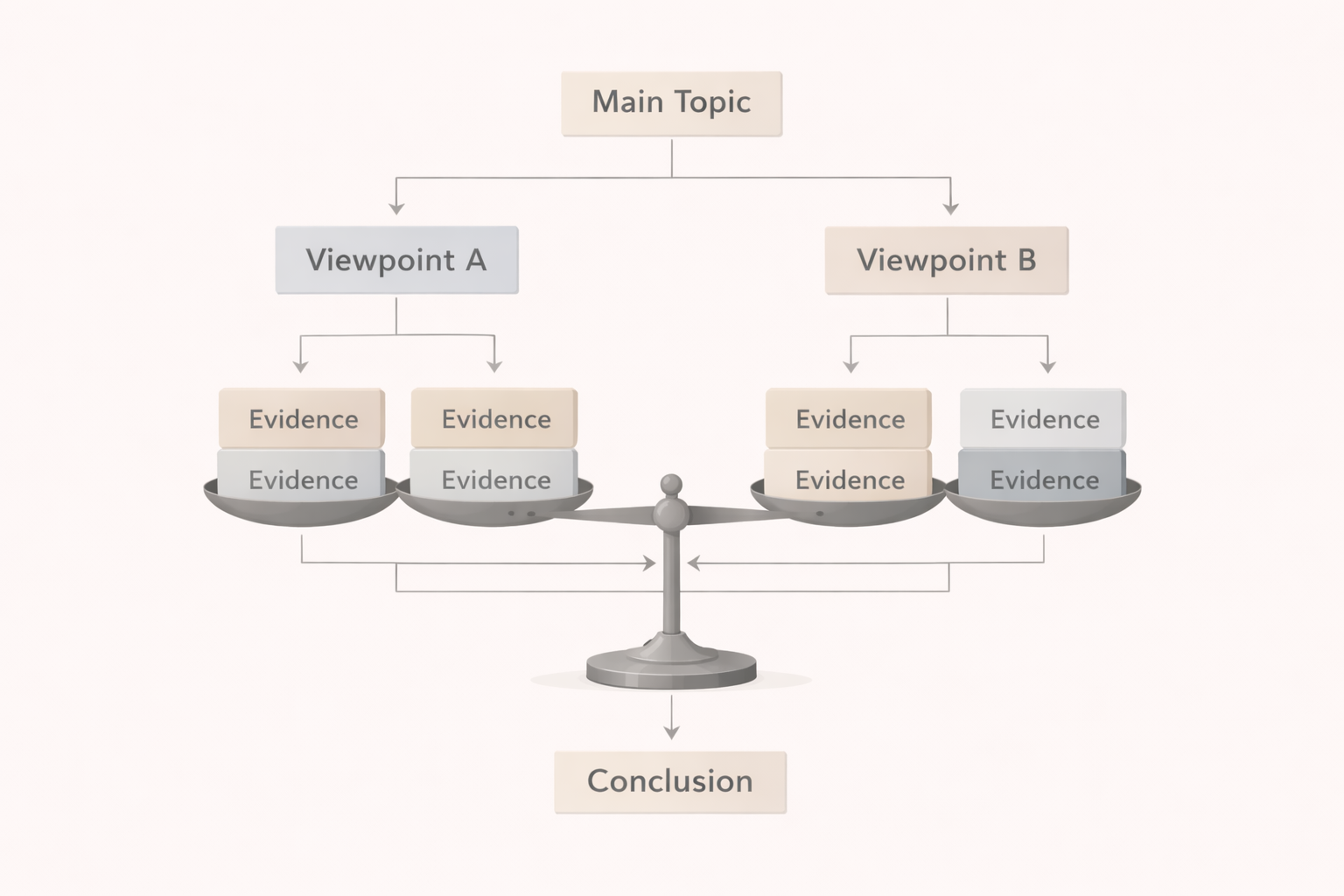
The argumentative essay occupies a central position in higher education because it tests more than knowledge recall. It evaluates a student’s ability to reason, evaluate evidence, engage with competing perspectives, and defend a position within established academic conventions.
Unlike descriptive or reflective assignments, an argumentative essay requires students to take a clear stance and justify it through structured reasoning. This expectation often creates difficulty for students who are unfamiliar with academic argumentation or who confuse argument with personal opinion.
This guide explains what an argumentative essay is, why it is used in university assessment, and how students can construct arguments that meet scholarly standards across disciplines.
What an Argumentative Essay Is in Academic Contexts
An argumentative essay is a form of academic writing in which the writer presents a clear, reasoned position on a debatable issue and supports that position with evidence, logic, and critical analysis.
In academic contexts, argument does not imply hostility or persuasion through rhetoric alone. Instead, it refers to a structured process of making claims, supporting them with credible sources, and responding to alternative viewpoints.
This form of writing demonstrates intellectual engagement with a topic rather than passive reporting of information.
Academic definition: An argumentative essay advances a defensible claim and justifies it through evidence-based reasoning and critical evaluation.
Why Universities Use Argumentative Essays
Universities rely on argumentative essays because they reveal higher-order thinking skills. These assignments assess whether students can move beyond description to analysis and evaluation.
Argumentative writing also mirrors scholarly practice, where knowledge develops through debate, critique, and justification rather than consensus alone.
As a result, argumentative essays are common in humanities, social sciences, law, education, and increasingly in applied disciplines.
Argument Versus Opinion in Academic Writing
A frequent misunderstanding is equating argument with opinion. Academic arguments are not based on personal belief but on defensible reasoning supported by evidence.
An opinion becomes an argument only when it is grounded in scholarly sources, logically developed, and open to critical scrutiny.
This distinction is fundamental to achieving academic credibility.
Core Components of an Argumentative Essay
Although formats vary slightly across disciplines, most argumentative essays share core structural components that guide logical development.
These components ensure clarity, coherence, and alignment with assessment criteria.
- A clear thesis statement that establishes the position
- Body paragraphs that develop individual arguments
- Use of evidence from credible academic sources
- Engagement with counterarguments
- A conclusion that synthesises the argument
Each element contributes to the essay’s overall persuasiveness and academic strength.
Developing a Clear and Defensible Thesis
The thesis statement is the foundation of an argumentative essay. It communicates the writer’s position and sets expectations for the argument that follows.
A strong thesis is specific, contestable, and aligned with the assignment question. Vague or factual statements do not provide a basis for argument.
Effective theses guide both the writer’s structure and the reader’s understanding.
Structuring Body Paragraphs Around Claims
Each body paragraph in an argumentative essay should focus on a single, clear claim that supports the thesis.
Claims are developed through explanation, supported by evidence, and linked back to the central argument. This structure prevents fragmentation and repetition.
Logical sequencing of paragraphs strengthens coherence and argumentative flow.
The Role of Evidence in Argumentative Writing
Evidence is essential to academic argumentation. Claims without evidence are interpreted as assertions rather than arguments.
Acceptable evidence typically includes peer-reviewed research, academic books, policy documents, and reputable data sources.
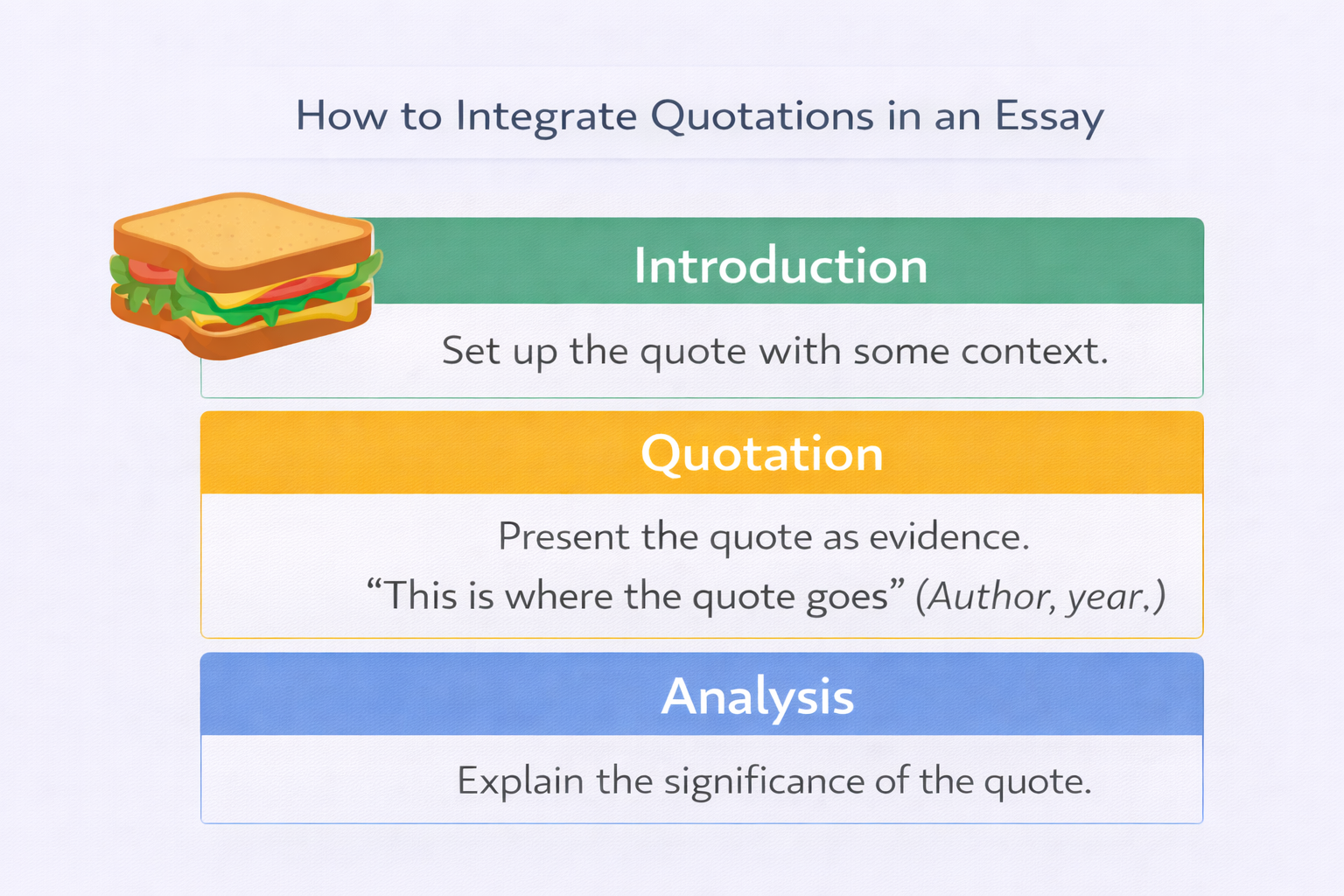
Evidence must be integrated and interpreted, not merely presented.
Critical Use of Sources
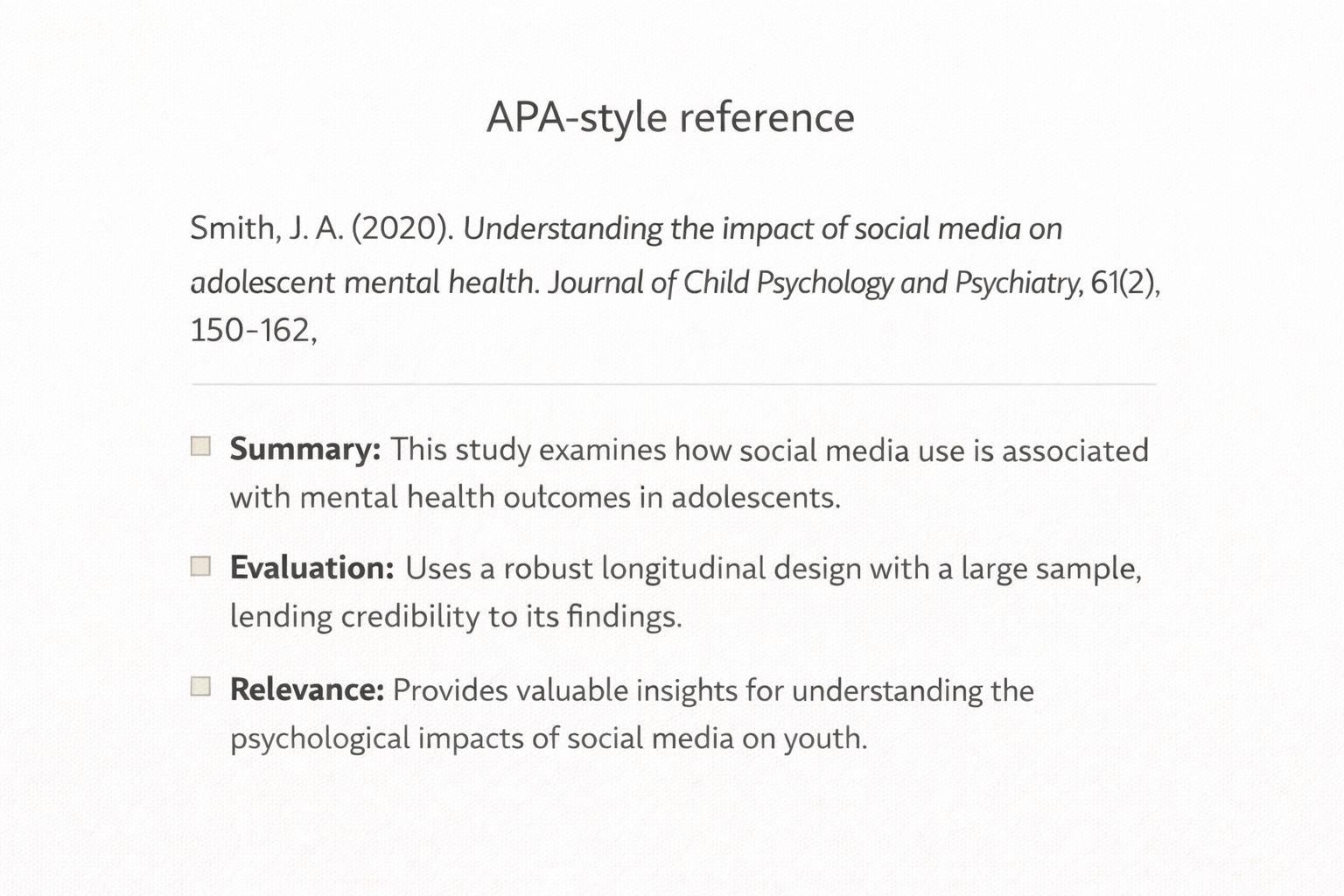
Argumentative essays require critical engagement with sources rather than uncritical acceptance. This involves evaluating methodology, relevance, and limitations.
Students are expected to demonstrate discernment in how sources are used to support claims.
Critical use of sources signals academic maturity and analytical skill.
Addressing Counterarguments Effectively
Engaging with counterarguments strengthens an argumentative essay by demonstrating awareness of alternative perspectives.
Rather than weakening the argument, acknowledging opposing views shows intellectual honesty and confidence.
Effective responses explain why the chosen position remains valid despite competing claims.
Common Approaches to Counterargument Integration
Counterarguments may be addressed within individual body paragraphs or in a dedicated section, depending on assignment scope.
The key requirement is that counterarguments are treated respectfully and analytically rather than dismissed.
This practice aligns with scholarly norms of debate.
| Element | Purpose | Academic Expectation |
|---|---|---|
| Main claim | Advance the central position | Clear, supported, logically developed |
| Counterargument | Acknowledge alternative views | Accurately represented and evaluated |
| Rebuttal | Defend the original claim | Reasoned and evidence-based |
This balance strengthens argumentative credibility.
Maintaining Academic Tone and Objectivity
Argumentative essays require formal academic tone. Emotional language, exaggeration, or informal expressions undermine authority.
Objectivity is achieved through cautious language, precise terminology, and evidence-based reasoning.
Modal verbs and qualifying phrases help convey measured academic judgement.
Logical Flow and Coherence
Logical progression is essential in argumentative writing. Each paragraph should build on the previous one in a way that advances the overall case.
Clear topic sentences and transitions guide the reader through complex reasoning.
Disjointed arguments weaken persuasive impact regardless of evidence quality.
Common Weaknesses in Argumentative Essays
Frequent weaknesses include unclear theses, excessive description, unsupported claims, and poor engagement with counterarguments.
Another common issue is presenting multiple ideas without clear prioritisation or connection to the central argument.
Awareness of these pitfalls improves both planning and revision.
Discipline-Specific Variations
While the core principles of argumentation remain consistent, disciplinary conventions influence emphasis and style.
For example, philosophical essays prioritise logical reasoning, while social science essays may emphasise empirical evidence.
Understanding these variations is critical for meeting marking criteria.
Revising Argumentative Essays for Clarity and Strength
Effective revision focuses on argument coherence rather than surface-level editing alone.
Students should evaluate whether each paragraph clearly supports the thesis and whether counterarguments are adequately addressed.
Revision often strengthens argument quality more than additional research.
Why Argumentative Essays Matter Beyond University
Argumentative writing develops transferable skills such as critical thinking, structured reasoning, and evidence evaluation.
These skills are essential in professional contexts, policymaking, and research environments.
Mastery of argumentative essays therefore has long-term academic and professional value.
Final Guidance on Writing Strong Argumentative Essays
An argumentative essay is not about asserting certainty but about demonstrating reasoned judgement within academic conventions.
By developing a clear thesis, supporting it with credible evidence, and engaging critically with alternatives, students meet the core expectations of higher education.
Consistent practice with argumentative writing strengthens overall academic performance across disciplines.

Comments