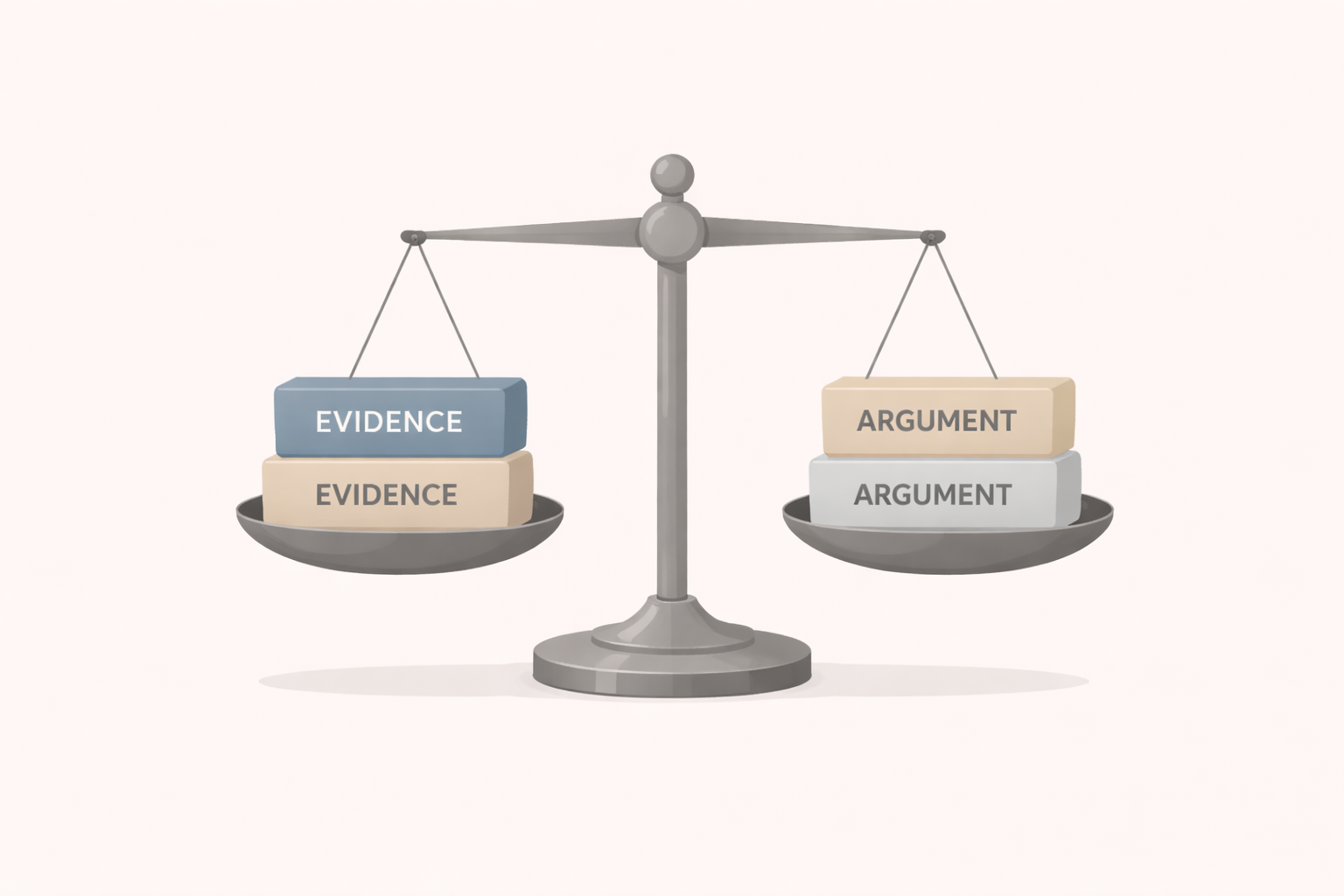
Persuasive essays are widely used in higher education because they test a student’s ability to influence academic judgment through reasoning rather than opinion. Unlike descriptive or narrative tasks, persuasive writing requires students to make a clear claim and justify it in a way that is credible, logical, and academically grounded.
Many students struggle with persuasive essays because they associate persuasion with emotional appeal or rhetorical force. In academic contexts, however, persuasion operates through evidence, structure, and critical engagement with ideas.
This guide explains what a persuasive essay is, how it functions in university assessment, and how students can construct persuasive arguments that meet academic standards.
What a Persuasive Essay Is in Academic Writing
A persuasive essay is a form of academic writing in which the author seeks to convince the reader of a particular position through structured argumentation and credible evidence.
In universities, persuasion is not achieved through personal belief or emotive language but through disciplined reasoning. The writer must demonstrate why a position is reasonable, justified, and preferable based on scholarly criteria.
This makes persuasive essays closely aligned with critical thinking and analytical writing expectations.
Academic definition: A persuasive essay advances a position and convinces the reader through evidence-based reasoning and critical evaluation.
Why Persuasive Essays Are Used in University Assessment
Persuasive essays are used because they reveal how well students can engage with debate, evaluate evidence, and defend a position under academic constraints.
They mirror scholarly practices where arguments are advanced, contested, and refined rather than accepted uncritically.
As a result, persuasive writing is common in humanities, social sciences, education, law, and policy-focused disciplines.
Persuasion Versus Opinion in Academic Contexts
A common misconception is that persuasive essays are opinion pieces. In academic writing, persuasion is distinct from opinion because it relies on justification rather than belief.
An academic position becomes persuasive only when it is supported by credible sources, logical structure, and critical engagement with alternative perspectives.
Unsupported claims weaken persuasion rather than strengthen it.
Core Characteristics of a Persuasive Essay
Although formats vary across disciplines, persuasive essays share core characteristics that distinguish them from other essay types.
These characteristics ensure clarity, coherence, and academic credibility.
- A clearly stated position or claim
- Logical organisation of supporting arguments
- Use of credible academic evidence
- Engagement with opposing viewpoints
- A conclusion that reinforces the argument’s validity
Each characteristic contributes to the essay’s overall persuasive strength.
Establishing a Persuasive Thesis Statement
The thesis statement is the central persuasive claim of the essay. It signals the position being defended and frames the scope of the argument.
An effective persuasive thesis is specific, debatable, and defensible within academic discourse. Statements of fact or overly broad claims do not persuade.
The thesis guides both the structure of the essay and the reader’s expectations.
Developing Persuasive Body Paragraphs
Each body paragraph should advance one reason that supports the thesis. These reasons must be clearly articulated and logically connected.
Persuasive body paragraphs typically follow a pattern of claim, explanation, evidence, and analysis. This structure ensures that persuasion is grounded in reasoning.
Weak paragraphs often list information without explaining its relevance to the central argument.
The Role of Evidence in Persuasive Writing
Evidence is the foundation of academic persuasion. Claims without evidence are interpreted as assertions rather than arguments.
Acceptable evidence includes peer-reviewed research, academic books, policy reports, and credible empirical data.
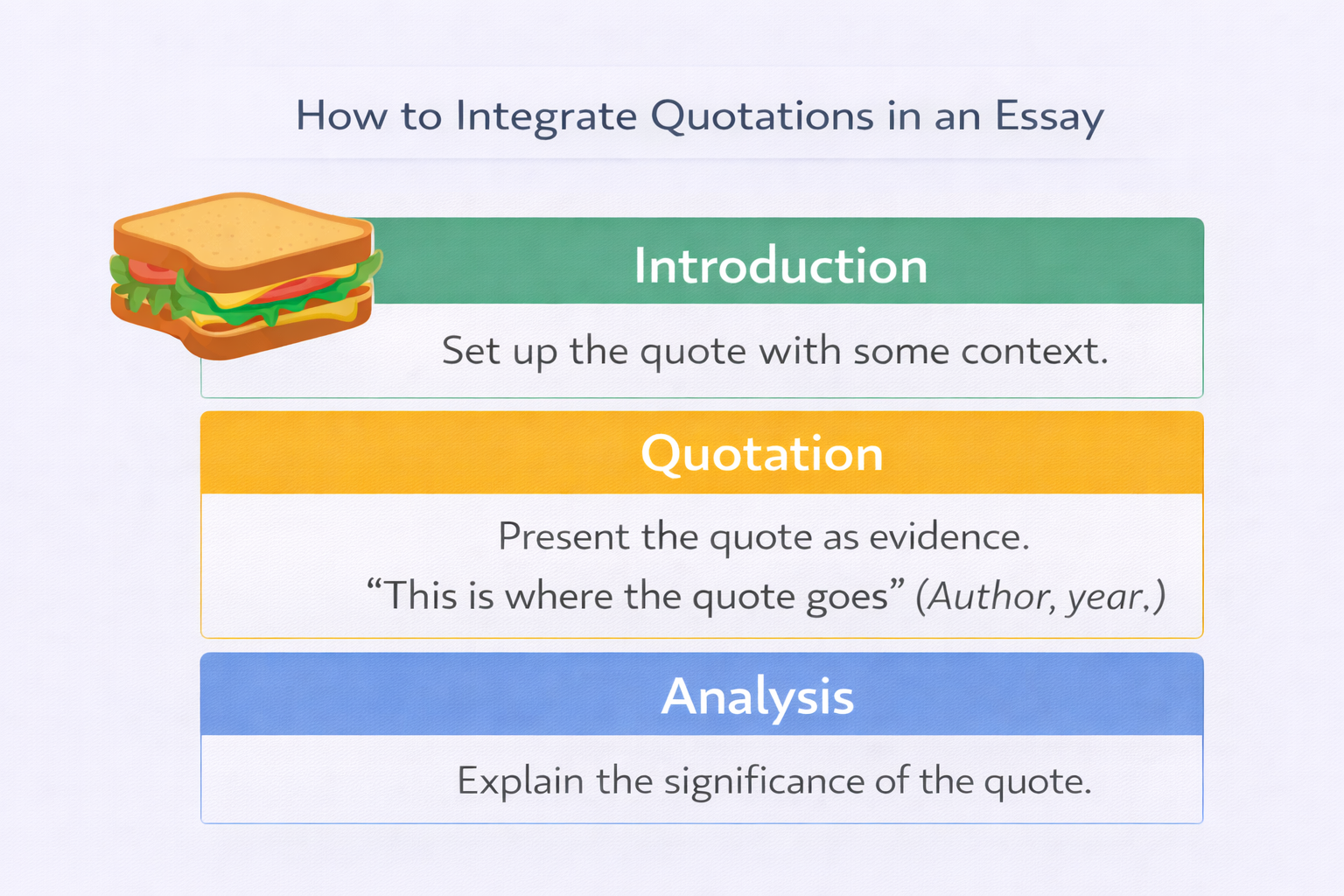
Evidence must be analysed and interpreted rather than quoted in isolation.
Integrating Sources Persuasively
Persuasive essays require active engagement with sources. This involves explaining how evidence supports the argument and why it is relevant.
Simply citing authorities does not persuade unless the reasoning behind their relevance is made explicit.
Effective integration demonstrates control over both content and argument.
Addressing Counterarguments in Persuasive Essays
Engaging with opposing viewpoints strengthens persuasion by demonstrating awareness of complexity.
Rather than avoiding disagreement, persuasive essays acknowledge counterarguments and respond to them thoughtfully.
This approach enhances credibility and academic integrity.
Strategies for Responding to Opposition
Counterarguments can be addressed by acknowledging their validity while explaining their limitations.
Alternatively, they may be refuted through evidence that undermines their assumptions or conclusions.
The goal is not dismissal but reasoned evaluation.
| Component | Function | Academic Expectation |
|---|---|---|
| Main argument | Advance the central position | Clear, supported, logically reasoned |
| Counterargument | Present alternative viewpoint | Accurately represented and fair |
| Response | Reinforce original position | Evidence-based and analytical |
This balance enhances persuasive depth and rigor.
Maintaining Academic Tone in Persuasive Writing
Persuasive essays must maintain a formal academic tone. Emotional appeals, exaggeration, and informal language undermine credibility.
Careful word choice, cautious claims, and precise language support academic persuasion.
Modal verbs and qualifiers help convey measured judgment.
Logical Flow and Coherence
Persuasion depends on logical progression. Each paragraph should build upon the previous one in a way that strengthens the overall case.
Clear topic sentences and transitions guide the reader through complex reasoning.
Disorganised arguments weaken persuasive impact regardless of evidence quality.
Common Weaknesses in Persuasive Essays
Common weaknesses include unclear positions, overreliance on opinion, insufficient evidence, and poor engagement with counterarguments.
Another frequent issue is confusing persuasion with repetition rather than developing depth.
Awareness of these weaknesses improves drafting and revision.
Disciplinary Expectations for Persuasive Writing
While core principles remain consistent, disciplinary conventions influence how persuasion is achieved.
For example, social sciences emphasise empirical support, while humanities may prioritise theoretical reasoning.
Understanding these expectations is essential for meeting marking criteria.
Revising Persuasive Essays for Academic Strength
Effective revision focuses on argument quality rather than surface-level corrections alone.
Students should assess whether each paragraph clearly supports the thesis and whether evidence is adequately analysed.
Revision often reveals gaps in reasoning that were not apparent during drafting.
The Value of Persuasive Writing Beyond University
Persuasive writing develops transferable skills such as critical thinking, structured reasoning, and evidence evaluation.
These skills are valuable in professional, policy, and research contexts.
Mastery of persuasive essays therefore supports long-term academic and career development.
Final Guidance on Writing Effective Persuasive Essays
Academic persuasion is achieved through clarity, evidence, and disciplined reasoning rather than forceful language.
By constructing a defensible position, supporting it with credible sources, and engaging critically with alternatives, students meet university expectations.
Consistent practice strengthens persuasive competence across disciplines.

Comments