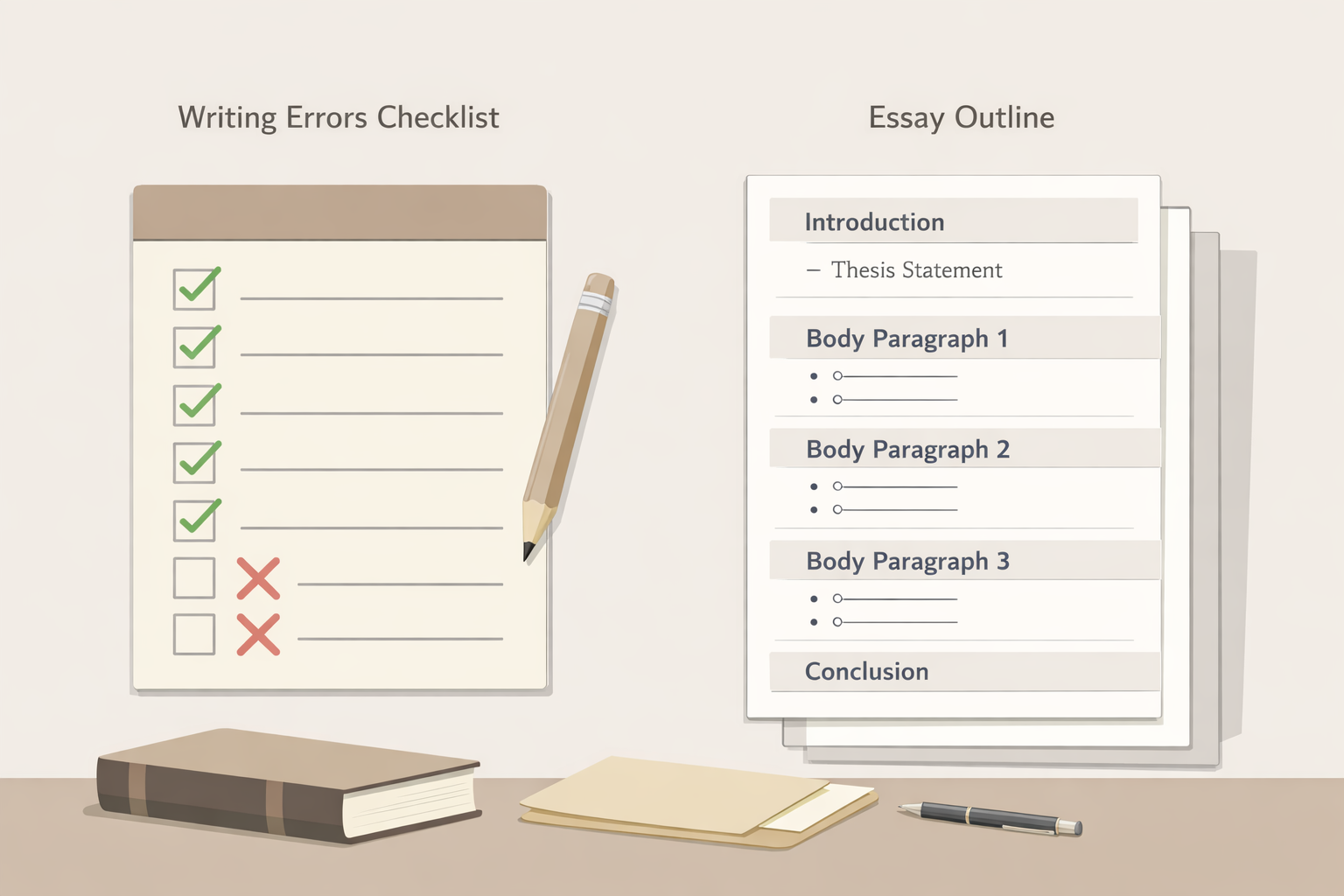
Argumentative writing is a core academic skill assessed across disciplines, from the social sciences to humanities and law. Despite its importance, many students struggle to meet examiner expectations, not because they lack ideas, but because their arguments are undermined by structural and reasoning errors.
Argumentative writing mistakes often occur when students misunderstand what an academic argument requires. Instead of balanced reasoning and evidence-based evaluation, essays become overly opinionated, descriptive, or rhetorically persuasive.
This article examines the most common argumentative writing mistakes, explains why they weaken academic credibility, and provides guidance on how to correct them.
Misunderstanding What an Academic Argument Requires
One of the most frequent argumentative writing mistakes is confusing argument with opinion. Students often assume that taking a strong stance automatically constitutes an argument.
In academic contexts, an argument must be supported by evidence, logical reasoning, and engagement with alternative viewpoints. Personal belief alone is insufficient.
When essays rely primarily on opinion, examiners perceive them as underdeveloped and analytically weak.
Academic rule: An argument is built on evidence and reasoning, not personal conviction.
Presenting a One-Sided Argument
Another common mistake is presenting only one perspective on an issue. While clarity of position is important, ignoring opposing viewpoints signals superficial analysis.
Argumentative writing requires students to demonstrate awareness of complexity. Engaging with counterarguments strengthens credibility rather than weakening it.
Failing to address alternative perspectives often leads to comments such as “lacks critical engagement” in examiner feedback.
Weak or Vague Thesis Statements
An unclear thesis statement undermines the entire argumentative essay. Many students use broad or descriptive statements that do not establish a clear line of reasoning.
A strong thesis should indicate not only the topic but the argumentative direction and evaluative stance.
Without a precise thesis, paragraphs lose focus and arguments become fragmented.
Overreliance on Emotional Language
Using emotive or persuasive language is a common argumentative writing mistake, particularly when students are passionate about a topic.
Academic argumentation values neutrality and precision. Emotional phrasing can appear biased or unprofessional.
Replacing emotive claims with evidence-based statements improves clarity and scholarly tone.
Poor Integration of Evidence
Evidence is central to argumentative writing, yet many students struggle to integrate sources effectively.
Quoting excessively without explanation, or listing sources without analysis, weakens the argument.
Each piece of evidence must be interpreted and linked directly to the claim it supports.
Examiner expectation: Evidence must be analysed, not merely presented.
Ignoring Counterarguments or Treating Them Superficially
Some essays mention counterarguments only briefly, dismissing them without explanation. This approach suggests defensiveness rather than confidence.
Effective argumentative writing acknowledges counterarguments fairly and responds to them logically.
Superficial treatment of opposing views reduces the perceived strength of the argument.
Logical Fallacies in Reasoning
Logical fallacies are subtle but damaging argumentative writing mistakes. These include overgeneralisation, false cause, and unsupported assumptions.
Fallacious reasoning undermines credibility, even when the conclusion seems plausible.
Careful reasoning and evidence evaluation help avoid these pitfalls.
| Mistake | Why It Weakens the Essay | Academic Expectation |
|---|---|---|
| Opinion-based claims | Lacks scholarly support | Evidence-based reasoning |
| Ignoring counterarguments | Appears one-dimensional | Balanced critical engagement |
| Emotional language | Reduces academic tone | Neutral, precise expression |
| Unanalysed evidence | Shows surface-level understanding | Interpretation and evaluation |
The table highlights how specific mistakes directly affect academic assessment outcomes.
Paragraphs Without Clear Argumentative Focus
Another frequent issue is writing paragraphs that describe information rather than advance an argument.
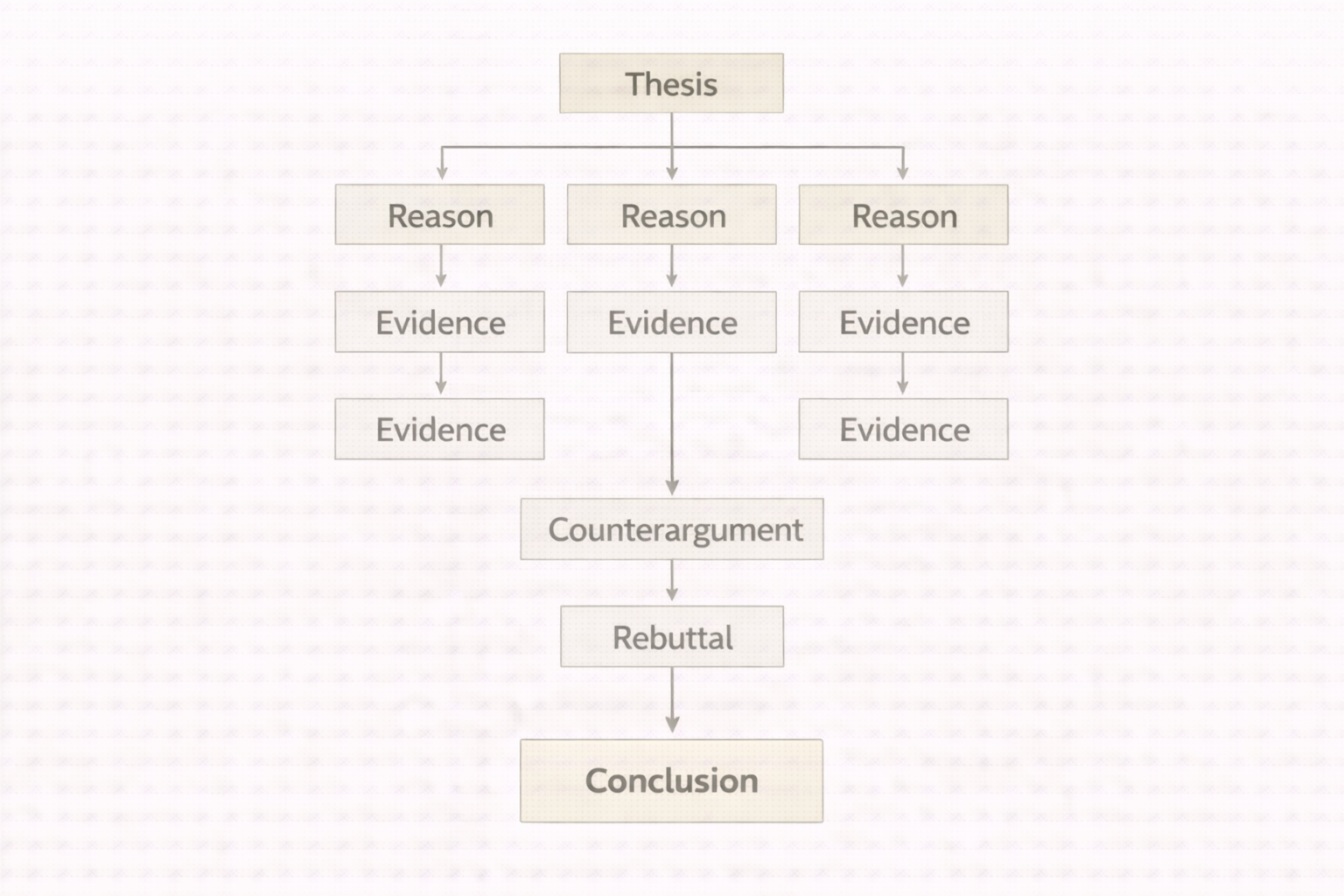
Each paragraph in an argumentative essay should contribute a specific reason supporting the thesis.
Descriptive paragraphs dilute argumentative coherence and reduce analytical depth.
Weak Logical Transitions Between Ideas
Argumentative writing requires clear logical progression. Abrupt transitions confuse readers and weaken persuasion.
Students often move between points without explaining how ideas connect.
Explicit signposting improves coherence and reader comprehension.
Inconsistent Use of Terminology
Using key terms inconsistently is a subtle but serious argumentative writing mistake.
When definitions shift across the essay, arguments lose precision.
Consistency in terminology supports clarity and analytical rigour.
Overgeneralised Conclusions
Many argumentative essays end with sweeping conclusions that extend beyond the evidence presented.
Effective conclusions synthesise arguments without exaggeration.
Overclaiming invites scepticism and weakens the essay’s overall credibility.
Failure to Align With Assessment Criteria
Some argumentative writing mistakes stem from misreading assignment instructions.
Students may write persuasively when critical evaluation is required, or vice versa.
Careful attention to task wording is essential for academic success.
Critical warning: A well-written essay can still score poorly if it does not meet the required argumentative criteria.
Developing Stronger Argumentative Writing Habits
Avoiding common argumentative writing mistakes requires deliberate practice and reflection.
Planning arguments, outlining counterarguments, and reviewing evidence critically improve writing quality.
Seeking feedback and revising with academic criteria in mind strengthens long-term performance.
Final Guidance on Avoiding Argumentative Writing Mistakes
Argumentative writing mistakes often arise from misunderstanding what academic argumentation demands.
By focusing on evidence-based reasoning, balanced engagement, and logical structure, students can significantly improve their essays.
Mastery of argumentative writing is not about sounding forceful, but about demonstrating disciplined, critical thinking.


Comments