
In academic writing, strong arguments are rarely built by presenting one perspective alone. University-level work is evaluated not only on the strength of its central claim, but also on how well it recognises, engages with, and responds to alternative viewpoints. This is where counterarguments become essential.
Many students mistakenly believe that acknowledging opposing views weakens their argument. In reality, the opposite is true. Thoughtfully handled counterarguments demonstrate critical thinking, intellectual honesty, and a deep understanding of the academic debate surrounding a topic.
This article explains the role of counterarguments in academic essays, how they function within argumentation, and how to use them strategically to strengthen rather than undermine your position.
What Counterarguments Mean in Academic Contexts
A counterargument is an opposing perspective, claim, or interpretation that challenges the main argument of an essay. In academic writing, counterarguments represent credible alternatives rather than superficial disagreements.
They are typically drawn from scholarly sources, established theories, or commonly accepted positions within a discipline. Addressing these viewpoints signals that the writer understands the broader academic conversation.
Importantly, a counterargument is not included to replace the main claim, but to test its strength and refine its justification.
Academic definition: A counterargument is a reasoned objection to a thesis that must be acknowledged and critically addressed.
Why Examiners Expect Counterarguments
Examiners assess academic writing for analytical depth, not agreement. Essays that present only one-sided claims often appear simplistic or underdeveloped.
Including counterarguments demonstrates that the student has evaluated competing explanations and has consciously chosen a position based on evidence and reasoning.
In many marking rubrics, this skill is directly associated with higher-grade descriptors such as “critical evaluation” and “independent thinking.”
Counterarguments Versus Contradictions
A common misconception is that counterarguments contradict the essay’s purpose. In academic writing, contradiction and counterargument are not the same.
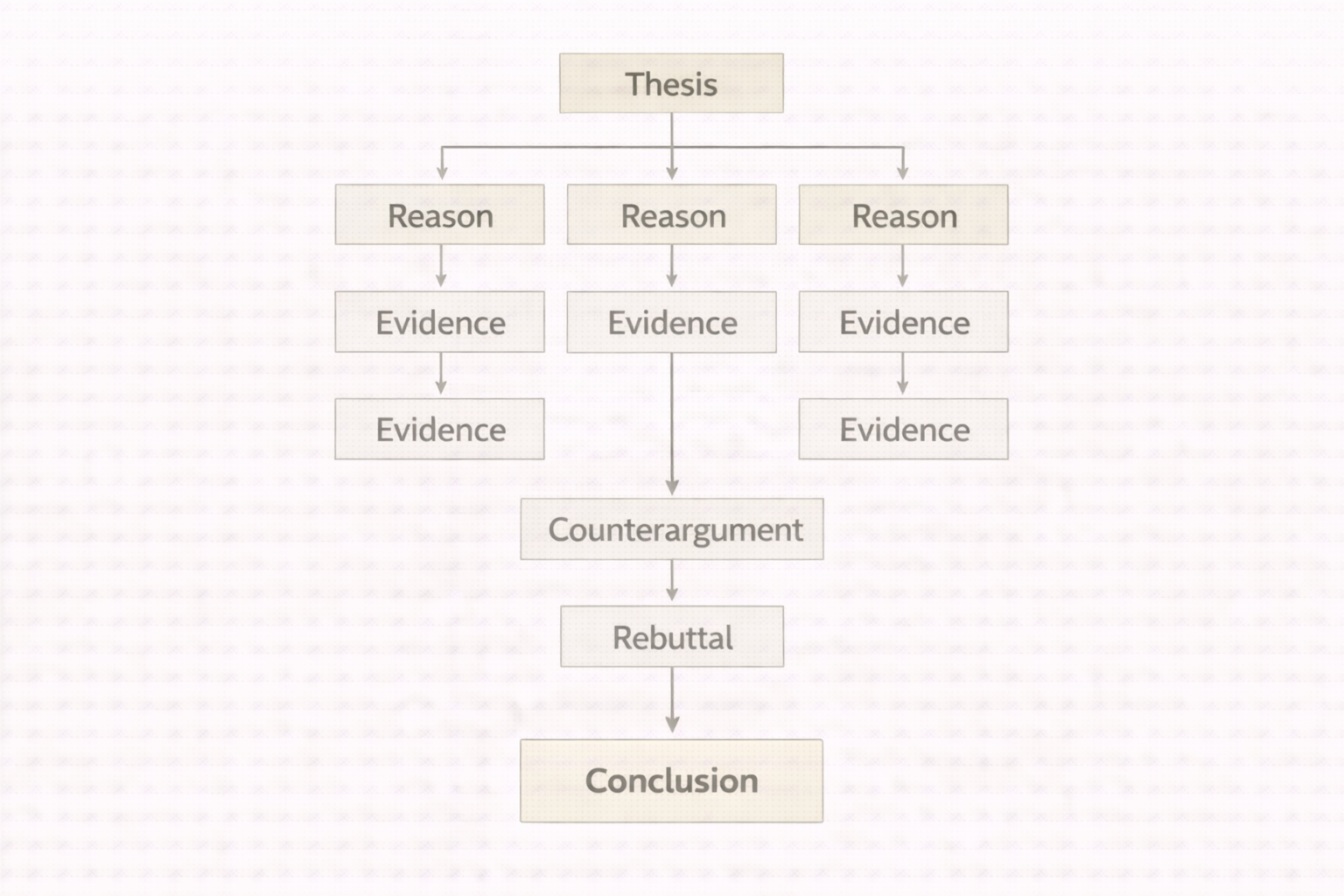
Contradictions undermine coherence by presenting conflicting claims without resolution. Counterarguments, by contrast, are structured challenges that are followed by responses or rebuttals.
The key distinction lies in control: the writer frames the counterargument and determines how it is addressed.
Where Counterarguments Appear in an Essay
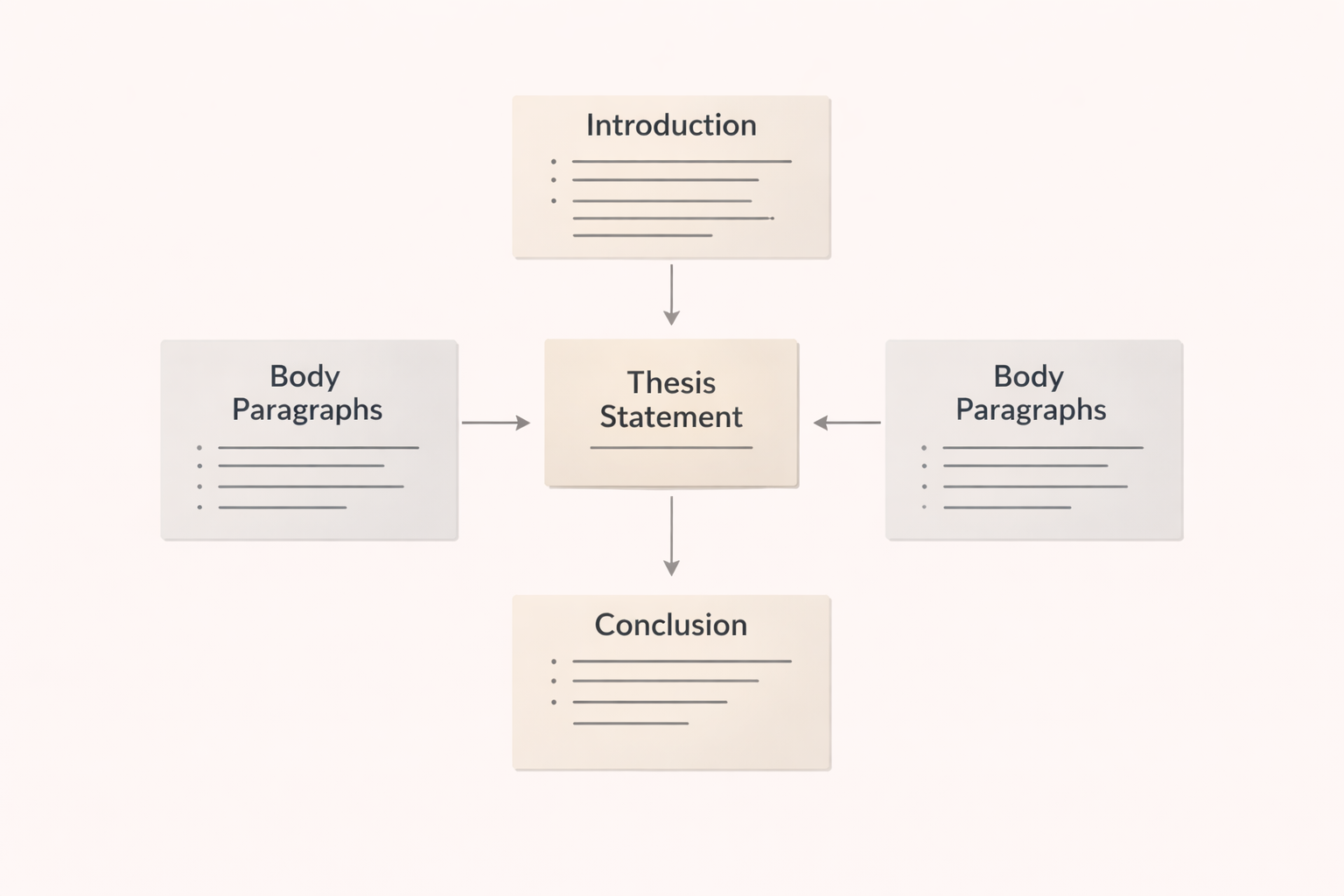
Counterarguments are most commonly introduced in the body of an essay, often after the main argument has been established. This sequencing allows the reader to understand the writer’s position before encountering opposition.
In longer essays, counterarguments may appear in dedicated sections. In shorter assignments, they are often embedded within analytical paragraphs.
Regardless of placement, counterarguments must be clearly signposted and purposefully integrated.
Types of Counterarguments in Academic Writing
Counterarguments can take several forms depending on the discipline and type of essay. Understanding these variations helps writers respond appropriately.
- Theoretical counterarguments based on alternative frameworks
- Empirical counterarguments drawn from conflicting evidence
- Methodological counterarguments questioning research design
- Ethical or normative counterarguments challenging values
Each type requires a different mode of engagement, ranging from evidence comparison to conceptual clarification.
How to Introduce Counterarguments Clearly
Effective counterarguments are introduced with careful academic signalling. This ensures that readers recognise the shift in perspective.
Common signalling phrases include expressions such as “some scholars argue,” “an alternative view suggests,” or “it may be contended that.”
Clear signalling prevents confusion and reinforces structural coherence.
Responding to Counterarguments Academically
Introducing a counterargument without responding to it weakens an essay. Academic writing requires engagement, not mere acknowledgement.
Responses may involve refuting the counterargument, qualifying it, or integrating aspects of it into a more nuanced position.
The goal is not to dismiss opposing views, but to demonstrate why the chosen argument remains stronger or more appropriate.
| Response Strategy | Description | Academic Purpose |
|---|---|---|
| Refutation | Demonstrating weaknesses in the opposing view | Defends the main argument |
| Qualification | Accepting partial validity with limits | Adds nuance |
| Integration | Incorporating elements into a refined claim | Strengthens complexity |
Choosing the appropriate strategy depends on the strength and relevance of the opposing claim.
Counterarguments in Argumentative Essays
In argumentative essays, counterarguments are especially important because the aim is persuasion through reasoned debate.
Addressing counterarguments shows confidence in one’s position and prevents the appearance of bias.
Well-developed argumentative essays often dedicate entire paragraphs to counterarguments and rebuttals.
Counterarguments in Analytical and Critical Essays
In analytical writing, counterarguments may focus less on persuasion and more on interpretation.
Here, the writer compares competing explanations or readings before justifying a preferred interpretation.
This comparative approach is central to disciplines such as literature, philosophy, and social sciences.
Common Mistakes When Using Counterarguments
One frequent mistake is presenting a counterargument more convincingly than the main claim, unintentionally weakening the essay.
Another issue is using straw-man counterarguments, which misrepresent opposing views to make them easier to dismiss.
Both practices reduce academic credibility and should be avoided.
Critical warning: Weak or misrepresented counterarguments signal shallow engagement rather than critical analysis.
Balancing Counterarguments and Main Claims
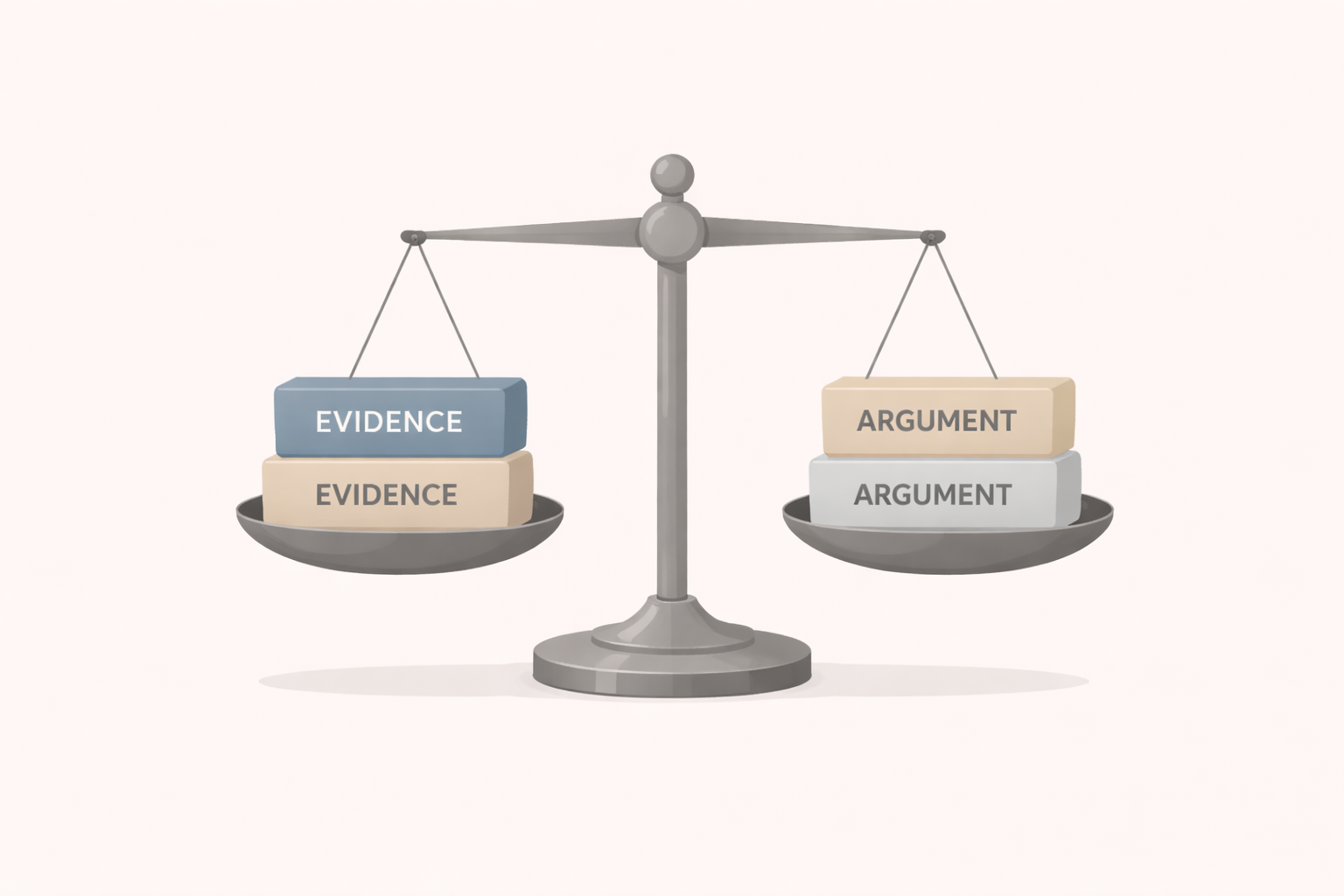
Effective essays maintain balance. Counterarguments should challenge the thesis, but not overwhelm it.
As a general principle, more space should be devoted to supporting the main argument than to opposing views.
This balance ensures that the essay remains focused while still demonstrating intellectual range.
Discipline-Specific Expectations for Counterarguments
Different academic disciplines place varying emphasis on counterarguments. Philosophy and law often require extensive engagement with opposing positions.
In contrast, scientific writing may address counterarguments through methodological justification or limitations.
Understanding disciplinary norms is essential for meeting assessment expectations.
Counterarguments and Academic Integrity
Engaging with counterarguments also supports academic integrity by acknowledging the contributions of other scholars.
This practice avoids presenting contested ideas as universally accepted truths.
Transparent engagement enhances scholarly credibility.
Revising Counterarguments During Editing
During revision, writers should assess whether counterarguments are clearly linked to the thesis and adequately addressed.
Questions to consider include whether the response is convincing and whether the counterargument genuinely reflects scholarly debate.
Refinement at this stage often elevates the essay’s analytical quality.
Final Guidance on Using Counterarguments Effectively
Counterarguments are not obstacles to strong academic writing; they are essential components of it. They transform essays from opinion pieces into reasoned contributions to scholarly discussion.
By acknowledging and responding to opposing views, students demonstrate critical thinking, academic maturity, and analytical confidence.
Mastery of counterarguments is therefore a defining skill in successful university-level writing.
Comments