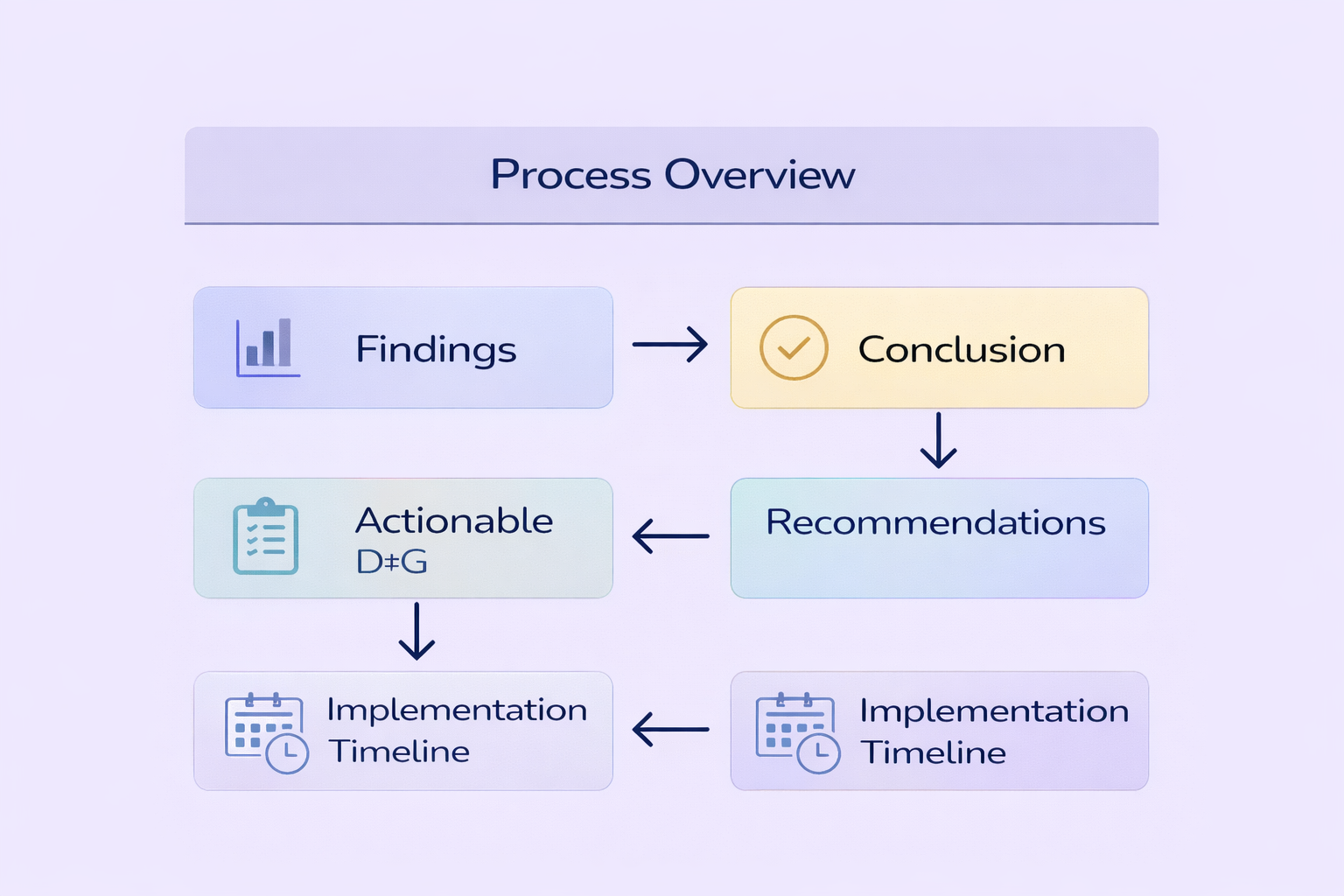
Understanding how to write recommendations section in a report is essential for producing high-quality academic and professional documents. The recommendations section transforms analysis into action. It answers a crucial question: Based on the findings, what should be done? While many students produce strong analysis, they often struggle to convert findings into clear, feasible, and logically grounded recommendations.
A well-written recommendations section demonstrates critical thinking, practical awareness, and the ability to apply research insights. Whether writing a business report, case study, consultancy project, or dissertation, mastering this section strengthens both academic performance and professional credibility.
The Purpose of the Recommendations Section
The recommendations section provides actionable solutions derived directly from the report’s findings and conclusions. It should not introduce new evidence or repeat earlier analysis. Instead, it builds logically on the conclusions already presented.
Recommendations must be directly supported by the report’s findings and analysis.
In academic contexts, recommendations demonstrate applied understanding. In professional reports, they inform decision-making and strategic planning.
Where the Recommendations Section Appears
In most structured reports, the recommendations section appears after the conclusion. The conclusion summarises what was discovered, while recommendations explain what should happen next.
| Report Section | Purpose |
|---|---|
| Introduction | Explain purpose and scope |
| Methodology | Describe approach |
| Findings | Present results |
| Conclusion | Summarise key insights |
| Recommendations | Propose actions based on findings |
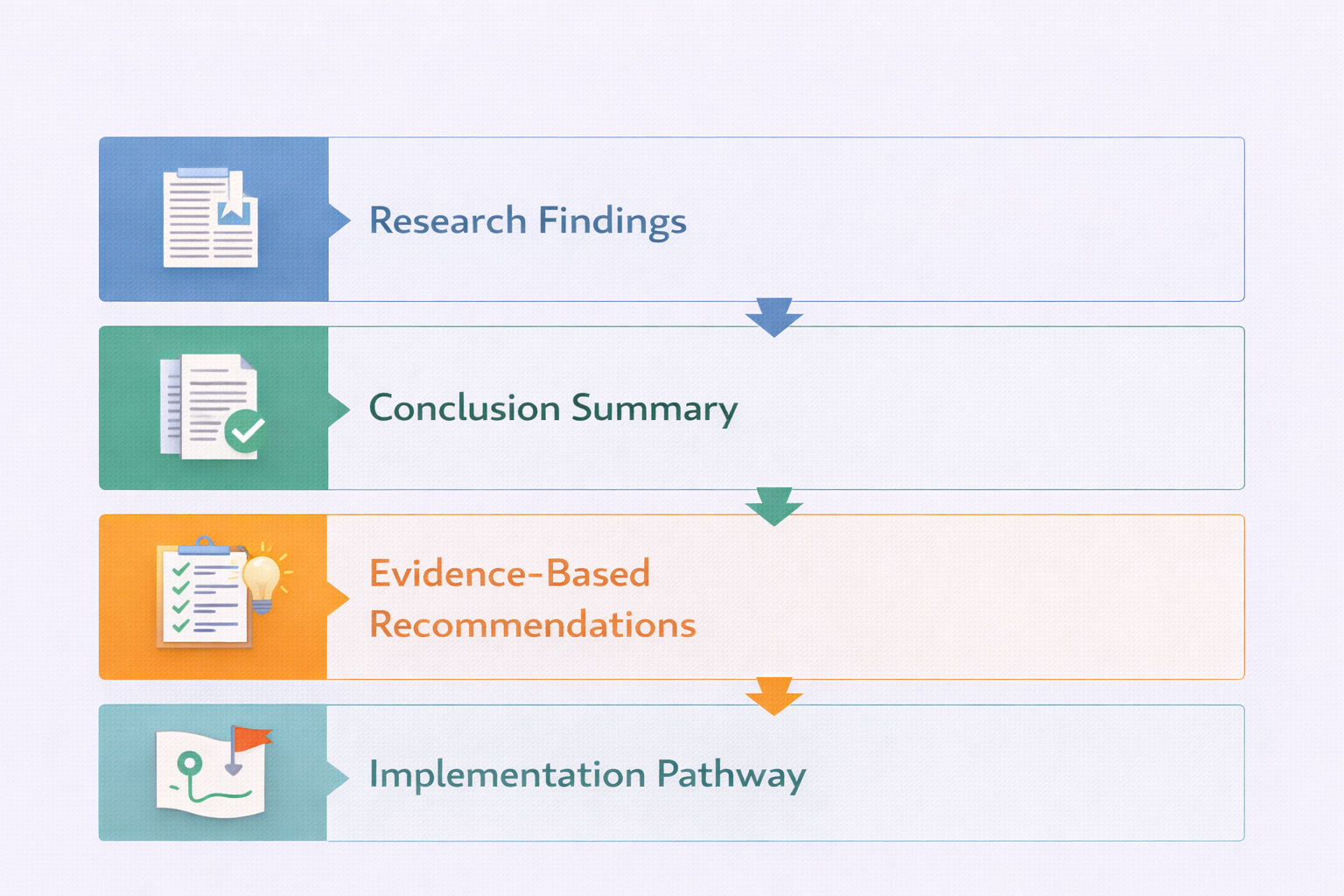
This structure ensures logical progression from evidence to action.
Key Characteristics of Strong Recommendations
Effective recommendations share several essential qualities. They should be clear, realistic, specific, and aligned with the research objectives.
- Directly linked to findings.
- Action-oriented and practical.
- Specific rather than vague.
- Feasible within context.
- Prioritised where appropriate.
For example, instead of writing “Improve communication strategies,” a stronger recommendation would be “Implement monthly cross-departmental meetings to improve communication efficiency.”
Step-by-Step Approach to Writing Recommendations
Following a structured method improves clarity and coherence.
- Identify key findings from the conclusion.
- Determine practical implications of those findings.
- Formulate clear action steps.
- Ensure feasibility and realism.
- Prioritise recommendations if necessary.
This systematic approach prevents repetition and ensures logical alignment with the report.
Linking Recommendations to Evidence
Every recommendation must be traceable to specific findings. Examiners often deduct marks when recommendations appear disconnected from earlier analysis.
For example, if a report identifies declining employee morale due to workload imbalance, a logical recommendation might involve restructuring task allocation or hiring additional staff. This demonstrates analytical continuity.
Avoid introducing new arguments or evidence in the recommendations section.
The strength of recommendations depends on the credibility of the supporting analysis.
Different Types of Recommendations
Recommendations can vary depending on the report type and academic discipline.
| Type | Description | Example |
|---|---|---|
| Strategic | Long-term organisational direction | Adopt digital transformation strategy |
| Operational | Day-to-day improvements | Revise workflow procedures |
| Policy-Based | Institutional guidelines | Implement revised HR policies |
| Research-Oriented | Further investigation | Conduct longitudinal follow-up study |
Choosing the appropriate type depends on the context of the report.
Writing Style and Tone in Recommendations
The tone should be formal, objective, and confident. Use directive but professional language. Passive constructions are common, but clarity should not be sacrificed.
Examples of effective phrasing:
- It is recommended that the organisation implement...
- The findings suggest prioritising...
- The evidence supports the introduction of...
Avoid emotional or speculative language. Recommendations must remain evidence-based.
Prioritising Recommendations
In longer reports, prioritising recommendations enhances practicality. This can be done by categorising them into short-term, medium-term, and long-term actions.
| Priority Level | Time Frame | Example Action |
|---|---|---|
| High | Immediate (0–3 months) | Introduce revised communication protocol |
| Medium | 3–12 months | Develop staff training programme |
| Low | Long-term | Invest in advanced data systems |
Prioritisation demonstrates strategic awareness and feasibility assessment.
Common Mistakes in Recommendations Sections
Students frequently make avoidable errors when writing recommendations:
- Repeating conclusions without proposing action.
- Providing vague or generic suggestions.
- Introducing new analysis not discussed earlier.
- Offering unrealistic or impractical solutions.
- Failing to align recommendations with objectives.
Avoiding these mistakes ensures coherence and academic credibility.
Balancing Academic and Practical Focus
In academic research reports, recommendations often include suggestions for future research. In professional or business reports, recommendations focus more on operational or strategic change. Understanding the purpose of the assignment helps determine the appropriate emphasis.
For dissertations, recommendations may address methodological improvements, theoretical extensions, or policy implications. For consultancy reports, they typically address actionable organisational change.
Mastering How to Write Recommendations Section in a Report
Learning how to write recommendations section in a report requires moving beyond summary toward strategic application. Strong recommendations are grounded in evidence, clearly articulated, realistic, and logically aligned with findings.
By following a structured approach, maintaining professional tone, and ensuring analytical continuity, students can produce recommendations that demonstrate both intellectual depth and practical competence. Mastery of this section enhances academic performance and prepares students for professional report writing in real-world contexts.

Comments